
Solar light panels work quietly every day, turning sunlight into clean energy. Over time, dust, dirt, bird droppings, pollen, and pollution block sunlight and reduce efficiency. Regular cleaning keeps panels working at their best and extends their lifespan.
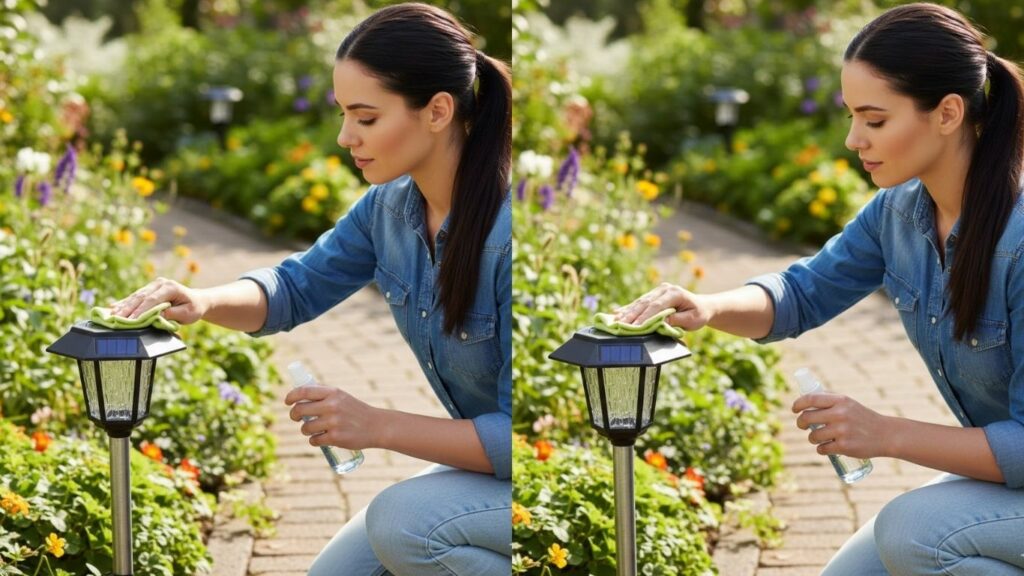
Learning how to clean solar light panels properly helps maintain brightness, charging capacity, and reliability. With simple tools and safe methods, anyone can clean solar panels without damage or professional help.
Table of Contents
- Helpful Items for Cleaning Solar Light Panels
- Understanding Solar Light Panels and Dirt Buildup
- How to Clean Solar Light Panels
- 1. Basic Water Rinse Cleaning Method
- 2. Mild Soap and Water Cleaning
- 3. Vinegar Solution for Mineral Spots
- 4. Soft Brush Dust Removal
- 5. Cleaning with Solar Panel Cleaner
- 6. Bird Dropping and Sticky Residue Removal
- 7. Seasonal Deep Cleaning Method
- Common Mistakes to Avoid
- Maintenance Tips for Long-Term Performance
- FAQ
- Final Words
Helpful Items for Cleaning Solar Light Panels
- Solar Panel Cleaner
- Soft Brush
- Microfiber Cloth
- Mild Dish Soap
- Bucket
Understanding Solar Light Panels and Dirt Buildup
Solar light panels are designed to sit outdoors, which means they are constantly exposed to environmental elements. Dust settles slowly, rain leaves mineral spots, and debris blocks sunlight. Even a thin layer of grime can reduce energy absorption significantly. Cleaning is not just about appearance—it directly affects performance.
Solar panels are made with sensitive glass and coatings that require gentle care. Using the wrong tools or harsh chemicals can scratch surfaces and permanently reduce efficiency. Safe cleaning methods protect the panel surface while restoring full sunlight exposure.
How to Clean Solar Light Panels
Cleaning solar light panels does not require complex equipment. The key is using gentle, effective methods suited to different levels of dirt. Below are seven proven ways, explained step by step, to keep panels clean and efficient.
1. Basic Water Rinse Cleaning Method
This is the safest and most common way to clean lightly dirty solar panels.
Step by Step
- Turn Off Solar Lights
Switch off the lights or remove them from direct sunlight if possible. - Use Clean Water
Fill a bucket with clean, cool water. - Rinse Panel Surface
Pour water gently over the panel to loosen dust. - Avoid High Pressure
Do not use strong water pressure that may damage seals. - Wipe with Soft Cloth
Use a microfiber cloth to remove remaining dirt. - Check Edges
Clean around panel edges where debris collects. - Air Dry Naturally
Let panels dry in open air without wiping aggressively.
This method works well for weekly or biweekly maintenance.
2. Mild Soap and Water Cleaning
For panels with light grime or sticky residue, soap adds extra cleaning power.
Step by Step
- Mix Soap Solution
Add a few drops of mild dish soap to warm water. - Dip Soft Cloth or Brush
Use a soft brush or cloth to prevent scratches. - Gently Clean Surface
Wipe the panel using slow circular motions. - Focus on Stains
Spend extra time on visible marks or spots. - Rinse Thoroughly
Remove all soap residue with clean water. - Inspect Panel
Ensure no streaks or soap remain. - Let Dry Completely
Allow natural drying before turning lights back on.
Soap cleaning restores clarity without harming the panel coating.
3. Vinegar Solution for Mineral Spots
Hard water leaves mineral deposits that block sunlight. Vinegar helps dissolve them safely.
Step by Step
- Prepare Vinegar Mix
Mix equal parts water and white vinegar. - Apply to Cloth
Lightly dampen a microfiber cloth. - Wipe Mineral Spots
Gently rub affected areas. - Avoid Excess Liquid
Do not soak the panel or frame. - Rinse with Water
Remove vinegar residue completely. - Dry with Clean Cloth
Prevent streaking or spotting. - Check Panel Shine
Ensure the surface is clear and reflective.
This method works well for panels exposed to sprinklers or rainwater.
4. Soft Brush Dust Removal
Dry dust buildup can be removed without water, especially in dry climates.
Step by Step
- Choose Soft Brush
Use a brush designed for glass or solar panels. - Brush Lightly
Sweep dust gently from top to bottom. - Avoid Pressing Hard
Let the brush do the work. - Remove Loose Debris
Shake off leaves or pollen. - Inspect Surface
Check for stubborn dirt that needs water. - Repeat as Needed
Brush regularly to prevent buildup. - Store Brush Clean
Keep it dust-free for next use.
Dry brushing is ideal for frequent light cleaning.
5. Cleaning with Solar Panel Cleaner
Specialized cleaners are designed to protect coatings and glass.
Step by Step
- Read Product Instructions
Follow directions carefully. - Apply Cleaner Lightly
Spray or pour small amounts onto the panel. - Use Microfiber Cloth
Spread cleaner evenly. - Wipe in One Direction
Prevent streaks and smears. - Remove Stubborn Spots
Reapply cleaner if needed. - Rinse if Required
Some cleaners need rinsing; others do not. - Allow Full Drying
Let panels dry before use.
This method is excellent for deep yet safe cleaning.
6. Bird Dropping and Sticky Residue Removal
Bird droppings harden quickly and block sunlight completely.
Step by Step
- Soften Residue with Water
Apply water and let it sit for a few minutes. - Use Soft Cloth
Gently lift residue without scraping. - Apply Mild Soap if Needed
Break down sticky material safely. - Wipe Carefully
Avoid scratching the surface. - Rinse Thoroughly
Remove all residue and soap. - Dry Panel Surface
Use microfiber cloth gently. - Inspect for Damage
Ensure glass remains smooth and clear.
Prompt cleaning prevents long-term efficiency loss.
7. Seasonal Deep Cleaning Method
Seasonal changes bring heavy dirt, pollen, and pollution buildup.
Step by Step
- Choose Cool Time of Day
Early morning or evening is best. - Remove Panels if Possible
For small solar lights, detach panels carefully. - Prepare Gentle Cleaning Solution
Use mild soap and water. - Clean Thoroughly
Cover the entire surface evenly. - Rinse Completely
No residue should remain. - Dry Before Reinstalling
Ensure full drying. - Test Light Function
Confirm charging and brightness.
Seasonal cleaning restores maximum energy absorption.
Common Mistakes to Avoid
Using Abrasive Tools
Rough sponges and brushes scratch protective coatings.
Cleaning in Direct Sunlight
Hot panels dry too quickly and cause streaking.
Using Harsh Chemicals
Bleach and ammonia damage panel surfaces.
Ignoring Panel Frames
Dirt around edges blocks water drainage.
Skipping Regular Cleaning
Long gaps reduce efficiency and shorten lifespan.
Maintenance Tips for Long-Term Performance
Clean Regularly
Light cleaning every two weeks prevents buildup.
Monitor Brightness
Dim lights often signal dirty panels.
Keep Surroundings Clean
Trim plants and remove nearby dust sources.
Store Panels Properly
For portable lights, store clean and dry.
Inspect After Storms
Rain can leave residue instead of cleaning panels fully.
FAQ
How often should solar light panels be cleaned?
Every two to four weeks, depending on environment.
Can rain clean solar panels?
Rain removes loose dust but not sticky grime.
Is vinegar safe for solar panels?
Yes, when diluted and rinsed properly.
Can I use glass cleaner?
Avoid it; many contain ammonia that damages coatings.
Do dirty panels really reduce efficiency?
Yes, even light dirt can reduce output noticeably.
Is professional cleaning necessary?
For small solar lights, home cleaning is sufficient.
Final Words
Clean solar light panels perform better, last longer, and provide brighter, more reliable lighting. Regular gentle cleaning protects the surface while maximizing energy absorption.
By following these seven effective methods and simple maintenance habits, solar lights stay efficient, eco-friendly, and ready to shine every night.