
A Blackstone griddle is perfect for outdoor cooking, from breakfast to dinner favorites. Over time, grease, burnt-on food, and carbon buildup can affect cooking performance and flavor.
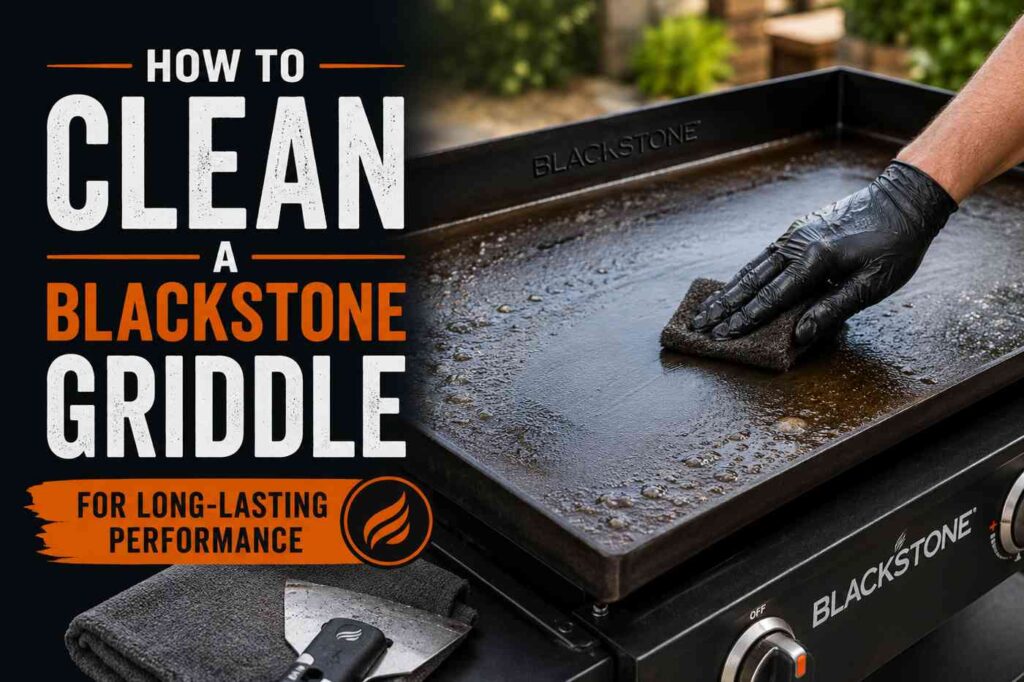
Proper cleaning keeps your griddle cooking efficiently, prolongs its lifespan, and ensures food tastes fresh every time. With the right techniques, even heavily used griddles can be restored to a near-new condition with minimal effort.
Essential Supplies for Cleaning a Blackstone Griddle
Having the right cleaning tools and products makes the process faster, safer, and more effective:
- Griddle scraper or spatula
- Grill brush with stiff bristles
- Paper towels or clean rags
- Vegetable oil or cooking spray
- Mild dish soap
Why Cleaning Your Blackstone Griddle Is Important
Cleaning a griddle isn’t just about appearance. Food residue and grease buildup can create hotspots, affect the non-stick surface, and even harbor bacteria if left unattended.
Routine maintenance prevents corrosion and carbon accumulation, ensuring that each cooking session delivers consistent heat and delicious results. Proper care also protects your investment and keeps your outdoor cooking setup hygienic and safe.
How to Clean a Blackstone Griddle
Cleaning a Blackstone griddle can seem daunting at first, but with consistent care and the right approach, it becomes straightforward. Below are seven effective methods explained step by step for user-friendly application.
1. Scrape After Each Use
Scraping is the simplest and most essential step in griddle maintenance.
- Let the griddle cool slightly but remain warm.
- Use a metal scraper or spatula to remove leftover food and grease.
- Work in small sections, pushing debris into the grease trap or a container.
- Wipe down the surface with paper towels to pick up loosened residue.
- Dispose of waste safely to avoid attracting pests.
Regular scraping prevents residue from burning onto the surface, making deeper cleaning easier.
2. Hot Water Cleaning for Daily Maintenance
Hot water is effective for light cleanup and prevents soap residue from affecting flavor.
- Turn the griddle on low and pour a small amount of warm water onto the surface.
- Let it steam for 1–2 minutes to loosen stuck-on food.
- Use a scraper or grill brush to gently remove debris.
- Wipe the surface with a clean rag or paper towel.
- Empty the grease trap and dry the surface thoroughly.
This method is perfect for everyday maintenance without stripping the seasoning layer.
3. Soap and Water for Deep Cleaning
Occasionally, a mild soap wash is safe and helps remove stubborn grease.
- Ensure the griddle is completely cool before cleaning.
- Mix warm water with a small amount of mild dish soap.
- Dip a sponge or soft cloth in the soapy water and scrub the griddle surface gently.
- Rinse thoroughly with clean water to remove all soap.
- Dry the surface completely to prevent rust formation.
Avoid harsh detergents, as they can damage the griddle’s seasoning.
4. Using a Grill Brush or Scrubbing Pad
For heavier grease and burnt-on food, a stiff grill brush or non-abrasive pad is effective.
- Preheat the griddle slightly to loosen debris.
- Scrub in a circular motion, focusing on stubborn spots.
- Use a scraper to remove the loosened residue.
- Wipe down with a damp cloth or paper towel.
- Finish with a light coat of oil to protect the surface.
This method maintains seasoning while removing persistent buildup.
5. Steaming Method for Tough Stains
Steaming helps lift stubborn food particles without damaging the surface.
- Pour a small amount of water onto the warm griddle.
- Cover with a lid or pan for 1–2 minutes to create steam.
- Scrape and wipe the surface once the residue softens.
- Repeat if necessary for heavy spots.
- Apply a thin layer of oil after cleaning to maintain the seasoning.
This method works well for areas where food has hardened after multiple uses.
6. Using Oil for Re-Seasoning
Maintaining the seasoning is critical for a non-stick griddle and rust prevention.
- After cleaning, ensure the surface is dry.
- Pour a small amount of vegetable oil or cooking spray onto the griddle.
- Spread evenly with a paper towel or cloth, covering all areas.
- Heat the griddle on medium for 10–15 minutes to polymerize the oil.
- Let it cool and wipe off any excess.
Regular re-seasoning protects the surface and improves cooking performance.
7. Preventive Cleaning and Maintenance Tips
Routine care reduces heavy cleaning time and keeps your griddle functioning optimally.
- Scrape after each use and clean with hot water.
- Avoid leaving acidic foods on the surface for long periods.
- Cover the griddle when not in use to prevent dust and moisture.
- Use minimal oil during cooking to reduce buildup.
- Store in a dry, sheltered area to prevent rust.
Consistent habits make deep cleaning quicker and extend the griddle’s lifespan.
Common Mistakes to Avoid
Using harsh chemicals, steel wool, or abrasive brushes can damage the griddle’s seasoning. Never leave the griddle wet after cleaning, as it can rust. Avoid acidic cleaners for long-term seasoning maintenance.
How Often to Clean a Blackstone Griddle
Daily scraping and hot water cleaning are recommended after each use. Deep cleaning and re-seasoning should be done monthly or after heavy cooking sessions.
Handling Rust on a Blackstone Griddle
Minor rust spots can be removed with steel wool or a grill brush, followed by re-seasoning. For severe rust, strip the surface, clean thoroughly, and reseason with oil to restore the non-stick layer.
Frequently Asked Questions
Can I use soap on a Blackstone griddle?
Yes, mild soap is safe occasionally, but frequent use may strip the seasoning.
How do I prevent food from sticking?
Ensure the griddle is properly seasoned and preheated before cooking. Use minimal oil or cooking spray.
Can I clean the griddle while hot?
Light scraping and hot water methods are safe, but avoid soap on a hot surface.
How do I remove heavy carbon buildup?
Soak with water and scrub with a grill brush or use the steam method for tough spots.
How often should I season my Blackstone griddle?
Re-season lightly after each cleaning and thoroughly once a month or as needed.
Final Words
Cleaning a Blackstone griddle is essential for flavor, hygiene, and longevity. With regular scraping, proper washing, and consistent seasoning, even heavily used griddles can perform like new.
Proper care not only protects the surface but also ensures every meal cooked on your griddle tastes fresh and delicious. A well-maintained griddle is key to enjoyable outdoor cooking for years.