
A dishwasher makes kitchen cleanup easier, but over time, it accumulates food debris, grease, and mineral deposits that can affect its performance and smell. Regular cleaning ensures your dishwasher runs efficiently, your dishes come out spotless, and odors are eliminated. Neglecting maintenance can lead to clogs, foul smells, and even costly repairs.
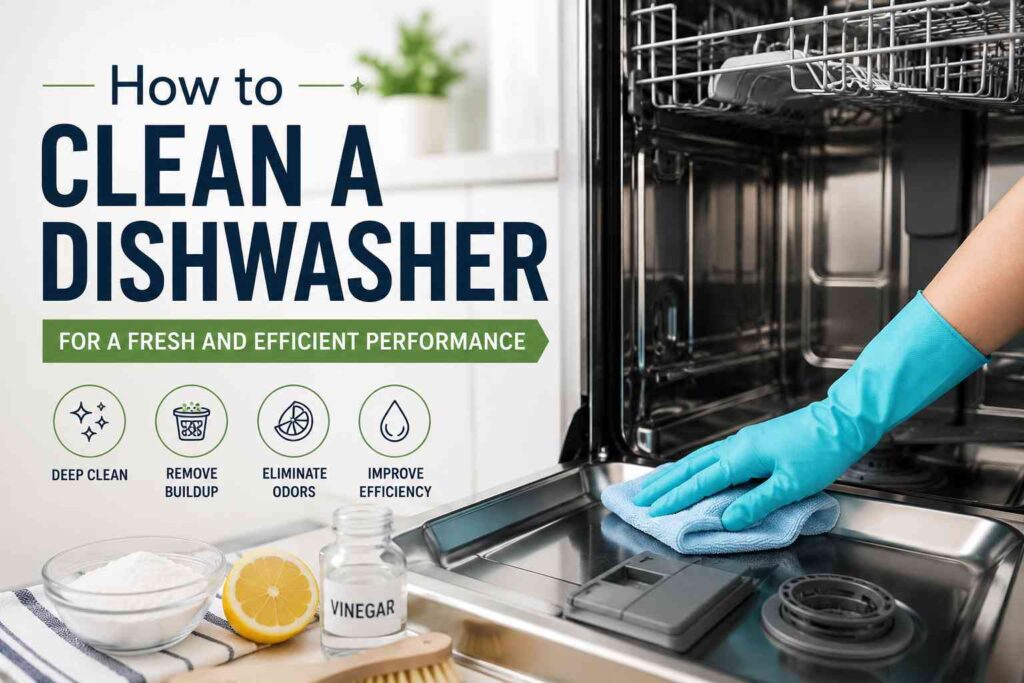
Knowing how to clean a dishwasher properly keeps it running like new, saves energy, and extends its lifespan. With a few household items and simple steps, you can refresh your appliance without professional help.
Helpful Items for Cleaning a Dishwasher
- Dishwasher Cleaner
- White Vinegar
- Baking Soda
- Toothbrush
- Microfiber Cloth
Why Regular Dishwasher Cleaning is Important
Dishwashers may seem self-cleaning, but food particles, soap scum, and hard water deposits build up over time. These residues can cause unpleasant odors, reduce washing efficiency, and even affect your dishes’ cleanliness. Regular maintenance prevents clogging, ensures proper drainage, and eliminates hidden bacteria. Understanding how to clean a dishwasher effectively helps maintain hygiene, improve appliance efficiency, and prolong its life.
How to Clean a Dishwasher
Cleaning a dishwasher involves removing debris, washing interior surfaces, and maintaining its filters and spray arms. Below are seven proven methods to deep-clean and maintain your dishwasher step by step.
1. Cleaning the Dishwasher Filter
The filter traps food particles and needs regular attention.
Step by Step Process
- Turn Off the Dishwasher
Ensure the appliance is powered off. - Locate the Filter
Most dishwashers have a removable filter at the bottom. - Remove the Filter
Follow the manufacturer’s instructions to take it out. - Rinse Under Water
Use warm running water to remove loose debris. - Scrub with a Brush
Use a soft brush or toothbrush to clean stuck-on particles. - Reinsert the Filter
Place the filter back securely. - Run a Quick Rinse
Run a short cycle to ensure everything is working properly.
Regular filter cleaning prevents clogs and improves dishwasher efficiency.
2. Vinegar Cleaning Method
White vinegar helps remove grease, odors, and mineral buildup.
Step by Step Process
- Empty the Dishwasher
Remove all dishes and racks if possible. - Place a Cup of Vinegar
Fill a dishwasher-safe cup with white vinegar and place it on the top rack. - Run Hot Water Cycle
Run a complete cycle using the hottest water setting. - Wipe Down Surfaces
After the cycle, use a microfiber cloth to wipe the interior. - Check Spray Arms
Ensure no vinegar residue blocks spray holes. - Repeat Monthly
Use this method monthly for maintenance. - Optional Baking Soda Rinse
Add baking soda to a short cycle for extra freshness.
Vinegar dissolves grease and sanitizes the dishwasher naturally.
3. Baking Soda Deep Cleaning
Baking soda helps deodorize and remove stubborn stains.
Step by Step Process
- Sprinkle Baking Soda
Place a cup of baking soda on the bottom of the empty dishwasher. - Run Short Hot Cycle
Run a 15–20 minute cycle with hot water. - Wipe Interior
Remove loosened residue with a cloth. - Check Rubber Seals
Clean seals to prevent mold buildup. - Repeat if Needed
Use this method for tough odors or discoloration. - Combine with Vinegar
Use baking soda after vinegar for maximum cleaning. - Dry Thoroughly
Leave the door open to air dry completely.
Baking soda is gentle, non-toxic, and highly effective.
4. Cleaning Spray Arms
Clogged spray arms affect cleaning efficiency.
Step by Step Process
- Remove Spray Arms
Follow manufacturer instructions to detach top and bottom arms. - Inspect Holes
Check for food particles and mineral buildup. - Use Toothpick or Brush
Clear any blocked holes carefully. - Rinse Thoroughly
Run water through the arms to flush remaining debris. - Reattach Spray Arms
Ensure arms spin freely. - Run Empty Cycle
Check for proper water circulation. - Repeat Regularly
Inspect every few months to prevent buildup.
Clean spray arms ensure proper water pressure and clean dishes.
5. Cleaning Door and Seals
Food particles and moisture accumulate around seals and edges.
Step by Step Process
- Inspect Rubber Gasket
Look for debris, mold, or mildew. - Use Warm Soapy Water
Apply mild detergent with a soft cloth. - Scrub Gently
Focus on grooves and corners to remove buildup. - Rinse with Clean Cloth
Remove soap residue completely. - Check for Damage
Ensure the seal is intact to prevent leaks. - Dry with Microfiber Cloth
Wipe all areas to prevent mold growth. - Repeat Monthly
Regular maintenance prevents odor and water leaks.
Clean seals maintain a tight closure and prevent unwanted smells.
6. Using Lemon for Fresh Smell
Lemon removes odors and leaves a fresh scent.
Step by Step Process
- Slice a Lemon
Cut a lemon into halves. - Place on Top Rack
Put the lemon halves in a dishwasher-safe bowl. - Run Hot Cycle
Run a full hot water cycle. - Wipe Down Interior
Use a cloth to remove loosened debris. - Check for Residue
Ensure no lemon pulp clogs spray arms. - Repeat as Needed
Use lemon monthly for freshness. - Optional Lemon Baking Soda Combo
Add baking soda to boost cleaning power.
Lemon works naturally to deodorize and sanitize the dishwasher.
7. Commercial Dishwasher Cleaner Method
Ideal for heavily used or very dirty dishwashers.
Step by Step Process
- Choose Product
Select a dishwasher cleaning tablet or powder. - Follow Instructions
Read the package carefully before use. - Empty Dishwasher
Remove dishes and racks. - Place Cleaner
Follow manufacturer’s directions to add the cleaner. - Run Cleaning Cycle
Use hot water for best results. - Wipe Interior
Remove any remaining residue. - Maintain Regularly
Use every few months for deep cleaning.
Commercial cleaners provide quick, thorough results for tough buildup.
Tips to Maintain a Dishwasher
Run Hot Water Cycle Weekly
Prevents buildup and keeps the interior fresh.
Remove Food Debris Daily
Scrape plates to reduce food accumulation.
Check Filters Regularly
Ensure filters are clean for proper drainage.
Avoid Overloading
Proper spacing improves cleaning efficiency.
Use Vinegar or Baking Soda Monthly
Maintains cleanliness and prevents odors naturally.
FAQ
How often should a dishwasher be cleaned?
Monthly cleaning keeps it performing optimally.
Can vinegar damage dishwasher parts?
No, when used properly, vinegar is safe for most dishwashers.
What if the dishwasher smells bad?
Clean filters, seals, and run a vinegar or baking soda cycle.
Can lemon replace commercial cleaners?
Yes, for light maintenance, lemon is effective and natural.
Do I need to remove racks when cleaning?
Removing racks allows better access to filters and interior surfaces.
How do I prevent mold in dishwasher?
Wipe seals dry and run monthly vinegar or baking soda cycles.
Final Words
A clean dishwasher ensures sparkling dishes, a fresh-smelling kitchen, and optimal appliance performance. Regular maintenance prevents buildup, odors, and mechanical issues.
By following these seven methods and incorporating simple maintenance habits, your dishwasher will stay efficient, hygienic, and long-lasting, making every wash cycle more effective and hassle-free.