
Cast iron skillets are a kitchen essential, prized for their durability, heat retention, and ability to develop a natural non-stick surface. Proper cleaning ensures your skillet remains rust-free, seasoned, and ready for every meal.
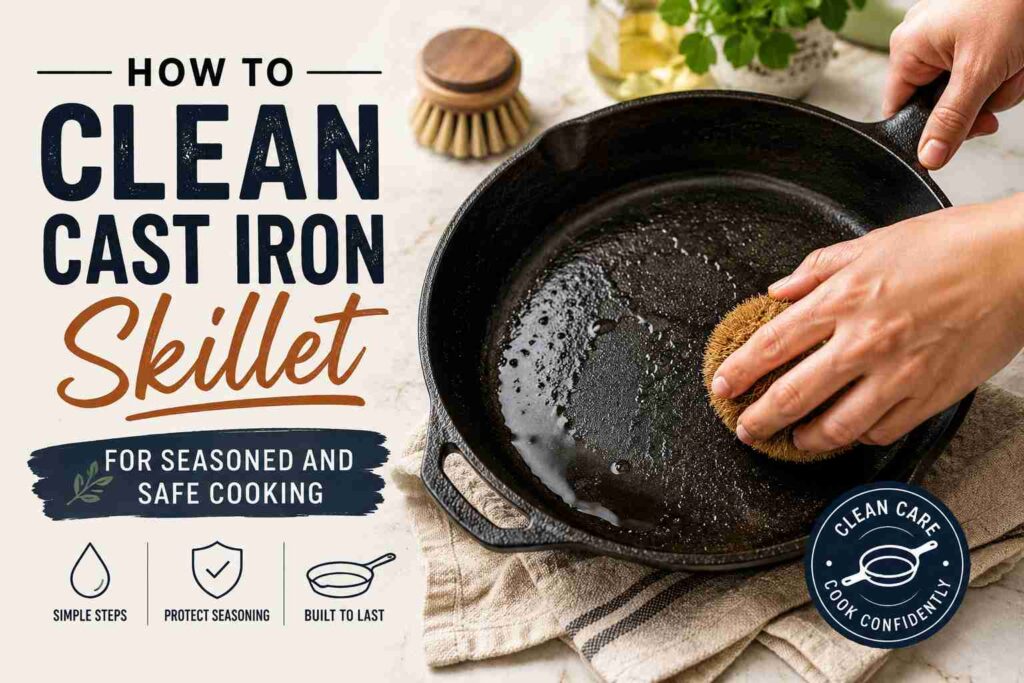
With the right techniques, cleaning a cast iron skillet becomes simple and prevents damage to its seasoning. Regular care can make your skillet last for decades while keeping it safe and easy to use.
Items You Might Need
- Cast iron cleaner brush
- Chainmail scrubber
- Mild dish soap
- Cooking oil for seasoning
- Silicone handle cover
How to Clean Cast Iron Skillet
Cleaning cast iron requires special care to preserve the seasoning while removing food residues. Here are seven detailed methods to keep your skillet in top condition.
1. Cleaning with Hot Water and Brush
Step 1: Allow the skillet to cool slightly but keep it warm.
Step 2: Rinse the skillet under hot running water.
Step 3: Use a stiff brush to remove food particles gently. Avoid metal scouring pads as they can strip the seasoning.
Step 4: For stuck-on bits, add coarse salt as a scrub to loosen debris.
Step 5: Rinse thoroughly with hot water.
Step 6: Dry immediately with a clean towel to prevent rusting.
Step 7: Apply a thin layer of oil after drying to maintain the seasoning.
This is the simplest daily cleaning method for lightly soiled skillets.
2. Using Mild Dish Soap
Step 1: Cast iron can tolerate mild soap occasionally without harming the seasoning.
Step 2: Add a few drops of dish soap to warm water in the skillet.
Step 3: Scrub gently with a non-abrasive brush or sponge.
Step 4: Rinse thoroughly with hot water to remove soap residue.
Step 5: Dry completely with a towel or by heating the skillet on the stove for a few minutes.
Step 6: Rub a thin layer of cooking oil to restore the surface.
Soap can help remove grease or sticky residues that water alone cannot handle.
3. Removing Stubborn Food with Salt
Step 1: Heat the skillet slightly to make stuck food easier to remove.
Step 2: Pour coarse kosher salt into the skillet.
Step 3: Use a paper towel or scrub brush to rub the salt across the surface in circular motions.
Step 4: The salt acts as an abrasive to lift food without damaging the seasoning.
Step 5: Rinse the skillet with warm water.
Step 6: Dry thoroughly and apply a light layer of oil.
This method is perfect for sticky or baked-on food without harsh chemicals.
4. Boiling Water Method
Step 1: Fill the skillet with enough water to cover stuck-on bits.
Step 2: Place it on the stove and bring to a gentle boil.
Step 3: Allow the water to simmer for a few minutes to loosen food particles.
Step 4: Use a spatula or brush to remove the loosened debris.
Step 5: Pour out the water and dry immediately.
Step 6: Re-season the skillet lightly with oil if needed.
Boiling water softens residue naturally and is ideal for deep cleaning without scrubbing too hard.
5. Using a Chainmail Scrubber
Step 1: Wet the skillet with warm water.
Step 2: Use a chainmail scrubber to scrub away stubborn food particles.
Step 3: Work in circular motions to clean thoroughly without damaging seasoning.
Step 4: Rinse the skillet with hot water.
Step 5: Dry immediately with a towel.
Step 6: Apply a thin layer of oil to restore the skillet’s protective surface.
Chainmail scrubbers are highly effective, gentle on seasoning, and reusable for long-term use.
6. Re-Seasoning the Skillet
Step 1: Preheat your oven to 375°F (190°C).
Step 2: Apply a thin layer of cooking oil (vegetable, flaxseed, or canola) to the skillet.
Step 3: Wipe off excess oil with a paper towel to avoid sticky buildup.
Step 4: Place the skillet upside down on the oven rack with foil underneath to catch drips.
Step 5: Bake for one hour.
Step 6: Allow the skillet to cool completely in the oven before storing.
Regular re-seasoning restores non-stick properties and prevents rust, keeping your skillet in top condition.
7. Cleaning After Cooking Acidic Foods
Step 1: Acidic foods like tomatoes or vinegar can strip seasoning, so clean promptly.
Step 2: Rinse the skillet with warm water immediately after cooking.
Step 3: Use a mild brush to remove any residue.
Step 4: Dry completely to avoid rusting.
Step 5: Apply a thin coat of oil to restore the protective layer.
Quick cleaning after acidic foods prevents damage and maintains the skillet’s longevity.
Tips for Maintaining Cast Iron Skillets
- Always dry immediately to prevent rust.
- Never soak the skillet in water for long periods.
- Avoid dishwasher use as it strips seasoning.
- Apply a thin layer of oil after each cleaning.
- Store in a dry, ventilated area.
- Use wooden or silicone utensils to avoid scratches.
- Periodically check for rust spots and address immediately.
FAQ
Can I use soap on a cast iron skillet?
Yes, mild soap is safe occasionally and won’t ruin seasoning if rinsed and dried properly.
How do I remove rust from a cast iron skillet?
Use coarse salt, a brush, or steel wool, then re-season with oil.
Can I put a cast iron skillet in the dishwasher?
No. Dishwashers remove seasoning and may cause rust.
How often should I season my cast iron skillet?
Seasoning after every few uses or when the surface looks dry or dull is ideal.
Is it safe to use metal utensils?
Occasionally yes, but wooden or silicone utensils are better to maintain seasoning.
Final Words
Proper cleaning and maintenance keep cast iron skillets non-stick, rust-free, and ready for generations of cooking. Gentle cleaning methods, occasional re-seasoning, and careful handling ensure longevity and performance.
By following these step-by-step methods, your cast iron skillet will remain a reliable, versatile, and essential kitchen tool. With consistent care, it will deliver perfectly cooked meals every time.