
Closets can quickly become cluttered, dusty, and disorganized. Clothes, shoes, accessories, and miscellaneous items accumulate over time, making it hard to find anything and creating an unpleasant environment.
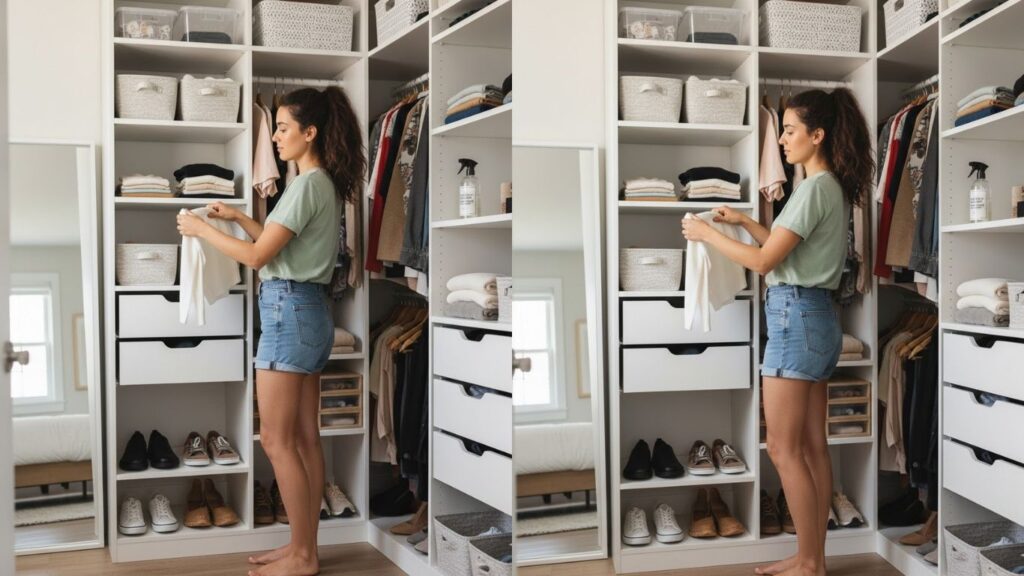
Cleaning and organizing your closet regularly not only improves space utilization but also extends the life of clothes and accessories. A fresh, well-maintained closet also contributes to a calmer and more efficient daily routine.
Items You Might Need
- Microfiber cloths
- Mild all-purpose cleaner
- Vacuum cleaner with brush attachment
- Storage bins or baskets
- Closet deodorizer or sachets
Why Cleaning Closets Is Important
Closets are prone to dust, mold, and odors, especially in humid climates. Clothes that sit in unclean spaces can absorb dust and develop musty smells, while shoes and accessories can attract dirt and bacteria.
A clean closet ensures that items stay fresh, organized, and easily accessible. It also helps prevent damage to fabrics, prolongs the life of shoes, and makes finding daily essentials faster and stress-free.
How to Clean Closet
Cleaning a closet involves decluttering, dusting, and organizing strategically. Here are seven effective methods with step-by-step guidance for a spotless and functional closet.
1. Declutter and Sort Items
Step 1: Empty your closet completely to see all items.
Step 2: Sort items into categories: keep, donate, repair, or discard.
Step 3: Check clothing for stains, damage, or wear.
Step 4: Examine shoes for dirt, damage, or wear.
Step 5: Consider the frequency of use for each item.
Step 6: Place unwanted items in donation or disposal bags.
Step 7: Keep frequently used items accessible and seasonal items stored neatly.
Decluttering creates space and makes cleaning easier.
2. Dusting Shelves and Surfaces
Step 1: Use a microfiber cloth or duster to remove dust.
Step 2: Start from the top shelves and work downwards.
Step 3: Wipe corners, edges, and hidden areas where dust collects.
Step 4: Remove any cobwebs from ceiling corners.
Step 5: Dust hanging rods and closet doors.
Step 6: Shake out fabric items like handbags to remove dust.
Step 7: Repeat periodically to prevent dust buildup.
Dusting protects clothes and keeps the closet looking neat.
3. Vacuuming the Floor and Corners
Step 1: Use a vacuum cleaner with a brush attachment.
Step 2: Vacuum corners, floor edges, and behind storage bins.
Step 3: Clean under hanging clothes and shoes.
Step 4: Remove any dirt, hair, or crumbs.
Step 5: For carpeted closets, consider using a carpet freshener.
Step 6: Vacuum the floor after dusting to catch settled dust.
Step 7: Repeat weekly to maintain cleanliness.
Vacuuming reduces dust, allergens, and odors in your closet.
4. Wiping and Sanitizing Surfaces
Step 1: Prepare a mild all-purpose cleaner.
Step 2: Dampen a microfiber cloth and wipe shelves, rods, and drawers.
Step 3: Pay attention to sticky or stained areas.
Step 4: Clean handles, knobs, and closet doors.
Step 5: Dry surfaces with a clean cloth to prevent moisture damage.
Step 6: For wooden shelves, use a suitable polish.
Step 7: Repeat monthly or as needed.
Wiping removes grime and prevents long-term damage to closet surfaces.
5. Organizing Clothes Strategically
Step 1: Sort clothes by type, season, or color for easy access.
Step 2: Use uniform hangers to save space and maintain shape.
Step 3: Hang delicate fabrics separately to avoid snags.
Step 4: Fold heavy items like sweaters and stack neatly.
Step 5: Use drawer organizers for small accessories.
Step 6: Label shelves or bins if needed for quick identification.
Step 7: Rotate seasonal items to keep current wardrobe accessible.
Proper organization maximizes space and keeps clothes in good condition.
6. Cleaning and Organizing Shoes
Step 1: Remove all shoes from shelves or racks.
Step 2: Wipe each pair with a damp cloth.
Step 3: For sneakers or boots, use a brush to remove dirt.
Step 4: Repair or discard damaged shoes.
Step 5: Place shoes in racks, bins, or clear boxes for visibility.
Step 6: Store off-season shoes in labeled containers.
Step 7: Apply shoe deodorizer to prevent odors.
Proper shoe care preserves footwear and keeps the closet hygienic.
7. Adding Fresheners and Final Touches
Step 1: Place closet deodorizer, scented sachets, or cedar blocks inside.
Step 2: Ensure proper ventilation by keeping doors slightly open occasionally.
Step 3: Adjust lighting to highlight clean and organized areas.
Step 4: Check for mold or mildew, especially in humid spaces.
Step 5: Replace or wash cloth bins or storage baskets.
Step 6: Maintain a small laundry bin to avoid dirty clothes piling up.
Step 7: Inspect periodically to maintain a tidy, fresh closet.
Fresheners and final touches maintain cleanliness and prevent odors.
Tips for Maintaining a Clean Closet
- Declutter regularly to avoid accumulation.
- Store seasonal items in labeled containers.
- Use uniform hangers for a neat look.
- Keep floors free of clutter for easy cleaning.
- Dust and vacuum weekly.
- Avoid overloading shelves and rods.
- Inspect for pests or moisture regularly.
Common Closet Cleaning Mistakes
- Leaving clutter behind instead of decluttering.
- Ignoring dust and dirt accumulation.
- Overstuffing shelves and rods.
- Using harsh chemicals on wooden surfaces.
- Skipping shoe and accessory maintenance.
- Forgetting to rotate seasonal items.
Avoiding these mistakes preserves closet functionality and cleanliness.
FAQ
How often should I clean my closet?
Deep cleaning is recommended every 3–6 months, while dusting and vacuuming can be done weekly.
Can I use bleach on closet shelves?
No, mild cleaners are best; bleach can damage surfaces and produce strong fumes.
How do I prevent musty odors?
Use deodorizers, ensure proper ventilation, and avoid storing damp clothes.
Should I fold or hang all clothes?
Fold heavy sweaters and delicate items; hang shirts, dresses, and jackets for best results.
How can I organize a small closet effectively?
Use bins, clear boxes, hanging organizers, and vertical space efficiently.
Final Words
A clean and organized closet improves daily routines, prolongs clothing life, and creates a fresh, stress-free space. Proper cleaning and organization techniques prevent dust, odors, and clutter.
By following these step-by-step methods, your closet remains tidy, functional, and visually appealing, making it easier to maintain over time.