
A humidifier adds moisture to indoor air, helping reduce dryness, irritation, and discomfort. However, without proper cleaning, it can quickly become a breeding ground for mold, bacteria, and mineral buildup that may affect air quality.
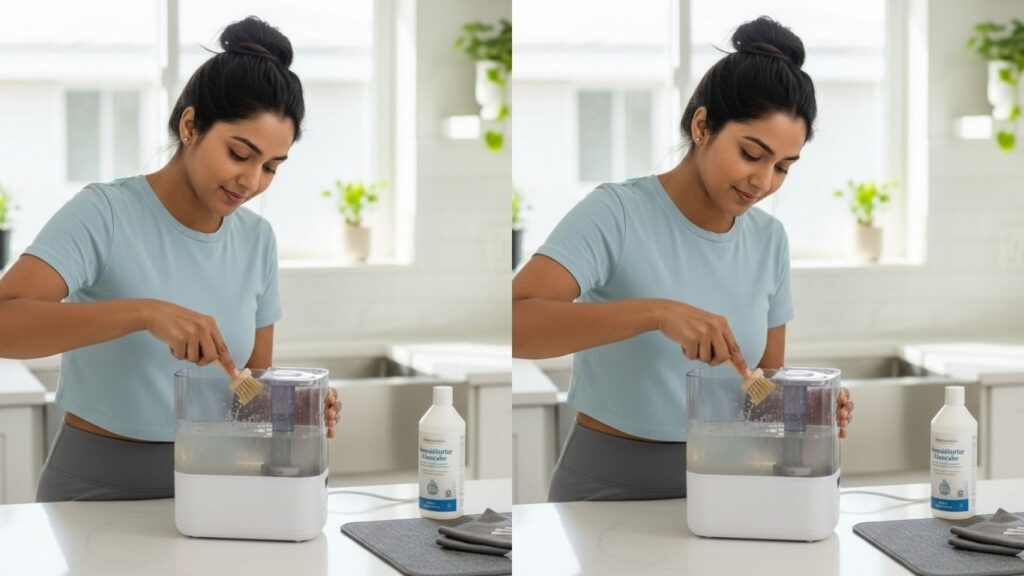
Keeping your humidifier clean ensures it works efficiently and safely. This detailed guide explains practical, easy, and effective cleaning methods you can follow at home to maintain a healthy environment and extend the life of your device.
Essential Items to Keep Ready
- White vinegar
- Hydrogen peroxide
- Soft-bristle brush
- Microfiber cloth
- Distilled water
Why Cleaning Your Humidifier Is Important
Humidifiers hold standing water, which creates the perfect environment for bacteria, mold, and mineral deposits. If not cleaned regularly, these contaminants can be released into the air.
Regular cleaning helps:
- Improve indoor air quality
- Prevent mold growth
- Reduce white dust buildup
- Extend the unit’s lifespan
- Maintain efficient performance
Understanding proper cleaning methods protects both your health and your device.
How to Clean a Humidifier
Before starting any cleaning method, always unplug the humidifier and disassemble removable parts. Check your manual for specific instructions related to your model.
Empty any remaining water daily and allow the tank to dry when not in use. Now let’s explore detailed cleaning methods step by step.
1. Daily Rinse and Dry Method
Daily maintenance prevents heavy buildup.
Step-by-Step Instructions
- Turn off and unplug the humidifier.
- Remove the water tank.
- Empty any remaining water.
- Rinse the tank with clean water.
- Shake gently to remove excess moisture.
- Wipe dry with a microfiber cloth.
- Leave the tank open to air dry.
This simple routine reduces bacterial growth.
2. Vinegar Deep Cleaning Method
Vinegar removes mineral deposits and scale buildup.
Step-by-Step Instructions
- Fill the water tank halfway with white vinegar.
- Add warm water to fill the rest.
- Let it sit for 30–60 minutes.
- Pour some vinegar solution into the base reservoir.
- Use a soft brush to scrub mineral buildup.
- Rinse thoroughly with clean water.
- Dry completely before reassembling.
This method is ideal for weekly cleaning.
3. Hydrogen Peroxide Disinfection
Hydrogen peroxide helps eliminate bacteria and mold.
Step-by-Step Instructions
- Pour 3% hydrogen peroxide into the tank.
- Let it sit for 20 minutes.
- Swirl gently to cover all surfaces.
- Scrub lightly if needed.
- Rinse thoroughly multiple times.
- Allow parts to air dry completely.
This method disinfects without harsh chemicals.
4. Removing Hard Water Scale
Mineral buildup appears as white crusty deposits.
Step-by-Step Instructions
- Add white vinegar directly to affected areas.
- Let sit for 20–30 minutes.
- Use a soft-bristle brush to loosen buildup.
- Wipe clean with a damp cloth.
- Rinse thoroughly.
- Dry before use.
Using distilled water daily reduces scale formation.
5. Cleaning Humidifier Filters
Some humidifiers contain replaceable filters.
Step-by-Step Instructions
- Remove the filter carefully.
- Check manufacturer guidelines.
- Rinse under cool running water if washable.
- Do not use soap unless allowed.
- Allow to air dry completely.
- Replace if heavily discolored or damaged.
Replace filters as recommended.
6. Full Disassembly Cleaning
Monthly deep cleaning ensures long-term performance.
Step-by-Step Instructions
- Unplug the device.
- Disassemble all removable components.
- Soak tank and base in vinegar solution.
- Scrub corners and crevices gently.
- Rinse thoroughly.
- Disinfect with hydrogen peroxide if needed.
- Dry completely before reassembling.
This prevents hidden mold growth.
7. Preventative Maintenance Routine
Prevention reduces the need for heavy cleaning.
Step-by-Step Instructions
- Use distilled water instead of tap water.
- Empty tank daily.
- Dry interior surfaces regularly.
- Avoid leaving water stagnant.
- Clean weekly with vinegar.
- Store dry when not in use.
Preventative care keeps your humidifier safe and efficient.
How Often Should You Clean a Humidifier?
- Daily: Empty and rinse
- Weekly: Vinegar cleaning
- Monthly: Deep disinfection
- As needed: Remove scale and buildup
Consistency ensures healthy air quality.
Common Mistakes to Avoid
- Ignoring daily water changes
- Using harsh bleach regularly
- Not drying after cleaning
- Skipping filter replacement
- Overfilling beyond capacity
Avoiding these mistakes extends the lifespan of your unit.
Signs Your Humidifier Needs Cleaning
- White dust in the room
- Musty odor
- Visible slime or buildup
- Reduced mist output
- Strange noises
Address these signs immediately.
Benefits of Regular Humidifier Maintenance
- Cleaner indoor air
- Reduced allergy triggers
- Longer appliance lifespan
- Better humidity control
- Lower maintenance costs
Clean devices function more efficiently.
Frequently Asked Questions
How often should I clean my humidifier?
Rinse daily and deep clean weekly.
Can I use bleach?
Occasionally for heavy mold, but rinse thoroughly.
Why is there white dust?
Minerals from tap water cause residue. Use distilled water.
Can I run vinegar through the humidifier?
Yes, but rinse thoroughly afterward.
Should I leave water in overnight?
Empty unused water daily to prevent bacteria growth.
When should I replace filters?
Follow manufacturer guidelines or replace when discolored.
Final Words
A clean humidifier ensures healthier indoor air and better device performance. Regular rinsing, deep cleaning, and preventative care prevent harmful buildup and extend the lifespan of your appliance.
By following these seven detailed methods and maintenance habits, you can enjoy clean, comfortable air while keeping your humidifier working efficiently year-round.