
Timberland boots are known for their rugged durability, premium materials, and timeless style. Whether worn for work, outdoor adventures, or everyday fashion, they face dirt, mud, salt, and stains that can quickly affect their appearance. Cleaning Timberland boots properly helps maintain their color, texture, and overall lifespan.
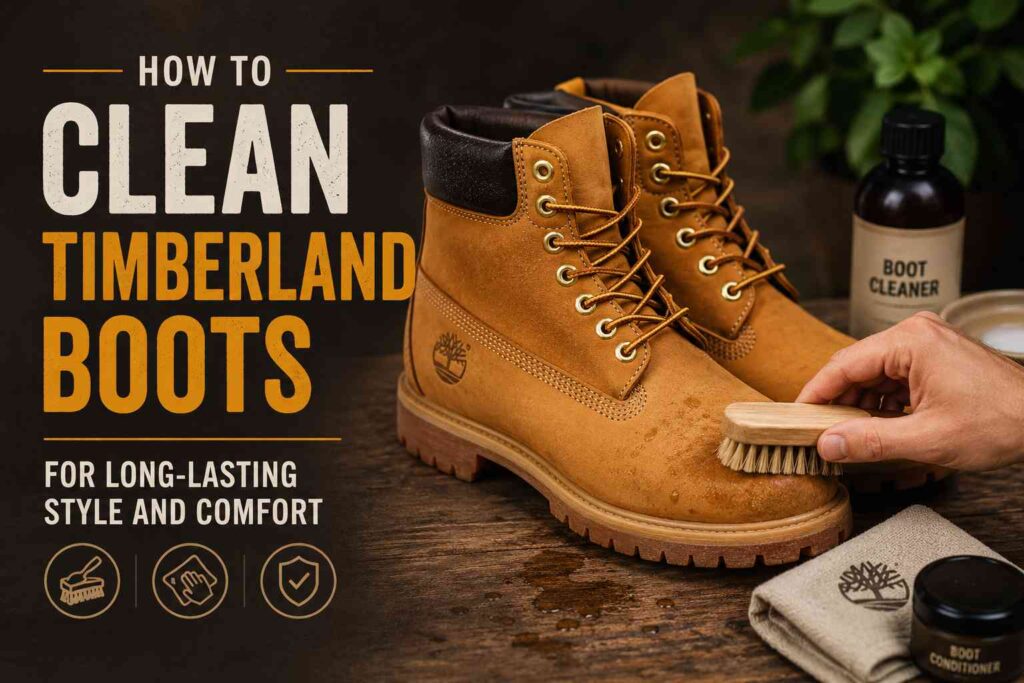
Many people damage their boots by using water incorrectly or applying harsh cleaners. With the right methods, Timberland boots can be cleaned safely and kept looking fresh for years. This guide explains simple, effective, and material-safe ways to clean them at home.
Regular care not only improves how Timberland boots look but also keeps them comfortable and supportive. Dirt buildup can stiffen leather and weaken stitching over time. Gentle, consistent cleaning makes a noticeable difference.
This complete guide walks through everything step by step in clear, user-friendly language so anyone can confidently clean their Timberland boots without fear of damage.
Helpful Items to Keep Ready
- Timberland Boots
- Soft Bristle Brush
- Nubuck Cleaner
- White Vinegar
- Microfiber Cloth
Understanding Timberland Boots and Their Materials
Timberland boots are commonly made from nubuck leather, full-grain leather, suede, and durable rubber soles. Nubuck, the most popular Timberland material, has a soft, velvety surface that looks great but requires special care. Unlike smooth leather, nubuck can absorb water and stains easily if cleaned incorrectly.
Another important factor is how Timberland boots are used. Outdoor wear exposes them to mud, rain, dust, and road salt. Winter use often brings salt stains, while daily wear leads to scuffs and darkened toe areas. Each type of dirt needs a slightly different cleaning approach.
Understanding the material and condition of your boots helps you choose the safest and most effective cleaning method. The seven methods below cover everything from light dust removal to deep stain treatment and long-term care.
How to Clean Timberland Boots
Cleaning Timberland boots correctly means removing surface dirt first, treating stains gently, and restoring the texture without soaking the leather. These seven methods provide step-by-step solutions for every situation.
1. Basic Dry Cleaning for Everyday Dirt
This method is ideal for regular maintenance and light dirt.
Step by Step
- Remove Laces
Take out the laces to access all areas of the boot. - Let Boots Dry Completely
Never clean Timberland boots while wet or muddy. - Use a Soft Bristle Brush
Brush gently in one direction to lift dirt and dust. - Focus on Seams and Creases
Dirt hides where panels meet. - Brush Soles Separately
Use firmer pressure on rubber soles. - Check for Remaining Spots
Lightly re-brush darker areas. - Re-lace After Cleaning
Only once boots look clean and dry.
Dry brushing prevents dirt from embedding into nubuck fibers.
2. Nubuck Cleaner Method for Overall Cleaning
This method works best for general cleaning and mild stains.
Step by Step
- Remove Loose Dirt First
Brush boots gently before applying cleaner. - Apply Nubuck Cleaner to Cloth
Never pour cleaner directly onto boots. - Clean in Small Sections
Use circular, gentle motions. - Avoid Over-Wetting
Nubuck should be damp, not soaked. - Work on Stained Areas Carefully
Apply slightly more pressure if needed. - Let Boots Air Dry
Keep away from heat sources. - Brush After Drying
Restore the soft texture.
This method refreshes color and texture safely.
3. Vinegar Method for Salt and Water Stains
Salt stains are common in colder months and need special care.
Step by Step
- Mix Vinegar and Water
Use equal parts of each. - Dampen a Clean Cloth
Cloth should not drip. - Blot Stained Areas Gently
Do not rub aggressively. - Allow Stain to Lift
White residue will fade as it dries. - Repeat if Needed
Some stains require two passes. - Let Boots Dry Naturally
Avoid sunlight and heaters. - Brush to Restore Texture
Once fully dry.
This method removes salt without discoloring leather.
4. Spot Cleaning Tough Stains
Some stains require focused attention rather than full cleaning.
Step by Step
- Identify the Stain
Oil, mud, or food stains behave differently. - Blot Fresh Stains Immediately
Use a dry cloth for oils. - Apply Cleaner Lightly
Use nubuck-safe product. - Work from Outside In
Prevent spreading the stain. - Use Gentle Pressure
Avoid forceful scrubbing. - Allow to Dry Fully
Patience prevents damage. - Brush to Blend Area
Even out appearance.
Spot cleaning protects the rest of the boot.
5. Deep Cleaning Heavily Soiled Timberland Boots
For boots exposed to mud or heavy outdoor use.
Step by Step
- Remove Thick Mud First
Let mud dry, then brush off. - Prepare Mild Cleaning Solution
Use water and nubuck cleaner. - Dampen Cloth Lightly
Avoid soaking the leather. - Clean in Sections
Focus on dirtiest areas first. - Rinse Cloth Frequently
Prevent dirt redistribution. - Air Dry Completely
Stuff boots with paper to hold shape. - Brush and Restore Finish
Bring back even texture.
Deep cleaning should be done only when necessary.
6. Cleaning Timberland Boot Soles
Soles collect grime that affects overall appearance.
Step by Step
- Remove Loose Dirt
Tap soles together gently. - Use Stiff Brush
Focus on grooves and edges. - Apply Mild Soap Solution
Only on rubber areas. - Scrub Thoroughly
Remove dark buildup. - Wipe with Damp Cloth
Remove soap residue. - Dry Completely
Prevent moisture transfer to leather. - Inspect for Remaining Dirt
Repeat if needed.
Clean soles make boots look almost new.
7. Protecting and Maintaining Timberland Boots
Protection keeps boots cleaner longer.
Step by Step
- Ensure Boots Are Fully Clean
No dirt or moisture remains. - Apply Nubuck Protector Spray
Use even, light coats. - Let Dry Completely
Follow product drying time. - Brush Lightly After Drying
Maintain texture. - Clean After Every Few Wears
Prevent heavy buildup. - Store in Dry Area
Avoid humidity. - Rotate Boots When Possible
Rest extends lifespan.
Preventive care reduces future cleaning effort.
Common Mistakes to Avoid
Using Too Much Water
Excess moisture damages nubuck fibers.
Scrubbing Too Hard
Aggressive brushing causes discoloration.
Drying Near Heat
Heat stiffens leather and causes cracking.
Ignoring Salt Stains
Salt weakens leather if left untreated.
Maintenance Tips for Long-Term Care
Brush Regularly
Keeps dirt from settling in fibers.
Clean Stains Quickly
Fresh stains are easier to remove.
Use Protection Spray
Adds a barrier against moisture and dirt.
Store Properly
Keep boots away from damp spaces.
FAQ
Can Timberland boots be washed with water?
Only minimal moisture should be used, especially on nubuck.
How often should Timberland boots be cleaned?
Light brushing after several wears and deeper cleaning when visibly dirty.
Can soap damage Timberland boots?
Strong soaps can damage leather; nubuck-safe cleaners are best.
How do I remove salt stains from Timberland boots?
A vinegar and water solution works effectively.
Can Timberland boots be dried in the sun?
Air drying in shade is safer to prevent fading.
Should Timberland boots be conditioned?
Conditioning is useful for smooth leather, not nubuck.
Final Words
Timberland boots are built to last, but proper care keeps them looking and feeling their best. Gentle cleaning methods protect the material while removing dirt, stains, and salt buildup.
By following these step-by-step techniques, Timberland boots remain stylish, comfortable, and durable for years. Consistent care turns a good pair of boots into a long-term companion for every season.