
A stained toilet bowl can make even the cleanest bathroom feel unhygienic and unpleasant. Over time, mineral deposits, hard water, rust, and bacteria can leave stubborn marks that regular flushing won’t remove.
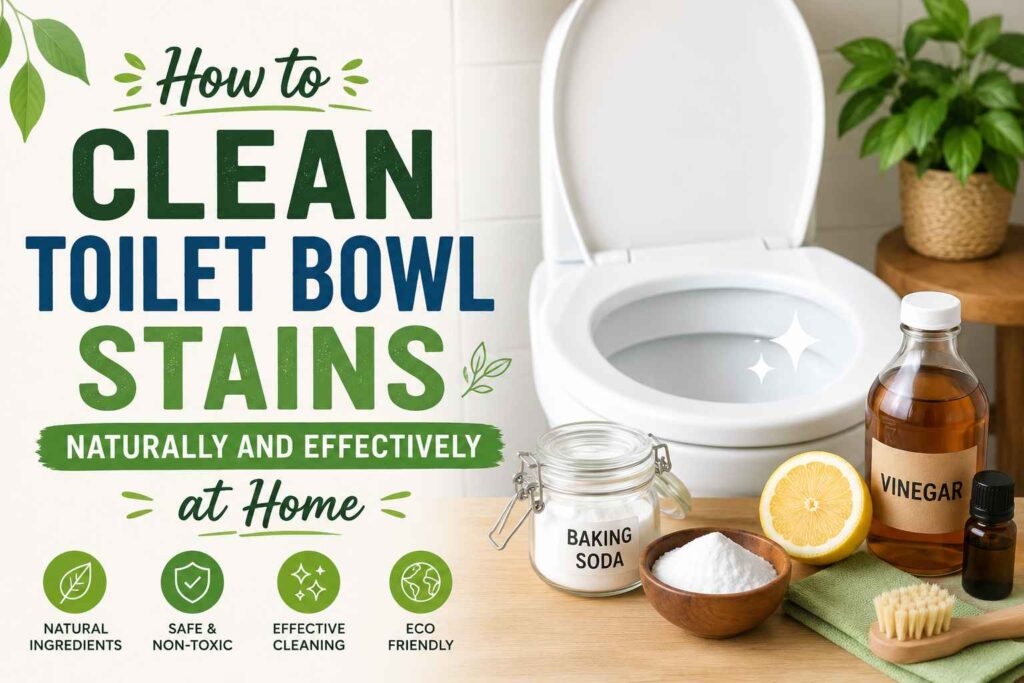
The good news is that you don’t need harsh chemicals or expensive services to fix this problem. With the right methods and a little consistency, you can restore your toilet bowl to a fresh, spotless condition and keep it that way for the long term.
Helpful Cleaning Supplies to Keep on Hand
Before you begin, having the right items nearby makes the process easier and more effective. Here are a few useful products commonly used for toilet bowl cleaning:
- Toilet bowl cleaner
- Baking soda
- White vinegar
- Pumice stone
- Toilet bowl brush
Understanding Toilet Bowl Stains and Why They Appear
Toilet bowl stains don’t appear overnight. They slowly build up due to water quality, usage habits, and cleaning routines. Understanding the cause of stains helps you choose the most effective cleaning method and prevent them in the future.
Hard water stains are caused by minerals like calcium and magnesium that cling to porcelain surfaces. Rust stains often come from old pipes or metal parts in the toilet tank. Organic stains may result from bacteria, mold, or mildew, especially in humid bathrooms.
Ignoring early signs allows stains to harden and darken, making them harder to remove later. That’s why routine maintenance is just as important as deep cleaning.
How to Clean Toilet Bowl Stains
Cleaning toilet bowl stains doesn’t have to be complicated. The methods below range from gentle natural solutions to more intensive techniques for tough buildup. Each approach is explained step by step so you can follow along with confidence.
1. Baking Soda and Vinegar Method
This is one of the most popular and gentle ways to clean toilet bowl stains. It works especially well for light to moderate mineral and organic stains.
First, flush the toilet to lower the water level in the bowl. Sprinkle baking soda generously over the stained areas, making sure it sticks to the sides. Next, slowly pour white vinegar over the baking soda. You’ll notice fizzing, which helps loosen grime.
Let the mixture sit for at least 20 to 30 minutes. For tougher stains, leave it for an hour. After waiting, scrub the bowl thoroughly with a toilet brush, focusing on stained areas. Flush to rinse away residue and reveal a cleaner surface.
2. Commercial Toilet Bowl Cleaner Technique
Sometimes stains are too stubborn for natural solutions alone. In those cases, a commercial toilet bowl cleaner can be effective when used properly.
Start by flushing the toilet to wet the bowl. Apply the cleaner evenly under the rim and around stained areas. Close the lid and let the cleaner sit for the recommended time, usually between 10 and 30 minutes.
After soaking, scrub the bowl using a sturdy toilet brush. Pay attention to the waterline and under the rim where stains often hide. Flush thoroughly to remove the cleaner and any loosened buildup.
3. Pumice Stone for Hard Water Rings
Hard water rings can be especially difficult to remove, but a pumice stone can help when used carefully.
Before starting, ensure both the pumice stone and the toilet bowl are wet. Gently rub the stone over the stain using light pressure. The stone works by scraping away mineral buildup without damaging porcelain if kept wet.
Move slowly and rinse the area frequently to check progress. Once the stain is gone, flush the toilet to wash away debris. This method is best reserved for tough mineral rings that don’t respond to other cleaning techniques.
4. Baking Soda Paste for Targeted Stains
For stains concentrated in small areas, a baking soda paste offers more control and scrubbing power.
Mix baking soda with a small amount of water until it forms a thick paste. Apply the paste directly to the stained spots, coating them well. Allow it to sit for 15 to 20 minutes so it can penetrate the buildup.
Scrub the area with a toilet brush or a non-abrasive scrub pad. The mild abrasiveness of baking soda helps lift stains without scratching. Flush to rinse and repeat if necessary.
5. Vinegar Soak for Mineral Buildup
White vinegar alone can be very effective for dissolving mineral deposits, especially in areas with hard water.
Pour a generous amount of vinegar directly into the toilet bowl, focusing on stained areas. For heavy buildup, you can also soak paper towels in vinegar and press them against stains above the waterline.
Let the vinegar sit for at least an hour, or overnight for severe stains. After soaking, scrub the bowl thoroughly and flush. This method is natural, affordable, and safe for regular use.
6. Hydrogen Peroxide for Organic Stains
Hydrogen peroxide is useful for removing organic stains caused by bacteria or mold while also helping with odor control.
Pour hydrogen peroxide directly into the toilet bowl, ensuring stained areas are covered. Let it sit for 20 to 30 minutes. During this time, the peroxide works to break down discoloration and kill bacteria.
Scrub the bowl with a brush, then flush thoroughly. This method is especially helpful for toilets that haven’t been cleaned regularly and show signs of biological staining.
7. Regular Brushing and Preventive Cleaning Routine
Sometimes the best way to deal with stains is to prevent them from forming in the first place.
Brush the toilet bowl at least two to three times a week using a standard toilet brush. Even a quick scrub helps prevent minerals and grime from settling. Regular flushing and occasional use of mild cleaners can keep stains from becoming permanent.
Consistency is key. A few minutes of routine cleaning saves time and effort compared to deep cleaning later.
Common Mistakes to Avoid When Cleaning Toilet Bowls
Using overly abrasive tools can scratch the porcelain surface, making future stains more likely. Mixing cleaning products can also be dangerous and should always be avoided.
Leaving cleaners in the bowl longer than recommended may damage surfaces or plumbing. Always follow usage instructions and rinse thoroughly after cleaning.
Tips to Keep Your Toilet Bowl Stain-Free Longer
Keeping your toilet bowl clean isn’t just about removing stains once. Simple habits like flushing regularly, addressing leaks promptly, and cleaning under the rim help maintain results.
Using a toilet brush daily for quick touch-ups and doing a deeper clean weekly can significantly reduce buildup. Good ventilation also helps prevent mold and mildew stains.
Frequently Asked Questions
Why do toilet bowl stains keep coming back?
Recurring stains are often caused by hard water, mineral content, or infrequent cleaning. Regular maintenance helps reduce buildup and prevent stains from returning quickly.
Can natural cleaners really remove tough stains?
Yes, natural cleaners like vinegar and baking soda can be very effective, especially when stains are treated early and allowed time to soak.
Is it safe to use a pumice stone on a toilet bowl?
A pumice stone is safe when used gently on wet porcelain. Dry use or excessive pressure may cause scratches.
How often should I clean my toilet bowl?
Light brushing two to three times a week and a deeper clean once a week is usually enough to prevent stains.
What causes dark rings at the waterline?
Dark rings are often caused by mineral deposits combined with bacteria growth. Regular cleaning and water treatment can help minimize them.
Final Words
Cleaning toilet bowl stains doesn’t have to be stressful or time-consuming. With the right methods and a consistent routine, even stubborn stains can be removed effectively.
By understanding the causes and using practical techniques, you can keep your toilet bowl fresh, clean, and inviting for everyone in your home.