
Vinyl floors are a popular choice for homes and offices because they are durable, affordable, and easy to maintain. But to keep them looking their best, regular cleaning and proper techniques are essential.
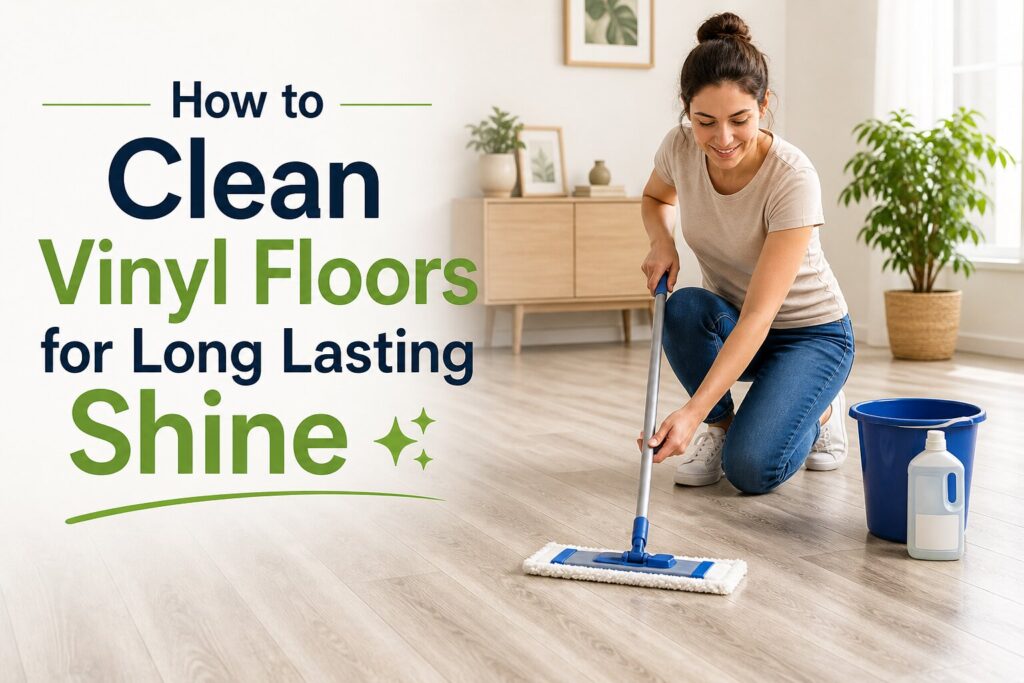
Whether your vinyl floor has light dust or deep stains, this guide will walk you through everything you need to know for a spotless, long-lasting finish.
Recommended Items for Cleaning Vinyl Floors
Having the right tools and supplies makes cleaning easier and more effective. These common products can help you keep your vinyl floors clean and shiny:
- Microfiber mop
- Neutral floor cleaner
- Soft bristle broom
- Spray bottle
- Vinyl floor polish
How to Clean Vinyl Floors: Different Ways
Vinyl flooring is designed to be low-maintenance, but dirt, grime, spills, and stains can still accumulate over time. Proper care protects the floor’s finish and extends its lifespan. In the sections below, you’ll learn step-by-step methods for cleaning vinyl floors, from everyday maintenance to deep stain removal techniques.
1. Daily Sweeping or Dust Mopping
Keeping dust and debris off the floor prevents scratches and buildup.
Sweep the vinyl floor with a soft bristle broom or use a dry microfiber mop. Start in one corner and work your way across the room in overlapping strokes. This helps ensure you pick up fine dust and larger particles.
Make a habit of doing this daily, especially in high-traffic areas like kitchens and hallways. Removing loose dirt before wet cleaning prevents smearing and dullness.
2. Regular Damp Mopping With a Neutral Cleaner
Damp mopping helps remove surface grime while protecting the vinyl from damage.
Prepare a cleaning solution by mixing a small amount of neutral pH floor cleaner with warm water according to the product instructions. Avoid harsh detergents, ammonia-based cleaners, or bleach as they can dull the vinyl.
Dip a microfiber mop into the solution, wring out excess water, and mop the floor in sections. Work in small areas and rinse the mop frequently to avoid spreading dirty water. After mopping, allow the floor to air dry completely.
3. Spot Cleaning Spills and Stains
Spills should be addressed promptly to prevent sticky residue or stains.
Start by blotting up excess liquid with a clean cloth or paper towel. Avoid rubbing as it can spread the stain. For most spills, mix a little floor cleaner with water in a spray bottle and lightly spray the area.
Use a soft cloth or sponge to gently wipe the stain. For sticky or dried substances, apply the cleaning solution and let it sit for a few minutes before wiping. This helps loosen the debris without damaging the vinyl surface.
4. Deep Cleaning With Vinegar Solution
Occasional deep cleaning helps break down grime that regular mopping can miss.
Mix one cup of white vinegar with one gallon of warm water. Vinegar is a mild disinfectant that helps dissolve dirt without leaving residue. Avoid using vinegar too frequently because it can dull the finish if overused.
Mop the floor with the vinegar-water mixture and focus on high-traffic areas. Rinse the floor afterward with clean water to remove any vinegar smell and allow it to dry.
5. Removing Scuff Marks and Stubborn Marks
Scuff marks from shoes or furniture can be more difficult to remove than regular dirt.
Apply a small amount of floor cleaner or a specialized vinyl floor stain remover directly to the scuff. Let it sit for a few minutes. Use a soft sponge or non-abrasive scrub pad to gently rub the mark in a circular motion.
For extra-tough marks, use a pencil eraser or a vinyl floor eraser block to lift the scuff without scratching the surface. Wipe clean with a damp cloth and allow it to dry.
6. Polishing to Restore Shine
Vinyl floors can lose their shine over time due to wear and residue buildup.
Choose a vinyl floor polish that is recommended for your specific floor type. Pour a small amount of polish on the floor and use a clean microfiber mop to spread it evenly in thin layers. Work in small sections and let each layer dry fully before applying the next.
Polishing restores shine, protects the surface, and creates a barrier against dirt. Be careful not to over-apply polish, as too much product can build up and create a dull look.
7. Preventative Maintenance Tips
Preventative care keeps your vinyl floors looking new and reduces the need for frequent deep cleaning.
Place doormats at entrances to trap dirt and grit. Avoid wearing high heels or shoes with sharp edges on vinyl floors. Use felt pads under furniture legs to prevent scratches.
Clean up spills promptly and sweep regularly to keep dirt from accumulating. These small habits make a big difference in maintaining the floor’s appearance over time.
Common Cleaning Mistakes to Avoid
Using abrasive scrub brushes, steel wool, or harsh chemicals can damage the vinyl’s protective surface. Never flood the floor with water, as excess moisture can seep into seams and edges, leading to lifting or warping.
Avoid using wax that is not specifically formulated for vinyl, as it can leave a buildup that attracts dirt and dulls the finish.
How Often to Clean Vinyl Floors
The frequency of cleaning depends on foot traffic and usage. High-traffic areas like kitchens and entryways may need daily sweeping and weekly mop cleaning. Less-used rooms may only require weekly maintenance.
Deep cleaning every month or two helps remove residue and maintain a fresh look.
How to Handle High-Traffic Areas
High-traffic zones accumulate more dirt and wear faster. Pay special attention to these areas with extra sweeping, targeted spot cleaning, and occasional deep cleaning.
Using area rugs in busy paths helps reduce wear and adds protection. Make sure rugs have a non-slip backing that won’t trap moisture or leave marks on the vinyl.
Cleaning Vinyl Floors After Renovation or Construction
After renovation work, floors may have dust, paint splatters, or adhesive residue.
Start with a dry sweep to remove loose debris. For paint or adhesive spots, apply warm water with a gentle cleaner and let it sit to soften the buildup. Use a non-abrasive scrub pad to lift hardened materials without scratching.
Repeat if necessary and finish with a full mop of the area.
Cleaning Different Types of Vinyl Flooring
Sheet Vinyl
Sheet vinyl floors come in large, continuous sheets with fewer seams. Clean by sweeping and damp mopping regularly. Avoid soaking seams with excess water.
Vinyl Plank or Tile
Vinyl planks and tiles mimic wood or stone. They may have more edges and grooves, so take extra care to clean between joints. Use a soft brush attachment or microfiber mop to lift debris from grooves.
Frequently Asked Questions
Is it safe to use vinegar on vinyl floors?
Yes, vinegar mixed with water is safe when used occasionally, but avoid overuse as it can dull the finish.
Can I use a steam mop on vinyl floors?
Most vinyl floors are not recommended for steam cleaning because excessive heat and moisture can cause seams to lift and damage the adhesive.
How do I fix scratches on vinyl floors?
Small scratches can be minimized using a vinyl floor polish or repair kit. Deep scratches may require professional repair.
What is the best cleaning schedule for vinyl floors?
Sweep daily or every other day and mop weekly. Deep clean or polish monthly for best results.
Will baking soda damage vinyl floors?
Baking soda itself won’t harm vinyl, but use it as a mild scrub with water and avoid vigorous rubbing.
Final Words
Keeping vinyl floors clean and beautiful takes consistent care, the right techniques, and gentle products. With simple habits and the cleaning methods above, your floors can stay fresh, smooth, and long-lasting.
Proper maintenance doesn’t just improve appearance—it protects your investment and enhances the comfort of your home. Clean vinyl floors make any space feel welcoming and polished.