
Learning how to dress over 50 and overweight is about finding clothes that feel comfortable, flatter your proportions, and reflect your personal style. You do not need to hide your body or follow strict fashion rules to look polished. The right fits, fabrics, colors, and outfit combinations can help you feel confident at any size.
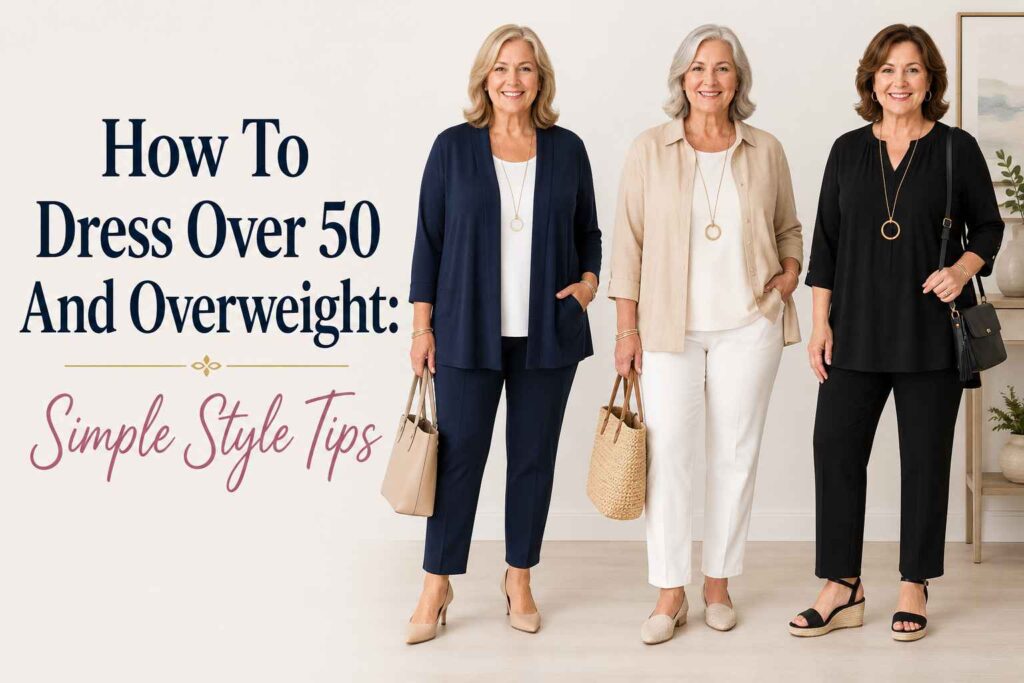
Whether you prefer casual everyday outfits, elegant dresses, relaxed jeans, or sophisticated workwear, getting dressed can be simpler with a few practical styling ideas. These tips will help you build versatile outfits that feel modern, comfortable, and completely your own.
Affiliate disclosure: As an Amazon Associate I earn from qualifying purchases.
Items to Buy
- Straight-Leg Jeans
- V-Neck Tops
- Long Cardigan
- Structured Blazer
- Wide-Leg Trousers
- Wrap Dress
- Comfortable Loafers
- Supportive Walking Sneakers
- Mid-Length Trench Coat
- Everyday Crossbody Bag
15 Simple Style Tips for Dressing Over 50 and Overweight
1. Choose Clothes That Fit Your Current Body
One of the most useful style tips at any age is to wear clothes that fit comfortably now. Pieces that are too tight may pull, wrinkle, or restrict movement, while oversized clothing can sometimes make an outfit feel less defined than you intended.
Look for garments that skim your body without clinging or feeling restrictive. A blouse should allow you to move your arms comfortably, trousers should sit securely at the waist, and jackets should close without pulling across the back or bust.
Do not feel obligated to wear a particular size or silhouette because of your age or weight. Clothing sizes vary considerably between brands. Focus on how a garment fits, how it feels throughout the day, and whether you enjoy wearing it.
2. Build Outfits Around Straight-Leg Jeans
Straight-leg jeans are a versatile foundation for a casual wardrobe. Their relatively balanced shape works with T-shirts, button-down shirts, sweaters, cardigans, and structured jackets. They also offer an alternative to very skinny or extremely wide denim if you prefer a classic silhouette.
Choose a rise that feels comfortable when sitting and walking. Dark washes can create a polished appearance, while medium-blue denim is easy to style for everyday activities. If you prefer lighter colors, cream or white jeans can also make attractive additions to your wardrobe.
Pair straight-leg jeans with a V-neck top, loafers, and a lightweight jacket for an easy everyday outfit. For weekends, swap the jacket for a soft cardigan and comfortable sneakers.
3. Use V-Neck and Open-Neck Tops
Necklines can change the overall appearance of an outfit. V-neck, scoop-neck, and open-collar tops create vertical space around the neckline and can make an outfit feel less crowded than a high, tightly fitted neckline.
You do not have to avoid crew-neck shirts or turtlenecks if you like them. Instead, experiment with different necklines and choose the ones that feel comfortable and suit your preferences.
A V-neck knit with straight-leg trousers creates a simple, polished combination. An open button-down shirt worn over a basic tank or tee adds another layer without feeling too heavy. Small details, such as an open collar or a simple pendant necklace, can also draw attention toward the face.
4. Add Structure with a Blazer
A well-fitting blazer can make a basic outfit feel more intentional. It works with jeans, trousers, simple dresses, and even casual knitwear. Look for a style that allows comfortable movement across the shoulders and upper arms.
You can choose a single-button blazer, a relaxed open-front style, or a slightly longer cut depending on your preference. The goal is not to conceal your body but to add a useful layer that gives the outfit structure.
For an easy smart-casual look, combine dark jeans, a soft blouse, a neutral blazer, and loafers. For work or a lunch date, try a blazer with wide-leg trousers and a simple top. Navy, black, camel, and gray are versatile choices, although a colorful blazer can be just as effective.
5. Try Wide-Leg Trousers with a Defined Waistline
Wide-leg trousers can be comfortable, elegant, and easy to dress up or down. Their flowing shape creates movement, making them a useful option for work, social occasions, or everyday wear.
Choose a waistband that feels secure without digging in, and pay attention to the length. Trousers that skim the top of your shoes or fall at a flattering point can look more balanced than hems that drag on the floor.
Pair wide-leg trousers with a fitted knit, a tucked-in blouse, or a top that gently follows your shape. If you prefer longer tops, try one with a side slit or a subtle waist detail. The aim is to balance proportions in a way that feels natural rather than forcing yourself into a particular silhouette.
6. Make Wrap Dresses Part of Your Wardrobe
Wrap dresses and wrap-inspired styles are worth trying if you enjoy dresses that offer an adjustable or defined waist. Many feature a V-shaped neckline and fabric that moves comfortably as you walk.
Choose a fabric that drapes well and provides the coverage you prefer. A knee-length, midi, or longer dress can work depending on your height, comfort level, and the occasion. Small prints, solid colors, and understated patterns are all options.
For daytime, wear a wrap dress with comfortable flats or low-heeled sandals. Add a cardigan or lightweight jacket when the weather changes. For a special dinner, choose a more structured fabric, add earrings, and finish with a dressy shoe you can comfortably wear.
7. Use Layers Without Adding Unnecessary Bulk
Layering makes outfits more versatile, especially when temperatures change throughout the day. However, several thick layers can feel restrictive and may create more volume than you want.
Instead, combine lightweight pieces. A fine-knit top under an open cardigan, a cotton shirt beneath a blazer, or a simple base layer under a trench coat can provide warmth without excessive bulk.
Try varying the lengths of your layers. A cropped jacket works well with high-rise trousers, while a longer cardigan can pair with a simpler top and straight-leg jeans. Make sure each layer fits comfortably over the one beneath it.
For an easy outfit, wear a neutral T-shirt, dark jeans, an open cardigan, and loafers. It is practical, adaptable, and suitable for shopping, casual visits, and relaxed lunches.
8. Choose Fabrics That Feel Good All Day
Comfort should be a priority when building a wardrobe. Soft cotton, breathable linen blends, smooth knits, and fabrics with a little stretch can make everyday clothing more pleasant to wear.
Fabric choice also affects how a garment falls. Some lightweight materials drape softly, while stiffer fabrics hold their shape. Neither is automatically better; choose according to the look you want and the weather.
Check whether a fabric becomes transparent in bright light, wrinkles easily, or feels uncomfortable against your skin. If a garment requires constant adjusting, it may not be a practical addition to your wardrobe.
For warm days, try breathable tops with relaxed trousers. In cooler weather, combine soft knitwear with a structured coat. A comfortable outfit is easier to enjoy when you do not have to keep adjusting it.
9. Experiment with Monochromatic Outfits
A monochromatic outfit uses different shades of one color, creating a coordinated appearance without requiring complicated styling. You might combine a navy top with navy trousers, a cream sweater with ivory pants, or several shades of brown.
The pieces do not have to match exactly. Different textures and tones can make the outfit more interesting. For example, a smooth blouse, textured cardigan, and tailored trousers in related shades create variety while maintaining a cohesive palette.
If you enjoy darker colors, an all-black or charcoal outfit can be easy to assemble. Add a colorful scarf, metallic jewelry, or a contrasting bag to personalize it. If you prefer lighter colors, try cream, beige, or soft blue.
Wear monochromatic outfits because you like their appearance, not because you feel obligated to use color in a certain way.
10. Find Prints That Reflect Your Personality
Prints can add character to a wardrobe, whether you prefer florals, stripes, geometric patterns, or animal-inspired designs. There is no single print size or pattern that everyone over 50 should wear.
If a large pattern catches your eye, try it. If you prefer subtle designs, small florals or fine stripes may feel more comfortable. Consider the garment’s color, fabric, and overall fit rather than following rigid rules about what is supposedly flattering.
For an easy combination, wear a patterned blouse with solid trousers or jeans. You can also layer a printed scarf over a neutral outfit for a smaller touch of color.
If you like mixing patterns, look for a shared color that connects the pieces. Otherwise, one statement print paired with simple separates is an effortless place to start.
11. Wear Shoes That Combine Comfort and Style
The right shoes can make an outfit look complete, but comfort matters just as much as appearance. Loafers, supportive sneakers, low block heels, ankle boots, and cushioned flats can all work with a mature, modern wardrobe.
Choose shoes that suit your everyday routine and provide the support you need. If you spend long periods standing or walking, prioritize a comfortable fit and appropriate cushioning over a shoe that looks attractive but causes discomfort.
White sneakers pair easily with jeans and casual dresses. Loafers work with trousers and structured outfits, while ankle boots are useful in cooler weather. For dressier occasions, try low heels or elegant flats.
You do not need to wear high heels to look polished. A well-maintained, comfortable shoe can be just as stylish.
12. Use Accessories to Finish an Outfit
Accessories can make simple clothes feel more personal. A scarf, necklace, watch, belt, or handbag may be all you need to finish a combination of basic pieces.
For everyday outfits, choose accessories that are easy to use and comfortable to carry. A crossbody bag can be practical when you are out for the day, while a structured tote works well when you need extra space.
If you wear a printed top, you might prefer understated jewelry. With a simple outfit, a colorful scarf or statement necklace can become the focal point.
Avoid feeling that every accessory must match perfectly. Coordinating a few colors or finishes is often enough to make an outfit feel deliberate.
13. Choose Outerwear That Complements Your Wardrobe
Outerwear is often one of the most visible parts of an outfit, particularly during colder months. A well-fitting trench coat, wool coat, denim jacket, or lightweight quilted jacket can work across several seasons.
Pay attention to the shoulders, sleeves, and length. You should be able to move comfortably and wear the coat over your usual layers. If you often carry a bag, check that the straps sit comfortably with the coat.
A camel trench coat can work with jeans, dresses, and tailored trousers. A denim jacket adds a casual touch, while a long neutral coat can make a simple sweater-and-trousers combination look more finished.
Choose a color that works with several pieces you already own. This makes outerwear easier to mix and match and helps you get more use from each purchase.
14. Dress for Your Proportions, Not Your Age
There is no single outfit formula that suits everyone over 50. Height, torso length, shoulder width, personal preference, and comfort all affect how clothes fit and look.
If you enjoy high-waisted trousers, try them with a top that sits comfortably at the waist. If you prefer longer tops, look for cuts that skim your body without bunching around the hips. If you love dresses, experiment with different lengths and sleeve styles.
You can also use simple proportions to create outfits that feel balanced. A loose top may work well with straighter trousers, while a flowing skirt can pair nicely with a more fitted top. These are starting points, not rules you must follow.
The most useful wardrobe is one that reflects how you actually live. Choose clothes for your activities, preferences, and comfort rather than dressing according to assumptions about your age or size.
15. Create a Small Collection of Reliable Outfits
Getting dressed becomes easier when you have several combinations you know work well. You do not need an enormous wardrobe or a completely new set of clothes to refresh your style.
Start with a few dependable pieces: comfortable jeans, tailored trousers, neutral tops, a cardigan, a blazer, a casual dress, and shoes suitable for your routine. Add color and personality through accessories, prints, and a few pieces you genuinely enjoy.
Create combinations for different situations. For example, jeans with a T-shirt and sneakers can work for errands; trousers with a blouse and blazer can suit a meeting; and a wrap dress with flats can be suitable for lunch or a casual event.
Take note of the outfits you reach for most often. They can help you identify the colors, fits, and fabrics that make you feel your best.
What to Wear for Different Occasions After 50
Casual Everyday Outfits
For everyday activities, choose comfortable basics that can be combined easily. Straight-leg jeans, a soft T-shirt, an open cardigan, and sneakers make a practical outfit. In warmer weather, relaxed trousers and a breathable blouse can be just as comfortable.
If you prefer dresses, try a simple midi dress with flats or supportive sandals. A lightweight jacket adds flexibility when the temperature changes.
Work and Smart-Casual Outfits
For work or smart-casual settings, combine tailored trousers with a blouse, fine-knit top, or blazer. Dark jeans may also work where the dress code allows them.
Keep the outfit comfortable enough for a full day. A structured bag, loafers, and simple jewelry can provide a polished finish without making the look feel overly formal.
Dinner and Special Occasions
For a dinner, celebration, or evening event, choose an outfit that feels special without sacrificing comfort. A wrap dress, a flowing midi dress, or wide-leg trousers with an elegant top can all be excellent options.
Add a statement necklace, earrings, or a small evening bag if you enjoy accessories. Choose shoes that suit the venue and allow you to move comfortably.
Travel and Long Days Out
Travel outfits should be easy to move in and suitable for changing temperatures. Stretch trousers, a breathable top, a cardigan, and supportive sneakers make a useful combination.
A crossbody bag keeps essentials accessible, while a lightweight jacket can provide an extra layer. Choose fabrics that are comfortable for sitting and walking, especially if you will be traveling for several hours.
Common Style Mistakes to Avoid
- Buying clothes that do not fit comfortably: A good outfit should allow you to sit, walk, and move without constant adjustment.
- Hiding under oversized clothing: If you prefer relaxed fits, choose pieces with a deliberate shape rather than wearing everything several sizes too large.
- Following every fashion rule: Rules about age, weight, colors, and hemlines are not universal. Try what appeals to you.
- Ignoring fabric comfort: A garment that looks good but feels uncomfortable may remain unworn in your closet.
- Keeping clothes that no longer suit your life: Make room for pieces that fit your current needs, activities, and preferences.
- Overcomplicating accessories: A few well-chosen details can be enough to finish an outfit.
- Choosing style over practicality every time: Comfortable shoes, useful layers, and easy-care fabrics can still look sophisticated.
Frequently Asked Questions
How should a woman over 50 and overweight dress?
Choose clothes that fit comfortably and reflect your personal style. Straight-leg jeans, tailored trousers, soft tops, structured jackets, wrap dresses, and versatile layers are useful starting points. Experiment with different cuts and fabrics to discover what makes you feel confident.
What clothes are most flattering for a woman over 50 with a fuller figure?
There is no universal answer because bodies and preferences differ. Many people enjoy garments that skim rather than cling, trousers with comfortable waistbands, tops that allow easy movement, and jackets that fit well at the shoulders. The best choice is the one you like wearing.
Should women over 50 avoid tight clothing?
No. You do not need to avoid fitted clothes because of your age or weight. Choose pieces that feel comfortable and allow you to move freely. A fitted top can pair beautifully with flowing trousers, just as a relaxed shirt can work with straight-leg jeans.
Can women over 50 and overweight wear leggings?
Yes. Leggings can be a comfortable option for casual outings, travel, and everyday wear. Choose a fabric that offers the coverage and support you prefer, and pair leggings with a tunic, longer shirt, sweater, or jacket if that suits your style.
What colors should women over 50 wear?
Any color you enjoy can belong in your wardrobe. Navy, black, cream, gray, denim blue, and brown are versatile basics, while red, green, pink, purple, and other brighter shades can add personality. Choose colors based on your taste and how you like to combine them.
How can I look stylish without buying a whole new wardrobe?
Start by making new combinations with the clothes you already own. Try pairing a familiar top with different trousers, adding a blazer to jeans, or using accessories to change a simple outfit. Replace only the pieces that no longer fit comfortably or meet your needs.
Are dresses a good choice for women over 50 with a fuller figure?
Absolutely. Wrap dresses, shirt dresses, A-line styles, and flowing midi dresses are all worth trying. Consider the fabric, length, neckline, and fit, and choose the styles that feel comfortable and suit the occasion.
Final Words
Dressing over 50 and overweight does not require hiding your body, avoiding certain colors, or following a strict list of fashion rules. A comfortable fit, versatile basics, thoughtful layers, and accessories you enjoy can help you create outfits for almost any occasion.
Start with a few pieces that fit your current lifestyle, experiment with different silhouettes, and keep the clothes that make you feel good. Style is personal at every age and size, and your wardrobe should help you express that.
Helpful Resources
- AARP: Fashion and Style — Explore fashion ideas and practical style inspiration for adults over 50.
- National Institute on Aging: Exercise and Physical Activity — Find guidance on staying active and choosing comfortable clothing and footwear for everyday movement.
Read Next: