
A crochet blanket is more than just a household item—it’s a piece of art made with patience, skill, and love. Whether it’s a family heirloom passed down from generations, a handmade gift from a loved one, or your own crafting project, crochet blankets hold sentimental value that makes them worth preserving. But with regular use, they inevitably gather dust, dirt, and sometimes stains. Knowing how to wash a crochet blanket properly ensures it stays soft, beautiful, and long-lasting.
Improper washing can cause the yarn to stretch, fade, or lose its shape. Some blankets shrink, while others may unravel if not handled carefully. That’s why it’s crucial to learn the right washing techniques depending on the type of yarn, stitch, and overall design of your blanket.
This guide will walk you through everything you need to know about cleaning and maintaining your crochet blanket. From identifying the yarn type and choosing the right detergent to hand washing, machine washing, and drying techniques—you’ll discover gentle care tips to keep your crochet blanket looking as cozy and vibrant as the day it was made.
Understanding the Yarn Type
Before washing any crochet blanket, the first step is identifying the yarn type. Each fiber has its own care instructions, and washing methods vary depending on the material.
Cotton Yarn
Cotton is durable and can usually handle machine washing. However, it may shrink slightly, so using cold water is essential.
Wool Yarn
Wool is delicate and prone to felting if exposed to hot water or agitation. Hand washing in lukewarm water with a wool-friendly detergent is the best option.
Acrylic Yarn
Acrylic yarn is synthetic, making it more durable and machine washable. It’s less likely to shrink but can still lose shape if dried on high heat.
Blended Yarns
Many crochet blankets are made with yarn blends, such as cotton-acrylic or wool-acrylic. Always check the yarn label if available and treat it as you would the most delicate fiber in the blend.
Preparing Your Crochet Blanket for Washing
Shake Out Dust and Debris
Before washing, take the blanket outside and give it a gentle shake. This removes loose dirt, dust, and pet hair.
Inspect for Damage
Check for any loose stitches, unraveling yarn, or small holes. Repair these areas before washing to prevent further damage.
Spot Cleaning
If there are small stains, spot clean with a mild detergent and water mixture using a soft cloth. This reduces the need for full washing and protects the fibers.
Check Care Label or Instructions
If the blanket was store-bought or gifted, check if it came with specific washing instructions. Handmade blankets may not have labels, so rely on yarn knowledge.
Hand Washing Crochet Blankets
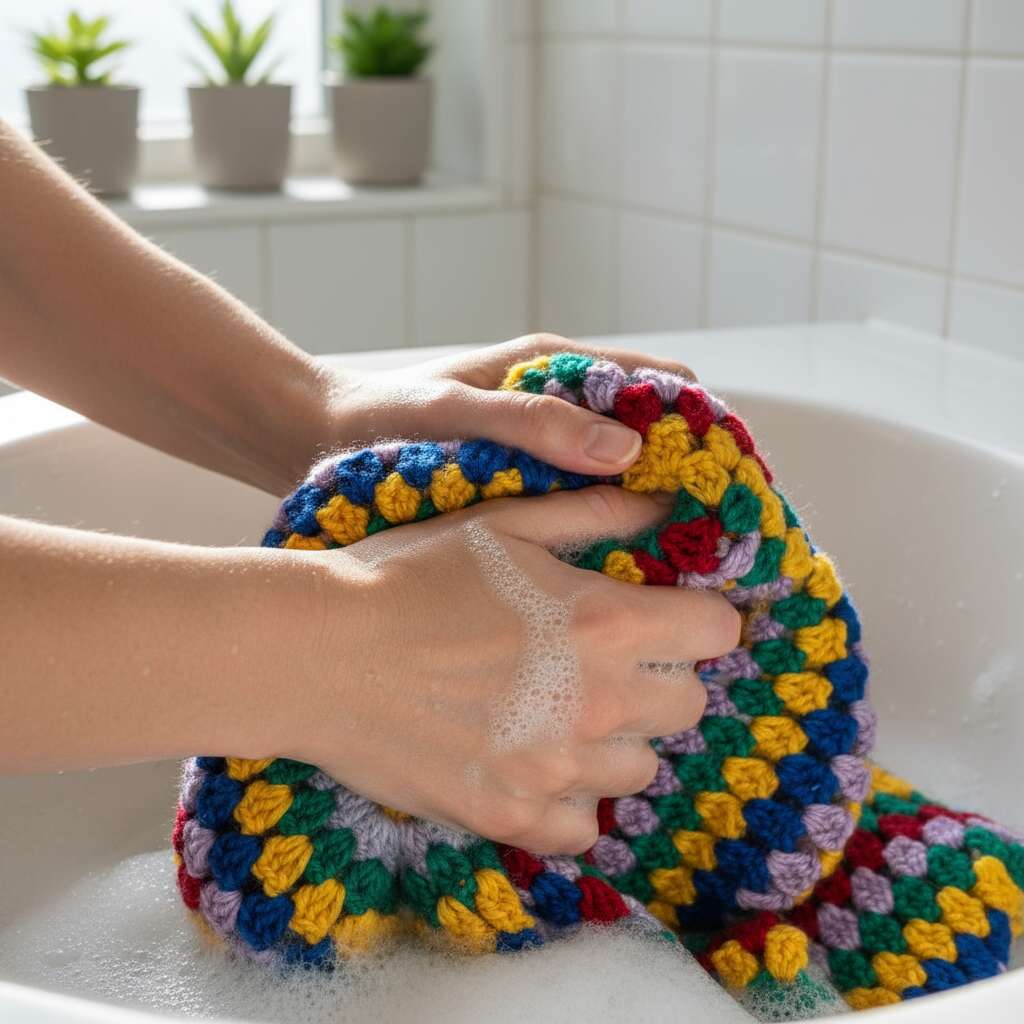
Hand washing is the safest method for most crochet blankets, especially those made from delicate yarns.
Steps for Hand Washing
- Fill a clean tub or basin with cool or lukewarm water.
- Add a small amount of mild detergent or wool wash.
- Submerge the blanket gently, ensuring it’s fully soaked.
- Let it soak for 15–20 minutes.
- Gently agitate the water with your hands—avoid scrubbing or twisting.
- Drain the soapy water and refill with clean water.
- Rinse until all detergent is removed.
Tips for Success
- Avoid wringing the blanket as it stretches fibers.
- Use gentle pressing motions to remove excess water.
- Handle with both hands to support the weight of wet yarn.
Machine Washing Crochet Blankets
Some crochet blankets can be machine washed, especially those made with acrylic or cotton yarns.
Choosing the Right Cycle
- Use the delicate or gentle cycle.
- Wash with cold water to prevent shrinking.
- Place the blanket in a mesh laundry bag to reduce stretching.
Detergent Choices
Opt for mild, fragrance-free detergents. Avoid bleach or harsh chemicals that weaken fibers.
Extra Precautions
- Wash alone to avoid tangling with other clothes.
- Add a few towels to balance the load.
- Never use hot water.
Drying Crochet Blankets
Air Drying
Air drying is the safest method for crochet blankets. After washing, lay the blanket flat on a clean towel or drying rack. Shape it back to its original size and allow it to dry naturally.
Towel Rolling Technique
- Place the damp blanket on a large towel.
- Roll them together gently to squeeze out excess water.
- Unroll and transfer to another dry towel for air drying.
Avoid Hanging
Never hang a crochet blanket to dry, as the weight of the wet yarn causes stretching and misshaping.
Machine Drying
If the yarn is machine-safe, use a dryer on the low-heat or air-dry setting. Check frequently to prevent overheating.
Stain Removal for Crochet Blankets
Food and Drink Stains
Blot the area with a mixture of mild detergent and water. Rinse carefully.
Pet Stains
Use a vinegar-water solution (1:1 ratio) to neutralize odors before washing.
Oil or Grease Stains
Apply cornstarch or baking soda to absorb oil before gently hand washing.
Ink Stains
Dab with rubbing alcohol on a cotton ball, but test on a hidden area first.
Storage Tips After Washing
Fold Properly
Once fully dry, fold the blanket neatly to prevent creases.
Avoid Plastic Bags
Store in breathable cotton bags or pillowcases. Plastic can trap moisture and cause mildew.
Add Lavender or Cedar
Natural repellents like lavender sachets or cedar blocks prevent moth damage.
Seasonal Care for Crochet Blankets
Winter
Frequent use means more washing. Stick to gentle hand washes and allow longer drying times indoors.
Spring
Shake out and air the blanket outdoors to refresh it after heavy winter use.
Summer
If storing, wash and dry thoroughly before packing away to prevent mustiness.
Autumn
Prepare the blanket for use by giving it a light wash and ensuring it’s fresh and clean.
Common Mistakes to Avoid
- Using hot water, which causes shrinking or felting.
- Wringing or twisting during washing.
- Drying in direct sunlight for long periods, which fades colors.
- Overloading the washing machine.
- Ignoring small damages before washing.
Caring for Handmade vs. Store-Bought Crochet Blankets
Handmade Blankets
Often require extra care, as they are made from unique yarns without treatment coatings. Hand wash unless sure of the yarn’s durability.
Store-Bought Blankets
Usually made from durable, machine-washable fibers. Check the label for specific instructions.
Long-Term Care Tips
- Wash only when necessary; frequent washing wears out fibers faster.
- Use fabric softeners sparingly, as they can coat yarn and reduce softness.
- Rotate use between multiple blankets to extend their lifespan.
- Refresh blankets with a light shake and air-out session between washes.
Frequently Asked Questions
Can I wash a crochet blanket in hot water?
No, hot water can cause shrinking, fading, or felting depending on the yarn. Always use cold or lukewarm water.
How often should I wash a crochet blanket?
Wash only when needed—every few weeks for heavy use, or every few months for decorative blankets.
Can I put a crochet blanket in the dryer?
Only if the yarn is dryer-safe, and even then, use the low or air-dry setting. Air drying is always safest.
What detergent is best for crochet blankets?
A mild, fragrance-free, gentle detergent works best. For wool, choose a detergent specifically for wool fibers.
How do I remove musty smells from a stored crochet blanket?
Air it out outdoors, then wash with a vinegar-water rinse before regular washing.
Should I block my crochet blanket after washing?
Yes, blocking (reshaping while drying) helps maintain stitch definition and shape, especially for handmade pieces.
Final Words
Crochet blankets are treasures that deserve careful care. By understanding the yarn type, using gentle washing techniques, and storing them properly, you can keep your blanket soft, cozy, and beautiful for years to come. Whether hand washing delicate wool or machine washing durable acrylic, the key is patience and gentleness.
With these easy and thoughtful care tips, you won’t have to worry about ruining your handmade or heirloom blanket. Instead, you’ll enjoy the warmth and charm of your crochet creation for many seasons ahead.