
Learning how to knit a bag is a rewarding project that combines creativity with practicality. Whether you’re making a simple tote for everyday use or a stylish handbag with decorative details, a knitted bag allows you to create something both beautiful and functional.
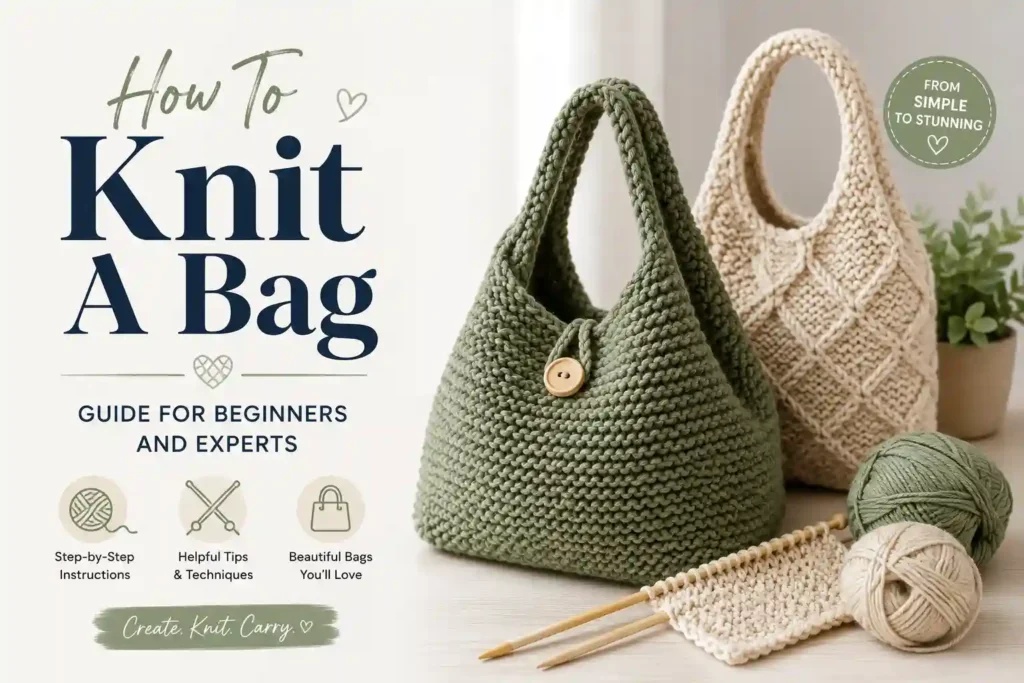
The best part is that knitted bags can be customized to suit your style, skill level, and needs. This guide will walk beginners and experienced knitters through the process, from choosing materials to finishing a durable handmade bag.
Items to Buy
Before you begin, gather the following supplies:
- Knitting needles
- Cotton, acrylic, or sturdy wool yarn
- Tapestry needle
- Scissors
- Stitch markers
- Measuring tape
- Row counter (optional)
- Bag handles (optional)
- Fabric lining (optional)
- Magnetic snap or button closure (optional)
Why Knit a Bag?
Knitted bags are practical projects that can be used daily while showcasing your knitting skills. Unlike garments, bags don’t require precise sizing, making them ideal for beginners.
For experienced knitters, bags offer opportunities to experiment with textures, cables, colorwork, and embellishments. They also make thoughtful handmade gifts for friends and family.
Choosing the Best Yarn for a Knitted Bag
The yarn you choose affects the durability and appearance of your finished bag. Cotton yarn is a popular choice because it is strong, sturdy, and holds its shape well.
Wool can provide structure, especially when felted, while acrylic blends offer affordability and a wide range of colors. Avoid overly stretchy yarns if you want the bag to maintain its shape over time.
Types of Knitted Bags
Before starting, decide what type of bag you’d like to make.
Popular options include:
- Tote bag
- Market bag
- Shoulder bag
- Drawstring bag
- Crossbody bag
- Handbag
- Project bag
- Beach bag
Choosing a style beforehand helps determine the size, yarn requirements, and construction method.
How to Knit a Bag: Step-by-Step Guide
Step 1: Choose a Pattern
Select a bag pattern that matches your skill level and desired style.
Step 2: Gather Materials
Purchase enough yarn and any additional accessories such as handles or closures.
Step 3: Knit a Gauge Swatch
Create a small sample square to ensure your stitches match the pattern gauge.
Step 4: Cast On Stitches
Cast on the required number of stitches for the bag’s base or front panel.
Step 5: Knit the Main Body
Work the stitch pattern according to your design, maintaining even tension throughout.
Step 6: Shape the Bag
If your pattern requires shaping, follow increase and decrease instructions carefully.
Step 7: Create the Handles
Knit separate handles or leave openings that can later accommodate purchased handles.
Step 8: Bind Off
Once the bag reaches the desired dimensions, bind off all stitches securely.
Step 9: Assemble the Pieces
Sew side seams and attach handles if your bag is knitted in separate sections.
Step 10: Add Finishing Touches
Weave in loose ends, attach closures, and add a lining if desired.
5 Knitted Bag Patterns to Try
1. Beginner Garter Stitch Tote Bag
Steps
- Cast on 60 stitches.
- Knit every row.
- Create two identical panels.
- Bind off.
- Sew side seams.
- Add handles.
This simple bag is perfect for beginners learning construction techniques.
2. Market Bag
Steps
- Knit a sturdy base.
- Work mesh stitch patterns.
- Continue until desired height.
- Knit handles.
- Bind off.
- Finish seams.
The open design makes it ideal for grocery shopping and farmers markets.
3. Drawstring Bag
Steps
- Knit a rectangular body.
- Fold and sew side seams.
- Create eyelets near the top.
- Thread a drawstring through eyelets.
- Secure ends.
- Finish.
This bag works well for gifts and storage projects.
4. Cable Knit Handbag
Steps
- Cast on stitches.
- Work cable patterns across rows.
- Knit front and back panels.
- Sew pieces together.
- Add handles.
- Attach closure.
Cables add texture and sophistication to the finished bag.
5. Felted Knitted Bag
Steps
- Knit using 100% wool yarn.
- Make the bag larger than desired.
- Assemble the bag.
- Wash in hot water.
- Allow fibers to felt.
- Dry and shape.
Felting creates a sturdy, professional-looking bag.
Common Mistakes to Avoid
One common mistake is choosing yarn that stretches too much under weight. Bags need structure, so sturdy fibers are usually the best option.
Another issue is skipping the gauge swatch. Incorrect gauge can significantly alter the final bag size and shape.
Tips for a Professional Finish
Adding a fabric lining can increase durability and prevent small items from slipping through stitches. Linings also help the bag maintain its shape.
Consider reinforcing handles if the bag will carry heavier items. Strong handles improve comfort and longevity.
How Long Does It Take to Knit a Bag?
The time required depends on the bag size, stitch pattern, and your knitting experience. A simple tote bag may take a weekend, while detailed cable or felted bags can take several weeks.
Using bulky yarn and larger needles can speed up the process considerably.
FAQs
Is a knitted bag good for beginners?
Yes. Simple tote bags and drawstring bags are excellent beginner knitting projects.
What yarn is best for knitting bags?
Cotton, sturdy wool, and durable acrylic blends are popular choices.
Can knitted bags hold heavy items?
Yes, especially when made with strong yarn and reinforced handles.
Should I line a knitted bag?
Lining is optional but recommended for added durability and structure.
How much yarn do I need?
Most knitted bags require between 300 and 1,000 yards of yarn depending on size.
Can I wash a knitted bag?
Follow the care instructions for your chosen yarn. Many cotton and acrylic bags are machine washable.
What is the easiest knitted bag pattern?
A garter stitch tote bag is one of the easiest patterns for beginners.
Can I add a zipper to a knitted bag?
Yes. Zippers, buttons, and magnetic snaps can all be added after knitting.
Final Words
Learning how to knit a bag is a great way to create a practical accessory while improving your knitting skills. From simple totes to elegant cable-knit handbags, there are endless possibilities to explore.
Start with a beginner-friendly design, choose durable materials, and enjoy the process of creating something unique. With practice and creativity, you’ll soon have a collection of handmade bags that are both stylish and functional.