
Acrylic paint is a favorite among artists, DIYers, and crafters due to its fast-drying properties, vibrant pigments, and water-soluble nature. But once it ends up on your favorite shirt or jeans? It can quickly turn into a frustrating mess. Whether it’s a tiny splatter from a weekend craft project or a full-on spill from a painting session, knowing how to remove acrylic paint from clothes can save your wardrobe—and your peace of mind.
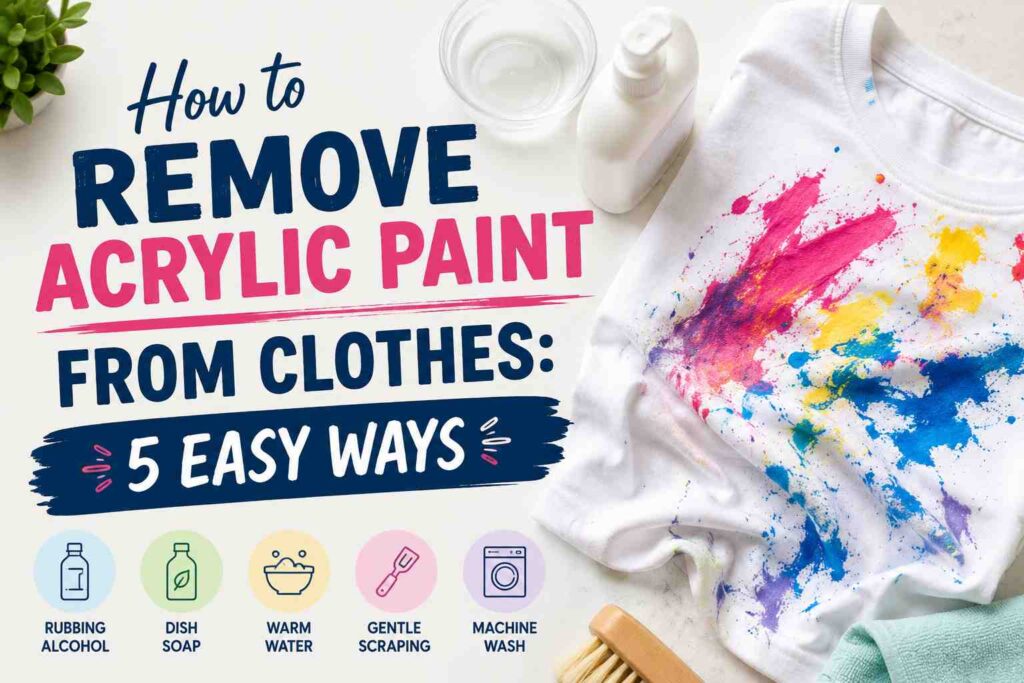
In this comprehensive guide, you’ll learn the best methods to remove both wet and dried acrylic paint from all types of fabric. From everyday items like dish soap and vinegar to professional stain removers and solvents, we’ll break down all the easy ways to tackle paint stains effectively without damaging your clothes.
Understanding Acrylic Paint and Fabric
What Is Acrylic Paint Made Of?
Acrylic paint is composed of three main elements:
- Pigment for color
- Acrylic polymer emulsion (a plastic binder)
- Water to keep it fluid during application
Once the water evaporates, the acrylic forms a waterproof, plastic-like coating—great for art, not so much for fabric.
Why Acrylic Paint Is Hard to Remove
When acrylic paint dries, it adheres tightly to fibers, making it difficult to remove without the right technique or products. Time is critical; the sooner you act, the better your chances of completely removing the stain.
Things to Know Before You Start
Act Quickly
The sooner you treat the stain, the easier it is to remove. Wet acrylic paint is much easier to lift than dried paint.
Test on a Small Area
Always test your removal method on a hidden part of the fabric to ensure it doesn’t cause discoloration or damage.
Check the Fabric Type
Natural fibers like cotton respond better to stain removal than synthetic fibers like polyester. Delicate fabrics may require professional cleaning.
Avoid Heat
Do not tumble dry or iron stained clothes until the paint is completely removed. Heat sets the stain permanently.
Supplies You May Need
Before you begin the removal process, gather the following items based on the method you choose:
- Paper towels or clean rags
- Spoon or dull knife (to scrape off excess)
- Old toothbrush
- Dish soap
- Rubbing alcohol (isopropyl)
- Acetone or nail polish remover
- Vinegar and baking soda
- Laundry detergent
- Hydrogen peroxide (for white fabrics)
- Fabric stain remover
- Cotton swabs
- Warm and cold water
How to Remove Wet Acrylic Paint from Clothes
Step 1: Blot, Don’t Rub
Use a clean cloth or paper towel to blot the stain. Remove as much of the wet paint as possible. Do not rub, as that pushes the paint deeper into the fibers.
Step 2: Scrape Off Excess Paint
Use a spoon, butter knife, or credit card to gently scrape off any thick paint. Be careful not to tear the fabric.
Step 3: Rinse with Cold Water
Run the stained area under cold water from the back of the fabric. This helps to push paint particles out rather than deeper in.
Step 4: Apply Dish Soap
Massage a few drops of mild dish soap into the stained area. Use a toothbrush to gently scrub in circles.
Let it sit for 15–30 minutes, then rinse with cold water and check the stain.
Step 5: Wash Normally
Launder the garment in cold water with your usual detergent. Check the stain before drying. If the stain persists, repeat the process.
How to Remove Dried Acrylic Paint from Clothes
Step 1: Loosen the Paint
Scrape off as much of the dried paint as possible using a blunt tool. Gently break up thick layers of paint.
Step 2: Soak the Area
Soak the stained area in warm water mixed with a bit of dish soap or laundry detergent for 30 minutes to soften the paint.
Step 3: Apply Rubbing Alcohol or Acetone
Use a cotton swab or cloth to dab rubbing alcohol or acetone directly onto the paint stain. Let it sit for 10–15 minutes.
Scrub gently with a toothbrush until the paint starts to lift. Repeat if needed.
Step 4: Rinse and Wash
Rinse under cold water and wash the item on a normal cycle. Air dry to avoid setting any remaining paint.
Method 1: Using Rubbing Alcohol (Best for Dried Paint)
Rubbing alcohol is one of the most effective ways to break down dried acrylic paint.
What You Need
- 70% or higher isopropyl alcohol
- Cotton balls or pad
- Old toothbrush
How to Use
- Soak a cotton ball in alcohol and apply it to the paint.
- Let it sit for 10–20 minutes.
- Scrub gently with a toothbrush.
- Rinse with cold water.
- Wash with regular detergent.
This method works well for jeans, t-shirts, and durable fabrics.
Method 2: Using Acetone or Nail Polish Remover
Acetone is a strong solvent that can break down dried acrylic paint.
Caution
Test first—acetone can discolor some fabrics.
Steps
- Dab acetone onto the stain using a cotton ball.
- Let it sit for a few minutes.
- Scrub the area gently.
- Rinse thoroughly.
- Launder normally.
Avoid using on acetate, rayon, or other synthetic fabrics.
Method 3: Vinegar and Baking Soda (Natural Method)
This method is more fabric-friendly and great for light stains.
How to Use
- Sprinkle baking soda over the stain.
- Pour white vinegar over it and let it fizz.
- Scrub gently with a brush.
- Rinse and repeat if needed.
- Wash as usual.
This combo is safe for delicate clothes and baby items.
Method 4: Hydrogen Peroxide (For White or Light Fabrics)
Hydrogen peroxide can help lift stubborn stains on white clothing.
Instructions
- Apply hydrogen peroxide directly to the stain.
- Let it sit for 10 minutes.
- Blot with a cloth and scrub lightly.
- Rinse and launder.
Use only on colorfast or white fabrics to avoid discoloration.
Method 5: Commercial Fabric Stain Removers
If DIY methods fail, try stain removers like OxiClean, Shout, or Zout.
How to Use
- Follow the product instructions.
- Allow the treatment to sit as directed.
- Scrub with a brush for tough stains.
- Rinse and wash normally.
Repeat as necessary.
Special Tips for Specific Fabrics
Cotton
Easiest to clean—use alcohol, acetone, or detergent-based solutions.
Polyester
Can be more resistant—use rubbing alcohol or acetone carefully.
Silk or Wool
Delicate—use vinegar and mild soap only. Avoid harsh chemicals.
Denim
Durable—can handle scrubbing and alcohol treatments.
Blended Fabrics
Always test for colorfastness before applying any chemical solution.
Preventing Acrylic Paint Stains
Wear Old or Protective Clothing
Use an apron, smock, or old clothes when working with paint.
Use Drop Cloths
Protect surfaces and clothing from accidental splashes.
Clean Spills Immediately
Keep a damp cloth nearby to tackle wet paint the moment it touches fabric.
Frequently Asked Questions
Can I Remove Acrylic Paint After It’s Fully Dried?
Yes, though it’s harder. Solvents like rubbing alcohol or acetone are most effective. You may need multiple attempts.
Does Vinegar Remove Acrylic Paint?
Vinegar can help soften dried paint and works best on light stains when paired with baking soda.
Will Bleach Remove Acrylic Paint?
Bleach is not effective for acrylic paint removal and can damage fabric. Avoid unless treating white-only clothes with hydrogen peroxide instead.
What If the Stain Doesn’t Come Out After Washing?
Repeat the process, and don’t use a dryer until the stain is gone. Heat can permanently set the stain.
Can I Use a Paint Remover?
Paint removers are often too harsh for clothing. Stick with fabric-safe methods to avoid damage.
Creative Uses for Paint-Stained Clothes
Sometimes, you may not be able to completely remove a stain. But that doesn’t mean your clothing is ruined.
Turn It into Artwear
Embrace the splatter—add more paint to create a custom, wearable art piece.
Dye the Fabric
Use fabric dye to hide or camouflage the stain while giving the item a new life.
Add Patches or Embroidery
Cover the stain with a stylish patch or use embroidery to turn it into a unique design.
Final Thoughts: Keep Clothes Safe from Paint with These Easy Removal Methods
Accidents happen—even to the most careful artists and DIY lovers. The key to successfully removing acrylic paint from clothes lies in acting quickly, choosing the right method, and being patient. Whether you’re dealing with fresh spills or stubborn dried paint, the tips in this guide give you everything you need to tackle stains and restore your favorite garments.
Next time your creativity gets a little messy, you’ll be ready. Happy crafting, and may your clothes stay (mostly) paint-free.