
Learning how to sew pants is a valuable skill that opens up endless possibilities for your wardrobe. Whether you’re aiming to make casual lounge pants, tailored trousers, or wide-leg palazzos, sewing your own pants gives you full control over the fit, fabric, and style. While it might seem like a challenging project for a beginner, this comprehensive guide breaks it down into simple steps you can follow.
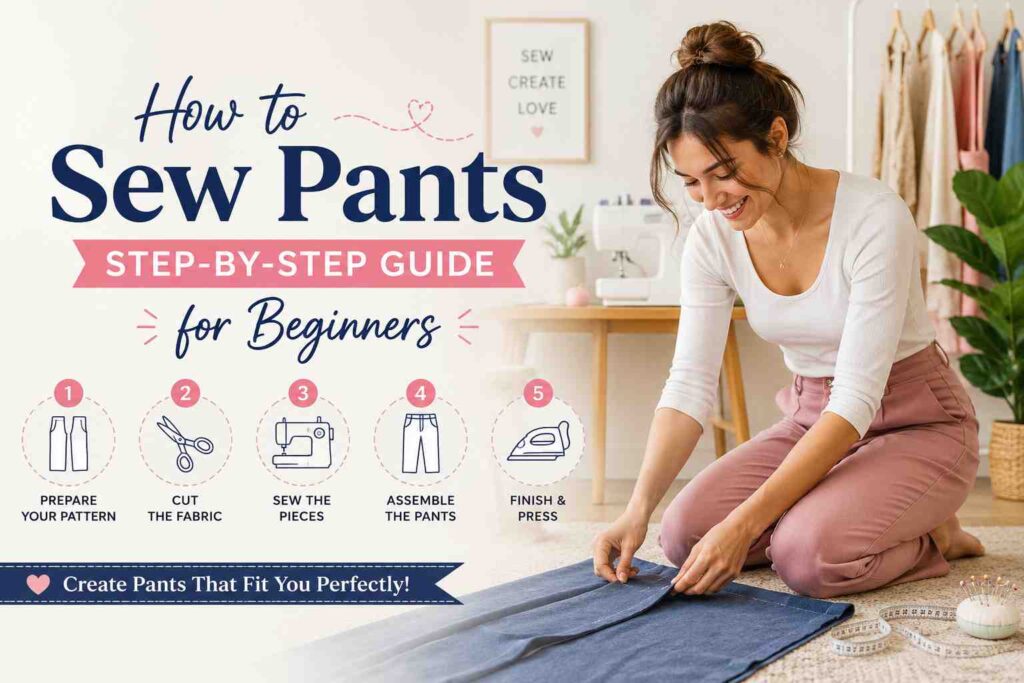
By the end of this tutorial, you’ll know how to sew a pair of pants from scratch—starting with choosing a pattern and fabric, all the way to sewing waistbands, hemming legs, and finishing seams. Let’s dive in.
Why Sew Your Own Pants?
There are many compelling reasons to sew your own pants, especially if you’re passionate about custom fashion, want to reduce textile waste, or struggle to find ready-to-wear pants that fit just right.
Personalized Fit
Everyone’s body is different. Sewing your own pants allows you to adjust the waist, hips, rise, and inseam so they fit like a glove.
Fabric Freedom
Choose exactly what you want—whether it’s breathable cotton for summer or warm wool for winter.
Style Control
From high-waisted culottes to slim-fit trousers, you can pick the style that fits your aesthetic perfectly.
Skill Building
Pants introduce you to techniques like sewing crotch seams, attaching waistbands, inserting elastic, and adding pockets or zippers.
Tools and Materials You’ll Need
Before you start sewing, make sure you’ve gathered all the necessary supplies. Having the right tools on hand can make the process smoother and less frustrating.
Fabric
For beginners, choose a woven fabric with some structure like cotton twill, linen, chambray, or lightweight denim. Avoid very stretchy or slippery fabrics on your first try.
Thread
Use all-purpose polyester thread that matches your fabric.
Sewing Machine
A basic machine with straight and zigzag stitches will work just fine for most pants.
Scissors or Rotary Cutter
Use sharp fabric scissors for clean cuts, or a rotary cutter for more precision on straight edges.
Pins or Clips
Pins are perfect for securing pieces together; clips work well on thicker fabrics.
Measuring Tape
Essential for checking your waist, hips, and inseam measurements.
Tailor’s Chalk or Fabric Marker
Use these to mark notches, darts, and fold lines.
Iron and Ironing Board
Pressing at every stage ensures crisp seams and a professional finish.
Pants Sewing Pattern
Start with a beginner-friendly pattern. Look for patterns labeled “easy,” “beginner,” or “pull-on pants.”
Choosing the Right Pants Pattern
Not all pants patterns are created equal. As a beginner, stick to simple designs without complex closures.
Pull-On Pants
Ideal for beginners, these use elastic waistbands and don’t require zippers or buttons.
Pajama Pants
A classic first sewing project—usually just two leg pieces, a crotch seam, and an elastic waistband.
Wide-Leg or Palazzo Pants
These offer a forgiving fit and dramatic flair while avoiding complicated fitting.
Joggers or Casual Pants
A great second project with features like cuffs, drawstrings, or patch pockets.
Taking Accurate Measurements
Before cutting fabric, take your body measurements to ensure the pants will fit properly. Use a flexible tape measure and stand straight but relaxed.
Key Measurements
- Waist: Measure at the narrowest part of your torso.
- Hips: Measure around the widest part of your buttocks.
- Inseam: From the crotch to the desired pant length.
- Rise: From the crotch to the top of the waistband.
Preparing the Fabric
Proper fabric preparation is critical to avoid shrinkage and distortion after the pants are sewn.
Pre-Wash and Iron
Wash and dry your fabric according to care instructions. Then iron it smooth to ensure accurate cutting.
Lay Out the Fabric
Fold the fabric right sides together (if instructed by your pattern) and place it on a clean, flat surface.
Cutting the Pattern Pieces
Follow your pattern’s layout diagram carefully, especially the direction of the grainline.
Pin or Weigh Down the Pattern
Use pins or pattern weights to keep pieces stable while you cut.
Cut with Precision
Cut slowly and carefully around the pattern edges. Don’t forget to snip notches and mark darts or pleats.
Sewing the Pants: Step-by-Step Instructions
Now comes the fun part—sewing your pants together. This guide follows a typical construction process for beginner pull-on or pajama-style pants.
Step 1: Sew the Inseams
Take the front and back leg pieces and pin each leg’s front to its matching back, right sides together. Sew along the inseam (from the crotch to the ankle) and press seams open.
Step 2: Sew the Crotch Seam
Turn one leg right side out and insert it into the other leg (which is still inside out), aligning the crotch curves. Pin and sew the entire U-shaped crotch seam. This connects both legs into one unit.
Step 3: Sew the Side Seams
If your pattern includes separate side seams (some don’t), pin the front to the back at the side edges and sew. Press seams open or toward the back.
Step 4: Create the Waistband
There are several ways to finish a waistband depending on your pattern. For beginners, elastic waists are easiest.
Elastic Waistband (Simple Casing Method)
- Fold down the top edge of the pants by ¼ inch and press.
- Fold down again by the width of your elastic plus ½ inch and press.
- Sew around the fold, leaving a 2-inch opening.
- Thread the elastic through with a safety pin.
- Overlap elastic ends and sew them together.
- Sew the opening closed.
Yoga Waistband (Knit Fabric)
This method uses a wide fabric band like in yoga pants:
- Fold the waistband fabric right sides together.
- Sew the short ends.
- Fold the band in half lengthwise, wrong sides together.
- Pin the raw edges of the band to the top of the pants, right sides together, and sew.
Step 5: Hem the Pants
Try the pants on to determine your ideal length. Mark and press the hem.
Basic Folded Hem
- Fold the raw edge under ¼ inch and press.
- Fold again 1 inch and pin.
- Stitch around the hem using a straight stitch.
Rolled Hem
A narrower finish where you roll the hem twice at ¼ inch each time. This works well for lightweight fabrics.
Step 6: Press and Finish
Give the entire garment a final pressing. Trim stray threads and admire your work—you’ve sewn a pair of pants!
Adding Optional Features
As you gain confidence, you can experiment with more advanced details and construction techniques.
Pockets
Add side seam, patch, or in-seam pockets for functionality and style. Sew these before sewing the side seams.
Decorative Topstitching
Topstitch around the waistband, pockets, or hems for a polished look.
Cuffs
Fold the hem upward and stitch for a cropped or cuffed finish. You can also use a contrast fabric.
Drawstring
Add a drawstring channel along with elastic for extra adjustability.
Zipper or Button Fly
These require more skill but give a polished, professional look—perfect for trousers or jeans.
Tips for Perfectly Sewn Pants
Even experienced sewists revisit these best practices:
Always Test Stitch First
Try out your stitches on fabric scraps to ensure tension and length are correct.
Finish Raw Edges
Use pinking shears, zigzag stitches, or a serger to prevent fraying.
Press After Every Seam
Don’t skip pressing—it improves accuracy and gives a professional result.
Use a Walking Foot (Optional)
A walking foot helps when sewing thick seams or slippery fabrics.
Stay Organized
Label pattern pieces, keep pins aligned by seam direction, and sew one step at a time.
Beginner-Friendly Pants Patterns
If you’re looking for patterns that are simple and beginner-friendly, try these tried-and-true options:
Free Online Patterns
- Peppermint Magazine Wide-Leg Pants
- Mood Sewciety Elastic Waist Trousers
- Made Everyday Pajama Pants
Paper Patterns
- Simplicity 2290 – Classic unisex pajama pants
- McCall’s M8057 – Easy jogger-style pants
- Tilly and the Buttons “Jaimie” Pants – Great for woven or knit fabrics
Choosing the Best Fabric for Your Pants
Selecting the right fabric makes a huge difference in how your pants feel, fit, and function.
Woven Cotton
Great for beginners—easy to sew and press. Ideal for casual or pajama-style pants.
Linen
Lightweight, breathable, and perfect for summer pants. It wrinkles easily but is very comfortable.
Twill or Canvas
More structured—good for chinos or utility pants.
Jersey Knit
Used for leggings, joggers, and yoga pants. Requires stretch stitches and a ballpoint needle.
Rayon or Viscose
Soft and flowy, good for wide-leg or palazzo styles, but can be slippery to sew.
Caring for Your Handmade Pants
Always pre-wash your fabric and then care for your pants based on fabric content.
Washing
Use gentle cycles and mild detergent. Machine wash cold unless the fabric requires special handling.
Drying
Air drying is best for preserving shape and preventing shrinkage.
Ironing
Use the appropriate heat setting for the fabric. Press seams and hems flat after washing for best results.
Conclusion: You Can Sew Your Own Pants
Sewing pants might seem intimidating at first, but with patience and the right guidance, it becomes a manageable and satisfying project. From casual pull-on pants to more advanced trousers, learning to sew pants is a game-changer for anyone who wants to build a handmade wardrobe.
By following this detailed guide, you now have the tools, techniques, and confidence to complete your first pair. The journey doesn’t end here—each pair you sew teaches you more about construction, fitting, and customization.
So gather your materials, pick a beginner-friendly pattern, and start sewing your next favorite pair of pants today.