
The saree is not just a garment; it’s a symbol of grace, heritage, and tradition. A six to nine-yard piece of fabric, the saree offers endless possibilities for styling, making it suitable for casual outings, professional settings, festive occasions, and even modern interpretations of traditional attire.
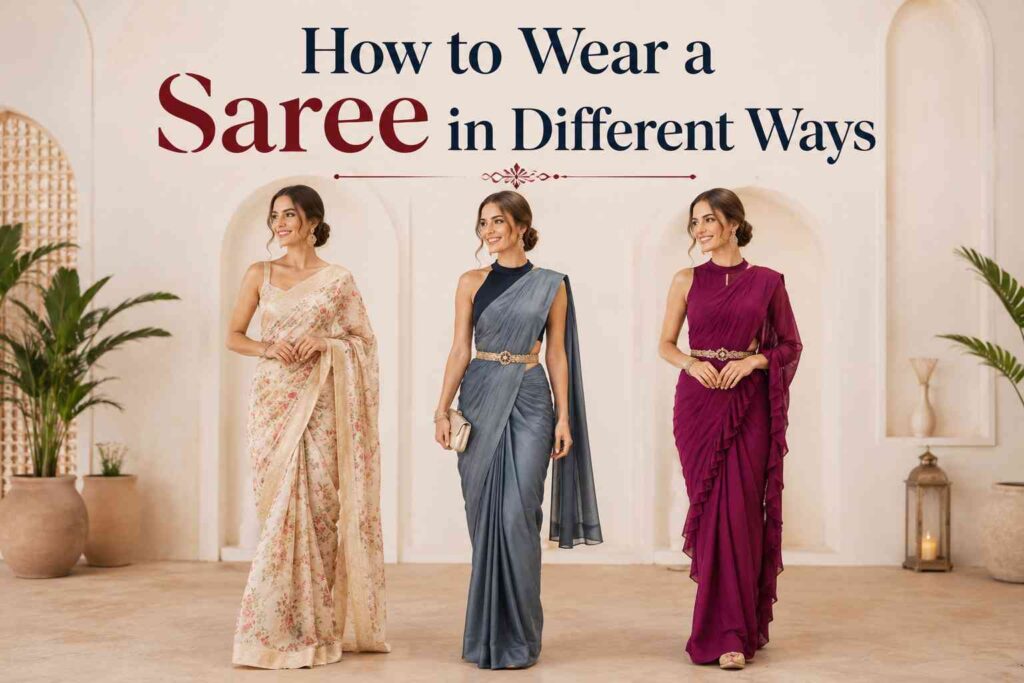
Whether you’re a saree enthusiast or a beginner exploring this versatile attire, this guide will walk you through various saree draping styles and essential tips to perfect the look.
Why the Saree is a Timeless Wardrobe Staple
The saree has been worn in the Indian subcontinent for thousands of years, evolving into an iconic symbol of beauty and culture. One of its most unique aspects is its adaptability. Whether you prefer a traditional look or a modern, experimental vibe, there’s a saree draping style for every occasion and body type.
The Basics of Draping a Saree
Before diving into different styles, let’s cover some essentials:
- Choose the Right Saree: Select a fabric that suits your occasion and comfort. Chiffon, georgette, and cotton are great for beginners, while silk and brocade work beautifully for formal events.
- Wear the Right Petticoat: Match the petticoat to the saree color. Ensure it fits well and isn’t too loose.
- Pick a Suitable Blouse: A well-fitted blouse can make or break your saree look. Experiment with different necklines, sleeves, and embellishments.
- Essential Accessories: Keep safety pins handy to secure pleats and the pallu. Add statement jewelry or modern accessories like belts for a unique touch.
Traditional Saree Draping Styles
Nivi Style
The Nivi drape is the most popular and widely recognized saree style. Originating from Andhra Pradesh, it is simple, elegant, and versatile.
Steps:
- Tuck one end of the saree into the petticoat at your navel and wrap it around your waist once.
- Make 5-7 pleats, each about 4 inches wide, and tuck them neatly into the petticoat at the front.
- Drape the remaining fabric over your left shoulder, allowing the pallu (decorative end) to fall behind. Secure it with a pin for convenience.
This style suits all occasions, from daily wear to weddings and formal events.
Bengali Style
Known for its regal appeal, the Bengali saree style is typically worn during Durga Puja and other traditional celebrations.
Steps:
- Wrap the saree around your waist and tuck it into the petticoat, leaving a bit of length for the pallu.
- Drape the saree around again, bringing it to the front.
- Create a broad pleat at the front and tuck it into the petticoat.
- Drape the pallu over your left shoulder, letting it fall freely. Bring the loose end back over your right shoulder for an added flair.
Contemporary Saree Draping Styles
Lehenga Style
This drape gives the appearance of a lehenga (traditional skirt), combining the elegance of a saree with the comfort of a skirt.
Steps:
- Begin by tucking one end of the saree into the petticoat and wrapping it around your waist.
- Instead of regular pleats, make continuous small pleats, tucking them in to create a flared, lehenga-like effect.
- Use the pallu to drape over your shoulder or style it as a dupatta.
Perfect for weddings and festive occasions, this style is glamorous and unique.
Pant Style
A modern take on saree draping, the pant style is trendy, comfortable, and ideal for casual and formal settings.
Steps:
- Swap your petticoat for slim-fit pants or leggings.
- Tuck the saree into the waistband and wrap it around your waist tightly.
- Make neat pleats and tuck them in the front.
- Drape the pallu over your shoulder, leaving it loose or pinning it for a clean look.
Regional Saree Draping Styles
Maharashtrian Style
The Maharashtrian or Nauvari saree is distinct because it doesn’t require a petticoat. Its dhoti-style draping is comfortable and ideal for active movements.
Steps:
- Use a nine-yard saree, dividing it into two equal parts.
- Pass one part between your legs and tuck it at the back, creating a dhoti-like effect.
- Drape the pallu over your shoulder or let it flow freely.
This drape is commonly worn by dancers and during cultural festivities.
Gujarati Style
In this style, the pallu is draped from the back to the front, creating a dramatic effect.
Steps:
- Wrap the saree around your waist, tucking it into the petticoat.
- Make pleats and tuck them neatly in the front.
- Bring the pallu over your right shoulder, allowing it to fall across your chest. Secure it on your left shoulder with a pin.
Party-Ready Saree Drapes
Butterfly Style
This drape accentuates the waistline and is a favorite among Bollywood celebrities.
Steps:
- Drape the saree like the Nivi style but spread the pallu pleats thinner to create a butterfly-like effect.
- Pin the pallu at the shoulder and let it flow down elegantly.
Belt Style
Adding a belt to your saree not only enhances the look but also keeps it in place during long events.
Steps:
- Drape the saree in your preferred style.
- Place a decorative belt or fabric belt around your waist, securing the pleats.
This style is chic and perfect for cocktail parties or fusion events.
Saree Draping Tips for Beginners
- Practice pleating: Use a mirror to practice pleats until you can make them uniform.
- Use safety pins: Secure pleats and the pallu to prevent wardrobe mishaps.
- Experiment with fabrics: Lightweight fabrics like chiffon and georgette are easier to drape and handle.
- Wear the right shoes: Put on your heels or shoes before draping to ensure the saree length is adjusted correctly.
Saree Draping Hacks for Modern Looks
- Crop Top as a Blouse: Replace a traditional blouse with a trendy crop top for a fusion look.
- High-Waisted Drape: Tuck the saree higher on the waist for a chic and contemporary vibe.
- Caped Pallu: Drape the pallu like a cape for a dramatic statement.
- Layered Accessories: Add necklaces, chokers, or brooches to enhance the overall outfit.
How to Choose the Perfect Saree for Each Occasion
- Daily Wear: Opt for lightweight fabrics like cotton or linen for comfort.
- Festive Events: Bright silk sarees with traditional motifs are a great choice.
- Weddings: Go for embellished sarees in luxurious fabrics like Kanjeevaram or Banarasi silk.
- Formal Settings: Neutral-toned sarees with minimal embroidery are ideal for professional environments.
Final Thoughts
The saree is an incredibly versatile garment, allowing endless possibilities for styling. Whether you prefer traditional drapes like the Nivi and Bengali styles or modern versions like the pant or lehenga style, there’s a saree look for everyone. With practice, you can drape a saree effortlessly and make a statement at any event.
Embrace the beauty of this timeless attire and experiment with different styles to discover the one that best suits your personality and the occasion.