
A scarf is one of the most versatile accessories you can own. Whether you want to make a simple outfit look more polished, add color to neutral clothing, or stay warm during colder months, learning how to wear a scarf opens up countless styling possibilities. From classic neck knots to elegant shoulder wraps and fashionable bag accents, the right technique can transform an everyday look.
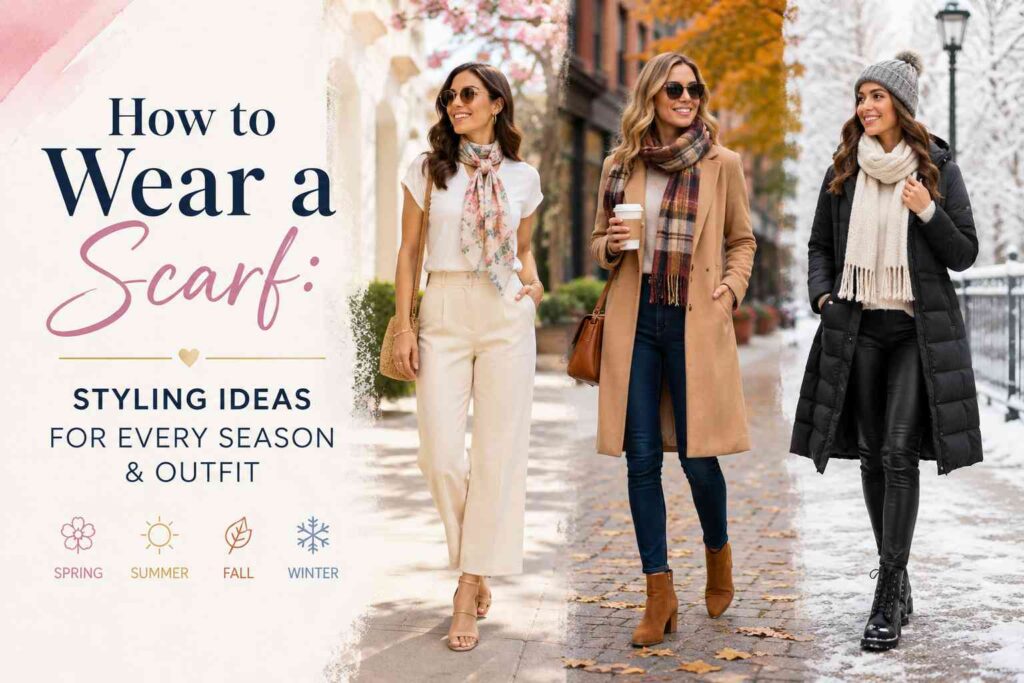
The best scarf styles depend on the fabric, length, season, and outfit you’re wearing. In this guide, you’ll discover practical ways to style scarves throughout the year, choose the right material, coordinate colors, and create polished outfits without buying an entirely new wardrobe.
Items to Buy for Styling Scarves
As an Amazon Associate I earn from qualifying purchases.
- Silk Square Scarf
- Lightweight Oblong Scarf
- Oversized Blanket Scarf
- Cashmere-Feel Winter Scarf
- Cotton Bandana Scarf
- Satin Neck Scarf
- Printed Square Scarf
- Scarf Ring or Scarf Slide
- Neutral Knit Scarf
Why a Scarf Can Transform an Outfit
A scarf adds color, texture, movement, and personality without requiring a complete outfit change. It can make basics feel intentional, soften structured clothing, or introduce a print to an otherwise simple look.
Add Interest to Simple Clothing
A white T-shirt, straight-leg jeans, and loafers can look more styled with a patterned neck scarf. Similarly, a plain knit dress can feel more distinctive with a contrasting scarf tied loosely at the neck or draped over the shoulders.
The key is to let the scarf complement the outfit rather than compete with every other element. If the clothing has bold patterns, a solid scarf can create balance. If the outfit is mostly neutral, a colorful print can become the focal point.
Change the Mood of an Outfit
The same scarf can create different effects depending on how you wear it. A neat knot at the neck looks polished, while a loose drape feels relaxed. A silk scarf tied around a handbag adds a decorative detail, and a thick wool scarf creates a cozy winter look.
Think about the occasion before choosing a style. A small silk scarf can work for a dinner or office outfit, while an oversized knit scarf is more practical for a chilly walk.
How to Choose the Right Scarf for Each Season
The best scarf for an outfit is not just about color. Fabric weight, breathability, size, and how the scarf sits against your skin all affect comfort and appearance.
Spring: Lightweight and Colorful
Spring is a good time to wear cotton, linen blends, and lightweight silk or satin scarves. Soft pastels, floral patterns, and fresh colors work well with trench coats, denim jackets, cardigans, and lightweight dresses.
A thin scarf can be tied around the neck or draped loosely over the shoulders without adding too much warmth. Choose a fabric that feels comfortable as temperatures change throughout the day.
Summer: Breathable and Minimal
In summer, choose lightweight cotton, linen, or thin silk scarves. Smaller square scarves and bandanas are especially easy to style with tank tops, sleeveless dresses, T-shirts, and relaxed button-down shirts.
Use a scarf as a neck accent, hair accessory, or handbag detail. Avoid bulky knots and heavy fabrics when the weather is hot, particularly if you plan to spend several hours outdoors.
Fall: Rich Colors and Layered Textures
Autumn outfits work well with scarves in camel, burgundy, olive, rust, chocolate brown, and deep navy. Lightweight wool, cotton, and medium-weight woven scarves pair naturally with denim jackets, blazers, trench coats, and knitwear.
Layering becomes more practical in fall, so experiment with a loose front drape, a simple loop, or a soft knot. Choose a scarf that adds warmth without making the neckline of your coat feel crowded.
Winter: Warmth and Volume
Winter is the season for wool, cashmere, thick knits, and oversized scarves. Neutral shades such as gray, cream, camel, and black are versatile, while jewel tones can add contrast to dark outerwear.
A looped or wrapped style helps keep the scarf in place and provides warmth around the neck. If you’re wearing a bulky coat, check that the scarf fits comfortably beneath the collar and does not restrict movement.
How to Wear a Scarf: 15 Styling Ideas for Every Outfit
1. Wear a Scarf in a Classic Neck Drape
<AsyncImage query=”woman wearing long neutral scarf draped evenly around neck over white shirt and tailored trousers full outfit street style” aspectRatio=”4:5″ width=”100%” />
The classic neck drape is one of the easiest ways to wear a scarf. Place the center of a long scarf at the back of your neck and let both ends fall evenly down the front. You don’t need a knot, making this style especially suitable for lightweight scarves and outfits that already have a clean silhouette.
Try a camel scarf over a white shirt and tailored trousers, or choose a gray scarf with a black coat for a simple, coordinated look. The hanging ends create vertical lines that work well with open jackets, long coats, and straight-leg jeans. If the scarf is very long, adjust the ends so they fall at a comfortable length rather than dragging against your clothing.
2. Try the Simple One-Loop Style
<AsyncImage query=”woman wearing a long beige scarf looped once around neck with camel coat elegant autumn street style full body” aspectRatio=”4:5″ width=”100%” />
The one-loop style adds structure without looking overly formal. Fold the scarf around the back of your neck, bring one end across the front, and let both ends hang naturally. You can keep the loop loose for a relaxed look or bring it closer to your neck for extra warmth.
This style works particularly well with a trench coat, wool coat, denim jacket, or long cardigan. Choose a medium-weight scarf for fall and winter, or a thinner woven scarf for spring. Keep the rest of your outfit relatively simple if the scarf has a bold check, stripe, or geometric print.
3. Tie a Small Silk Scarf at the Neck
<AsyncImage query=”woman wearing small printed silk square scarf tied neatly at neck with white blouse and tailored black trousers Parisian inspired street style” aspectRatio=”4:5″ width=”100%” />
A small silk scarf adds a refined accent to a simple outfit. Fold a square scarf diagonally into a narrow band, wrap it around your neck, and tie a small knot at the front or slightly to one side. Adjust the fabric so the knot sits comfortably without pulling tightly against your skin.
Pair it with a white blouse, fitted cardigan, striped top, or blazer. A patterned scarf can add color to a neutral outfit, while a solid scarf creates a quieter finish. This style is especially useful when you want an accessory that feels polished but doesn’t add much bulk.
4. Use the French-Inspired Knot
<AsyncImage query=”woman wearing a narrow patterned neck scarf tied in a small elegant knot with navy blazer and white top street style” aspectRatio=”4:5″ width=”100%” />
For a neat, tailored appearance, fold a narrow scarf into a band and tie it in a small knot near the front of the neck. You can position the knot centrally or slightly to one side for a softer effect. Keep the ends short and tidy so they do not compete with the collar of your shirt or blazer.
This styling technique works well for office outfits, dinner plans, and smart-casual occasions. Try a navy scarf with a cream blazer or a burgundy print with a charcoal jacket. A thin scarf is usually easier to arrange than a thick one, especially if you want a compact knot.
5. Drape a Scarf Over Your Shoulders
<AsyncImage query=”woman wearing lightweight cream scarf draped over shoulders over elegant black sleeveless dress evening outfit full body” aspectRatio=”4:5″ width=”100%” />
A scarf draped over the shoulders can act as a light wrap when you need a little extra coverage. Open the scarf fully and let it rest across both shoulders, allowing the ends to fall down the front. This works especially well with wide rectangular scarves and large square styles.
Try this look over a sleeveless dress, a simple jumpsuit, or a fitted top and trousers. A soft neutral scarf can complement an evening outfit without distracting from it, while a colorful scarf can brighten a plain dress. Choose a lightweight fabric for indoor events and a warmer weave for cool evenings.
6. Wear an Oversized Scarf Like a Shawl
<AsyncImage query=”woman wearing oversized camel blanket scarf wrapped around shoulders over fitted sweater and jeans autumn outdoor street style full body” aspectRatio=”4:5″ width=”100%” />
An oversized scarf can double as a casual shawl. Spread it over your shoulders, then arrange the fabric around your upper arms and back. You can leave it open for a flowing silhouette or secure it with a scarf ring if you want it to stay in place.
This style is ideal for cool fall days, travel, outdoor gatherings, and casual outfits. It pairs well with fitted jeans, leggings, long-sleeved tops, and simple dresses. Since the scarf creates volume, balancing it with more streamlined pieces underneath can help the overall outfit feel intentional rather than bulky.
7. Pair a Scarf With a Blazer
<AsyncImage query=”woman wearing slim printed silk scarf with tailored beige blazer white shirt dark trousers elegant smart casual outfit full body” aspectRatio=”4:5″ width=”100%” />
A scarf can soften the sharp lines of a blazer and make tailored clothing feel more personal. Tie a small scarf at the neck, let a narrow scarf hang inside the open lapels, or fold a square scarf into a neat band. Choose a method that does not bunch up beneath the blazer collar.
For an office-ready look, try a cream blazer with a navy scarf and tailored trousers. For a more relaxed outfit, pair a checked blazer with a plain scarf, jeans, and loafers. Keep the scarf proportionate to the lapels so the neckline stays comfortable and uncluttered.
8. Style a Scarf With a Sweater
<AsyncImage query=”woman wearing lightweight plaid scarf over cream knit sweater and dark straight leg jeans cozy fall outfit full body” aspectRatio=”4:5″ width=”100%” />
A scarf and sweater combination creates a layered look that feels appropriate for fall and winter. Choose a lightweight scarf for a fine-knit sweater or a warmer scarf for a chunky knit. Drape it loosely or use a single loop so the neckline does not become too crowded.
Try a plaid scarf with a cream sweater and dark jeans, or a solid camel scarf with a charcoal knit. Mixing textures can make the outfit more interesting, but consider the weight of each piece. A thick scarf paired with a bulky sweater may feel uncomfortable indoors, so keep the layers lighter if you expect to move between outdoor and heated spaces.
9. Add a Scarf to a Denim Jacket
<AsyncImage query=”woman wearing a small red patterned bandana scarf with classic blue denim jacket white t shirt and straight jeans casual street style full body” aspectRatio=”4:5″ width=”100%” />
A denim jacket is an easy base for a colorful scarf. Tie a bandana or small square scarf around the neck, or wear a lightweight rectangular scarf loosely over a plain T-shirt. Red, cream, navy, and patterned designs all work well with classic blue denim.
For a casual weekend outfit, combine the jacket with a white tee, straight-leg jeans, and sneakers. If you want a more coordinated look, repeat one scarf color in your shoes, bag, or top. A small scarf is often the most comfortable choice because it won’t compete with the jacket’s collar.
10. Wear a Scarf With a Dress
<AsyncImage query=”woman wearing elegant floral silk scarf loosely tied at neck over simple midi dress and ankle boots autumn fashion full body” aspectRatio=”4:5″ width=”100%” />
A scarf can add color or texture to a dress without requiring another clothing layer. Tie a small scarf at the neck for a polished look, or drape a longer scarf over your shoulders when the weather is cool. For a printed dress, choose a scarf that picks up one color from the pattern.
A plain black, navy, or cream dress gives you more freedom to experiment with colorful scarves. For a formal occasion, select a smooth, lightweight fabric that falls neatly. For everyday wear, a cotton or soft woven scarf can create a relaxed finish that works with flats, ankle boots, or sneakers.
11. Tie a Scarf Around Your Handbag
<AsyncImage query=”close up of elegant structured tan leather handbag with small patterned silk scarf tied around one handle, neutral outfit fashion accessory” aspectRatio=”4:5″ width=”100%” />
A scarf tied to a handbag is an easy way to use an accessory without wearing it around your neck. Fold a small square scarf into a narrow strip and wrap it around one handle, or tie a small bow near the base of the handle. Keep the knot secure but avoid pulling so tightly that the fabric creases unnecessarily.
This technique works with structured totes, shoulder bags, and small top-handle bags. Choose a scarf that complements the bag’s color or introduces a contrasting accent. Since the scarf may rub against the handle during use, consider a washable or less delicate fabric if you carry the bag frequently.
12. Wear a Scarf as a Hair Accessory
<AsyncImage query=”woman with hair tied in low ponytail using a narrow printed silk scarf as a hair tie, white blouse and jeans casual elegant style” aspectRatio=”4:5″ width=”100%” />
A scarf can be tied around a ponytail, woven into a braid, or wrapped around a bun. A narrow scarf is usually easiest to handle, while a larger square scarf can be folded into a headband. Tie it securely enough to stay in place, but avoid pulling so tightly that it causes discomfort or breaks delicate hair.
Coordinate the scarf with your top or bag for a cohesive look. A floral scarf can add interest to a simple summer outfit, while a solid satin scarf creates a subtle accent. If you have fine or fragile hair, choose a smooth fabric and avoid knots that tug at the same section throughout the day.
13. Use a Scarf as a Head Wrap
<AsyncImage query=”woman wearing a neatly tied patterned square scarf as a head wrap with simple neutral outfit outdoor fashion portrait full body” aspectRatio=”4:5″ width=”100%” />
A square scarf can be styled as a head wrap for a practical and decorative finish. Fold it into a triangle, place the folded edge along your hairline, and tie the ends securely at the back or side according to the look you prefer. Adjust the fabric so it sits comfortably and stays in place.
This style works with summer dresses, casual denim outfits, and relaxed travel clothing. A lightweight cotton scarf is often comfortable in warm weather, while a silk or satin scarf can create a smoother finish. If you plan to wear it for several hours, check that the knot does not create pressure or slip during movement.
14. Try a Scarf With a Coat
<AsyncImage query=”woman wearing a long camel wool coat with oversized cream scarf looped around neck and black boots winter street style full body” aspectRatio=”4:5″ width=”100%” />
A scarf and coat combination is both practical and stylish when the weather turns cold. For a simple loop, place the scarf around your neck and bring the ends through the front. For a more relaxed look, drape it over the coat and let the ends hang naturally.
Camel, charcoal, navy, and black coats pair easily with cream, gray, burgundy, and patterned scarves. If your coat has a large collar, choose a thinner scarf to prevent bunching. With a minimalist coat, an oversized checked or textured scarf can add visual interest while providing warmth.
15. Create a Monochromatic Scarf Outfit
<AsyncImage query=”woman wearing tonal cream monochrome outfit with ivory scarf matching knit top and tailored trousers elegant minimalist fashion full body” aspectRatio=”4:5″ width=”100%” />
A monochromatic outfit uses different shades of one color family to create a coordinated appearance. Try an ivory scarf with a cream sweater and beige trousers, or combine a charcoal scarf with a gray coat and dark trousers. Varying textures helps prevent the outfit from looking flat.
You don’t need every item to match exactly. A slightly lighter or darker scarf can create dimension while keeping the overall look cohesive. This approach is especially useful when you want a polished outfit from simple wardrobe staples and prefer accessories that work with multiple pieces.
How to Choose Scarf Colors That Complement Your Outfit
Color coordination can make a scarf look like a natural part of an outfit rather than an afterthought.
Match One Color From a Pattern
If your scarf has several colors, choose one shade and repeat it in your top, trousers, shoes, or bag. This creates a visual connection between the pieces without requiring an exact match.
For example, a navy-and-cream scarf can work with a cream sweater and navy trousers. A scarf with rust details can complement a camel coat or brown boots.
Use Neutrals for Versatility
Black, gray, cream, camel, navy, and chocolate brown scarves can work with many wardrobe basics. A neutral scarf is especially useful if you want one accessory to pair with coats, sweaters, blazers, and casual tops.
For a softer look, combine related tones such as cream and beige. For more contrast, wear a light scarf against a dark coat or a charcoal scarf with a pale sweater.
Make a Bright Scarf the Focal Point
A vivid scarf can bring energy to a simple outfit. Red, cobalt, emerald, or fuchsia can stand out against black, white, denim, or gray clothing.
When the scarf is the main focal point, keep other accessories relatively simple. You can repeat a small accent color elsewhere, but you do not need to match every item.
Common Scarf Styling Mistakes to Avoid
- Choosing the wrong fabric for the weather: Heavy wool can feel uncomfortable in summer, while a thin silk scarf may provide little warmth in winter.
- Creating too much bulk: Thick scarves can crowd the neckline when paired with chunky sweaters or high-collared coats.
- Ignoring proportions: A very large scarf may overwhelm a delicate outfit, while a tiny scarf can look out of place with a bulky coat.
- Overmatching every accessory: Coordinating one or two colors is usually enough; exact matching is not necessary.
- Tying knots too tightly: A scarf should sit comfortably and should not restrict movement or breathing.
- Forgetting the occasion: A delicate silk scarf may suit a dinner outfit, while a practical wool scarf is better for a cold outdoor day.
- Neglecting fabric care: Silk, wool, and cashmere may need special washing or professional cleaning. Always check the care label.
How to Care for Your Scarves
Proper care helps scarves keep their shape, color, and texture. Different materials require different handling, so avoid washing every scarf in the same way.
Read the Care Label
Check whether the scarf is machine washable, hand washable, or dry-clean only. Silk, wool, cashmere, and embellished scarves may require more delicate care than ordinary cotton.
When the label recommends professional cleaning, follow that guidance rather than experimenting with household stain removers.
Store Scarves Carefully
Fold knitted scarves loosely to reduce stretching, and keep delicate silk scarves away from sharp jewelry or rough surfaces that may snag them. Store clean scarves in a dry place away from direct sunlight to help protect their colors.
If you hang a scarf, make sure the fabric will not stretch under its own weight. Heavy knitted styles are generally better folded.
Remove Wrinkles Gently
Use the care label to determine whether steaming or ironing is appropriate. Delicate fabrics can be damaged by excessive heat, and some synthetic fibers may melt or develop shine if pressed incorrectly.
When in doubt, use a cautious approach and test an inconspicuous area first.
FAQs About How to Wear a Scarf
What is the easiest way to wear a scarf?
The classic drape is the easiest option. Place the scarf around the back of your neck and let both ends fall down the front. It requires no knot and works with many casual and smart-casual outfits.
How do you wear a scarf without looking bulky?
Choose a lightweight or medium-weight scarf, use a simple drape or single loop, and avoid piling thick fabric around a high neckline. If you’re wearing a chunky sweater or coat, a thinner scarf may feel more comfortable.
Can you wear a scarf in summer?
Yes. Choose breathable fabrics such as cotton, linen blends, or lightweight silk. Small square scarves, bandanas, and narrow hair scarves can add color without creating too much warmth.
How do you wear a scarf with a blazer?
Try a small scarf tied neatly at the neck or a narrow scarf draped inside the lapels. Keep the knot compact so it does not bunch beneath the collar or interfere with the blazer’s shape.
What scarf color goes with everything?
Neutral shades such as black, gray, cream, camel, and navy are versatile choices. The best color depends on your wardrobe, but a neutral scarf can usually be worn with a broad range of basics.
How do you style an oversized scarf?
Drape it over your shoulders like a shawl, wrap it loosely around your neck, or use a single loop. Balance the extra volume with a more streamlined outfit if you want to keep the silhouette defined.
Can you wear a scarf with a dress?
Absolutely. Tie a small scarf at the neck, drape a larger scarf over your shoulders, or choose a scarf that picks up a color from the dress’s print. Lightweight fabrics are often easiest for formal or warm-weather outfits.
How do you wear a scarf with a coat?
Use a single loop for warmth, drape the scarf over the coat for a relaxed look, or tuck the ends inside the front for a neater finish. Make sure the scarf does not interfere with the coat’s collar or movement.
Should your scarf match your outfit?
It does not have to match exactly. A scarf can coordinate with one color in your outfit, complement your neutrals, or provide a contrasting accent. Repeating one shade elsewhere can help the outfit feel cohesive.
How do you keep a scarf from slipping?
Use a secure but comfortable knot, choose a scarf ring if suitable, or tuck the ends into a coat or jacket. Smooth fabrics may slip more easily than textured ones, so the best solution depends on the scarf material and style.
Final Thoughts
Learning how to wear a scarf gives you an easy way to refresh outfits in every season. Try a classic drape for everyday wear, a silk neck knot for tailored looks, an oversized wrap for colder weather, or a scarf tied around your bag or hair for a decorative touch.
Start with scarves that suit your wardrobe and the weather, then experiment with different knots, textures, and colors. A few versatile scarves can make familiar outfits feel more considered without adding unnecessary complexity.
Helpful Resources
- Victoria and Albert Museum — Explore fashion history, textiles, and accessory design for inspiration.
- The Metropolitan Museum of Art — Discover historical clothing and textile collections that show how accessories have been worn across cultures and eras.