
A clean fish tank is essential for healthy, stress-free fish and clear, beautiful water. Over time, waste, algae, and uneaten food build up, affecting water quality and fish health if not handled properly.
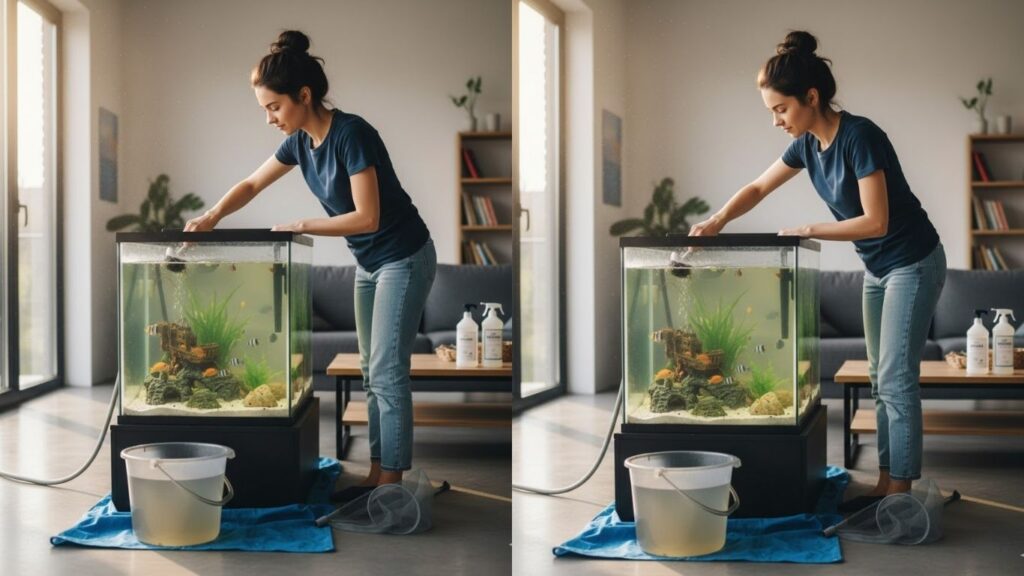
With the right approach, cleaning a fish tank becomes simple and safe. Regular care keeps fish active, water crystal clear, and the aquarium enjoyable to maintain.
Items You Might Need
- Aquarium gravel vacuum
- Algae scrubber pad
- Fish-safe water conditioner
- Bucket reserved for aquarium use
- Aquarium glass cleaner
Why Regular Fish Tank Cleaning Is Important
Fish tanks are closed environments where waste accumulates quickly. Fish produce waste, leftover food sinks, and plants shed organic matter. Without regular cleaning, toxins such as ammonia and nitrates build up, which can harm or kill fish.
Cleaning helps maintain stable water chemistry, improves oxygen levels, and reduces stress on fish. It also prevents cloudy water, unpleasant odors, and excessive algae growth. A clean tank supports stronger immune systems and longer fish lifespans.
How to Clean a Fish Tank
Cleaning a fish tank requires balance. The goal is to remove waste while preserving beneficial bacteria that keep the ecosystem healthy. Below are seven effective methods, explained step by step, to clean a fish tank safely and thoroughly.
1. Partial Water Change Method
Step 1: Unplug heaters, filters, and lights to ensure safety.
Step 2: Use a gravel vacuum to siphon water into a bucket. Remove 20–30% of the tank water only.
Step 3: While siphoning, gently move the vacuum through the gravel to lift fish waste and debris.
Step 4: Dispose of the old water away from household drains used for chemicals.
Step 5: Refill the tank with fresh water at the same temperature as the tank.
Step 6: Add fish-safe water conditioner to remove chlorine and chloramine.
Step 7: Plug equipment back in and observe fish behavior.
This method is the foundation of regular aquarium maintenance and should be done weekly or biweekly.
2. Cleaning the Tank Glass
Step 1: Use an algae scrubber or magnetic cleaner designed for aquariums.
Step 2: Gently scrub the inside glass to remove algae buildup.
Step 3: Avoid household glass cleaners, as they are toxic to fish.
Step 4: For stubborn algae, scrape lightly using a plastic blade.
Step 5: Wipe the outside glass with an aquarium-safe glass cleaner.
Step 6: Dry with a microfiber cloth for a streak-free finish.
Step 7: Inspect corners and seams for leftover buildup.
Clean glass improves visibility and light penetration, supporting plant and fish health.
3. Gravel and Substrate Cleaning
Step 1: Insert the gravel vacuum into the substrate.
Step 2: Push gently downward and allow debris to rise into the siphon.
Step 3: Lift the vacuum slowly to let clean gravel fall back.
Step 4: Move section by section across the tank floor.
Step 5: Avoid disturbing plant roots excessively.
Step 6: Remove no more than one-third of debris per session.
Step 7: Complete cleaning during a partial water change.
Clean substrate prevents toxic gas pockets and keeps water chemistry stable.
4. Cleaning Aquarium Decorations
Step 1: Remove decorations carefully from the tank.
Step 2: Rinse them in removed tank water, not tap water.
Step 3: Use a soft brush to scrub algae and debris.
Step 4: Avoid soap or chemical cleaners completely.
Step 5: For heavy algae, soak decorations in warm water briefly.
Step 6: Rinse thoroughly using tank water.
Step 7: Return decorations to the tank gently.
Decorations can trap waste, so periodic cleaning keeps the environment healthy.
5. Filter Cleaning Without Killing Beneficial Bacteria
Step 1: Turn off and unplug the filter.
Step 2: Remove filter media carefully.
Step 3: Rinse media in a bucket of old tank water.
Step 4: Gently squeeze sponges to remove debris.
Step 5: Never rinse filter media under tap water.
Step 6: Replace worn media only partially, not all at once.
Step 7: Reassemble and restart the filter.
This method protects beneficial bacteria essential for breaking down waste.
6. Managing Algae Growth
Step 1: Reduce excess lighting to 6–8 hours per day.
Step 2: Remove visible algae manually during cleaning.
Step 3: Avoid overfeeding fish.
Step 4: Perform regular partial water changes.
Step 5: Clean filter media consistently.
Step 6: Keep the tank away from direct sunlight.
Step 7: Monitor nutrient levels regularly.
Controlled algae growth keeps the tank attractive and balanced.
7. Deep Cleaning for Neglected Tanks
Step 1: Remove fish and place them in a temporary container with tank water.
Step 2: Drain most of the water using a siphon.
Step 3: Clean gravel thoroughly in sections.
Step 4: Scrub glass and decorations with aquarium-safe tools.
Step 5: Refill slowly with conditioned water.
Step 6: Acclimate fish back into the tank gradually.
Step 7: Monitor water parameters closely for several days.
Deep cleaning should be done carefully and only when absolutely necessary.
Tips for Keeping a Fish Tank Clean Longer
- Feed fish only what they can eat in two minutes
- Perform regular partial water changes
- Avoid overcrowding the tank
- Maintain proper filtration
- Test water parameters regularly
- Clean equipment on a schedule
- Observe fish daily for behavior changes
Common Fish Tank Cleaning Mistakes
- Cleaning the entire tank at once
- Using soap or chemical cleaners
- Replacing all filter media together
- Over-cleaning beneficial bacteria
- Ignoring water temperature differences
- Forgetting to condition new water
Avoiding these mistakes ensures a stable and healthy aquarium environment.
FAQ
How often should a fish tank be cleaned?
Partial water changes should be done weekly or biweekly, depending on tank size and fish load.
Can fish stay in the tank during cleaning?
Yes, during routine cleaning. Fish should only be removed for deep cleaning.
Why does my tank get cloudy after cleaning?
Cloudiness often comes from disturbed debris or bacterial blooms and usually clears within 24–48 hours.
Is tap water safe for fish tanks?
Tap water must be treated with a fish-safe conditioner before use.
Can I clean a fish tank without a vacuum?
Yes, but a gravel vacuum makes waste removal much easier and more effective.
Final Words
Cleaning a fish tank is essential for clear water, healthy fish, and a balanced aquatic environment. Gentle, regular maintenance prevents problems and keeps the aquarium enjoyable.
By following these step-by-step methods, fish tanks remain clean, stable, and visually appealing. Consistent care ensures fish thrive and the tank stays beautiful for years to come.