
Quartz countertops are popular for their durability, modern appearance, and low maintenance needs. They resist stains better than many natural stones, but daily cooking, spills, and grease can still leave marks if not cleaned properly.
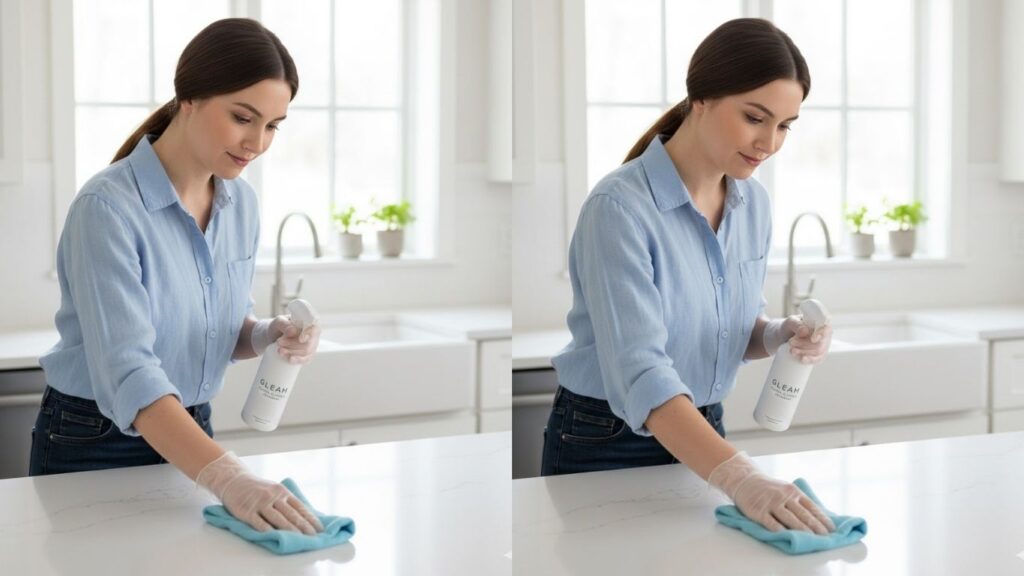
The good news is that quartz is non-porous and easy to maintain with the right methods. With simple household supplies and consistent care, you can keep your quartz countertops looking spotless, polished, and beautiful for years.
Essential Items to Keep Ready
- Mild dish soap
- Microfiber cloth
- Non-abrasive sponge
- Isopropyl alcohol
- Plastic scraper
Why Proper Quartz Care Matters
Quartz countertops are engineered stone surfaces made from natural quartz combined with resins. While they are strong and stain-resistant, harsh chemicals, abrasive tools, and high heat can damage the resin binders. Proper cleaning preserves shine, prevents dullness, and protects the surface from long-term wear.
Unlike granite, quartz does not need sealing. However, regular cleaning prevents buildup from grease, soap residue, and cooking spills that can reduce its glossy finish.
How to Clean Quartz Countertops
Before trying any method, remove loose crumbs and wipe the surface with a dry cloth. Always avoid harsh scrubbing pads or acidic cleaners.
1. Daily Cleaning with Soap and Water
This is the safest and most recommended method.
Step-by-Step Instructions
- Fill a bowl with warm water.
- Add a few drops of mild dish soap.
- Dip a microfiber cloth into the solution.
- Wipe the countertop gently in circular motions.
- Rinse the cloth with clean water and wipe again to remove soap residue.
- Dry with a soft towel to prevent streaks.
Daily cleaning prevents buildup and keeps the surface shiny.
2. Removing Grease with Isopropyl Alcohol
Ideal for kitchen areas near stovetops.
Step-by-Step Instructions
- Mix equal parts water and isopropyl alcohol in a spray bottle.
- Lightly spray the greasy area.
- Let it sit for one to two minutes.
- Wipe with a microfiber cloth.
- Rinse with a damp cloth and dry.
Alcohol breaks down grease without harming quartz.
3. Baking Soda Paste for Stubborn Spots
Helpful for dried spills or sticky residue.
Step-by-Step Instructions
- Mix baking soda with a small amount of water to form a paste.
- Apply the paste to the stain.
- Let it sit for 5–10 minutes.
- Gently wipe with a damp sponge.
- Rinse thoroughly and dry.
Avoid scrubbing aggressively to protect the finish.
4. Plastic Scraper for Dried Food
Safe way to remove hardened residue.
Step-by-Step Instructions
- Hold a plastic scraper at a low angle.
- Gently slide it under dried food or spills.
- Wipe away loosened debris with a damp cloth.
- Clean the area with mild soap solution.
- Dry thoroughly.
Never use metal tools that can scratch the surface.
5. Glass Cleaner for Quick Shine
Useful for removing fingerprints and light smudges.
Step-by-Step Instructions
- Spray a small amount of non-ammonia glass cleaner.
- Wipe with a microfiber cloth.
- Buff dry to restore shine.
Use occasionally, not as a primary cleaner.
6. Deep Cleaning Monthly Routine
Keeps the countertop looking like new.
Step-by-Step Instructions
- Clear the countertop completely.
- Clean with soap and warm water thoroughly.
- Treat greasy areas with alcohol solution.
- Remove any stuck debris with plastic scraper.
- Rinse and dry the entire surface.
- Buff gently with a dry microfiber cloth.
A monthly routine prevents dull buildup.
7. Disinfecting Safely
Safe sanitation without damage.
Step-by-Step Instructions
- Mix water with a small amount of isopropyl alcohol.
- Lightly spray the surface.
- Let sit for one minute.
- Wipe clean with a soft cloth.
- Dry completely.
Avoid bleach or strong disinfectants that may dull the finish.
What to Avoid on Quartz Countertops
- Harsh chemicals like bleach
- Abrasive scrub pads
- Oven cleaners
- Highly acidic cleaners
- Direct heat from hot pans
Always use trivets or heat pads to prevent resin damage.
How to Prevent Stains and Damage
Wipe Spills Immediately
Although quartz is stain-resistant, prolonged exposure to wine, coffee, or sauces can cause discoloration.
Use Cutting Boards
Avoid cutting directly on the surface to prevent scratches.
Avoid Extreme Heat
Place hot cookware on trivets instead of directly on quartz.
Keep the Surface Dry
Standing water can leave mineral spots. Always dry after cleaning.
Handling Common Stains
Coffee and Tea Stains
Clean immediately with soap and water. For older stains, use baking soda paste gently.
Wine and Juice Spills
Wipe quickly and clean with alcohol solution to prevent discoloration.
Sticky Residue
Use a plastic scraper followed by soap cleaning.
Frequently Asked Questions
Does quartz need sealing
No, quartz is non-porous and does not require sealing.
Can I use vinegar on quartz
Vinegar is acidic and should be avoided for regular cleaning as it may dull the finish.
Is bleach safe for quartz
Bleach is not recommended because it can damage the resin and reduce shine.
How often should quartz be cleaned
Daily light cleaning and monthly deep cleaning are ideal.
Final Words
Quartz countertops are durable and beautiful, but proper care keeps them shining for years. Simple cleaning routines with mild products protect the surface and maintain its elegance.
By avoiding harsh chemicals and practicing regular maintenance, you can preserve both the appearance and longevity of your quartz countertops with confidence.