
Learning how to wear a scarf with a coat can help you create warm, polished outfits without sacrificing comfort. The right scarf can complement your coat’s color, add texture, and make a simple winter outfit feel thoughtfully styled.
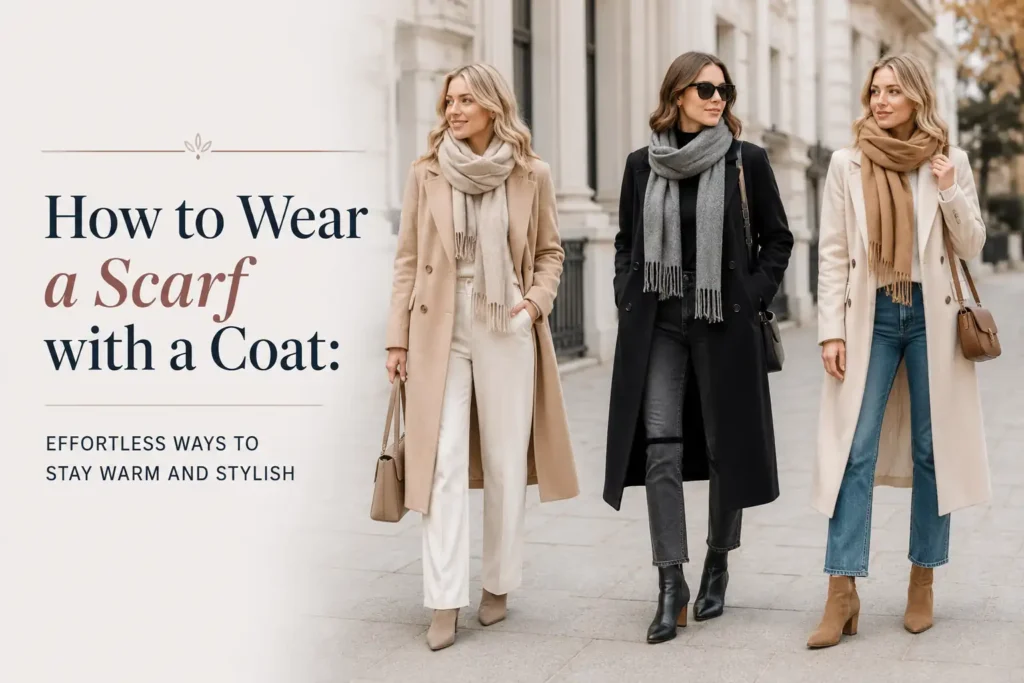
Whether you prefer a classic wool coat, a long trench, a puffer jacket, or a tailored blazer, a few easy styling techniques can make all the difference. From elegant Parisian-inspired looks to cozy everyday combinations, this guide covers versatile scarf styles for different coats, occasions, and weather conditions.
Affiliate disclosure: As an Amazon Associate, I earn from qualifying purchases.
Items to Buy
- Women’s Wool Scarves
- Cashmere Scarves
- Oversized Winter Scarves
- Plaid Scarves
- Neutral Knit Scarves
- Silk Neck Scarves
- Long Winter Coats
- Wool Blend Coats
- Trench Coats
- Puffer Jackets
- Leather Gloves
- Knit Beanies
- Women’s Ankle Boots
- Structured Shoulder Bags
Why a Scarf Makes Such a Difference
A scarf is more than a practical winter accessory. It can change the proportions of an outfit, introduce a new color, soften a structured coat, or add visual interest to a simple combination of jeans and boots.
A chunky knit scarf creates a relaxed, cozy appearance, while a lightweight cashmere or wool scarf can make a tailored coat look more refined. Patterned scarves add personality to neutral outerwear, and monochrome combinations create a streamlined, elegant effect.
The key is choosing a scarf that works with the coat’s shape, fabric, color, and collar. You do not need a large collection to create different looks. A few versatile scarves in complementary colors can make your existing coats feel new again.
How to Choose the Right Scarf for Your Coat
Before experimenting with different wrapping techniques, consider how the scarf will sit around your neck and shoulders.
Match the Scarf Thickness to the Coat
Thick, oversized scarves work especially well with simple wool coats, relaxed overcoats, and roomy winter jackets. Their volume creates a cozy silhouette without competing with too many details.
If your coat already has a bulky collar, padded shoulders, or a high neckline, a thinner scarf may be more comfortable. Lightweight wool, cashmere, and soft woven scarves can provide warmth without creating excessive bulk around your neck.
Consider the Length
Long scarves offer more styling options because you can loop them, wrap them, or let the ends hang down the front of your coat. Medium-length scarves work well for simple knots and loose drapes.
An oversized square scarf can be folded into a triangle and wrapped around the neck for a different shape. Choose a length that allows you to move comfortably without the ends dragging or getting caught in bags, doors, or other objects.
Choose a Suitable Fabric
Different scarf materials create different effects.
- Wool: A practical choice for cold weather, with a textured appearance that suits many winter coats.
- Cashmere: Soft and lightweight, making it ideal for elegant outfits and comfortable layering.
- Acrylic knit: Often budget-friendly and available in a wide range of colors and textures.
- Silk: Best for decorative styling, mild weather, and adding a polished accent to lighter coats.
- Cotton: Useful for transitional weather when you want a breathable layer without heavy insulation.
- Wool blends: Offer a variety of textures and warmth levels depending on their construction.
Always consider the weather and how much warmth you need, rather than choosing a scarf based on appearance alone.
Coordinate Colors and Patterns
Neutral scarves in cream, gray, camel, black, and navy are easy to wear with several coats. They are particularly useful if you prefer a capsule wardrobe with pieces that can be mixed and matched.
Patterned scarves can bring color to a plain coat. If your coat is already patterned or textured, a solid scarf often creates a calmer appearance. You can also combine patterns successfully by choosing designs with complementary colors and different scales.
How to Wear a Scarf with a Coat: 10 Stylish Outfit Ideas
1. Drape a Scarf Over a Classic Wool Coat
For a timeless winter outfit, wear a long wool scarf loosely draped over a tailored wool coat. Choose a camel coat with a cream scarf, a charcoal coat with a light gray scarf, or a navy coat with a soft beige accent. Let both ends fall naturally down the front for a clean, understated appearance.
Complete the outfit with straight-leg jeans or tailored trousers, leather ankle boots, and a structured handbag. This combination works well for commuting, shopping, lunch dates, and everyday winter activities. It is particularly effective when you want to look polished without spending much time arranging your accessories.
2. Wrap an Oversized Scarf Around a Long Coat
An oversized scarf adds warmth and creates a relaxed silhouette when paired with a long coat. Fold the scarf lengthwise if needed, place it around your neck, and wrap it once or twice depending on its thickness. Allow the ends to fall at different lengths for an effortless finish.
Keep the rest of the outfit relatively simple with a fitted sweater, slim or straight-leg trousers, and sturdy boots. This helps balance the volume of the scarf and coat. Choose a neutral scarf for a minimalist outfit or a bright color to make the outerwear more eye-catching.
3. Wear a Plaid Scarf with a Neutral Coat
A plaid scarf is an easy way to add color and pattern to a plain winter coat. Try a red-and-navy plaid scarf with a black coat, a green-and-cream design with camel outerwear, or a gray check with a charcoal coat. Fold the scarf in half, place it around your neck, and pull the loose ends through the loop for a simple finish.
Pair the outfit with dark jeans, a knit sweater, and ankle boots for a classic cold-weather look. Because plaid already creates visual interest, keep other accessories fairly understated. This combination works beautifully for weekend outings, casual dinners, and seasonal trips.
4. Create a Chic Monochrome Look
A monochrome outfit uses different shades of one color to create a coordinated appearance. Wear a cream scarf with an ivory coat, a charcoal scarf with a gray coat, or a black scarf with a black overcoat. Varying the textures keeps the outfit from appearing flat.
For example, combine a smooth wool coat with a soft ribbed scarf, tailored trousers, and leather boots. Add a bag in a similar shade for a cohesive finish. This styling approach is ideal for workdays, city walks, dinners, and occasions when you want an elegant outfit without relying on bold prints.
5. Pair a Bright Scarf with a Black Coat
A bright scarf can instantly lift a dark winter outfit. A black coat creates a versatile background for shades such as red, emerald green, cobalt blue, fuchsia, or mustard yellow. Drape the scarf over your shoulders or wrap it loosely around your neck so the color remains visible.
Keep the rest of the outfit simple with black trousers, dark jeans, and matching boots. You can repeat the scarf color in a small accessory, such as gloves or a handbag, if you want a more coordinated appearance. This combination is especially useful on gray winter days when you want a little extra color.
6. Style a Scarf with a Trench Coat
A trench coat pairs beautifully with a lightweight wool, cotton, or cashmere scarf. Choose a beige trench with a navy scarf, a black trench with a patterned accent, or an olive trench with a cream scarf. Drape the scarf around your neck without creating too much bulk beneath the lapels.
Wear the combination with straight-leg jeans, tailored trousers, loafers, or ankle boots. The lighter layers make this outfit suitable for spring, fall, and mild winter days. A neat scarf arrangement also complements the trench coat’s structured collar and belt, creating a polished appearance for travel, work, or weekend plans.
7. Wear a Scarf with a Puffer Jacket
Puffer jackets are practical for cold weather, but their padded shape can make thick accessories feel bulky. Choose a medium-weight scarf and wrap it once around your neck, keeping the knot or loop comfortable rather than tight. A longer scarf can also be tucked loosely inside the jacket if the neckline allows it.
Pair the outfit with leggings or relaxed trousers, warm boots, and a beanie for a comfortable winter look. If your puffer is black or navy, a cream, gray, or colorful scarf adds contrast. This combination is ideal for walks, errands, outdoor markets, and casual winter travel.
8. Tie a Lightweight Scarf with a Tailored Coat
For a refined outfit, use a lightweight wool or cashmere scarf with a tailored coat. Fold the scarf lengthwise and drape it around your neck, allowing the ends to hang neatly down the front. You can tuck one end beneath the coat’s lapel for a subtle asymmetrical effect.
Wear the combination with tailored trousers, a fine-knit sweater, leather gloves, and polished ankle boots or loafers. Choose coordinated neutral shades for a sophisticated appearance, or use a soft pastel scarf to add gentle color. This styling method works well for office settings, meetings, dinner reservations, and occasions that call for smart outerwear.
9. Combine a Textured Scarf with a Leather Coat or Jacket
A leather jacket or coat has a smooth, structured finish that contrasts nicely with a soft knitted scarf. Try a charcoal knit scarf with a black leather jacket, a cream scarf with brown leather, or a deep burgundy scarf with a dark coat. A loose loop keeps the outfit relaxed while adding warmth around the neckline.
Finish the look with jeans, a simple top, and ankle boots or sneakers. The combination of smooth leather and textured knit creates visual interest without requiring multiple patterns. It is a great option for casual dinners, concerts, weekend outings, and transitional weather.
10. Drape a Statement Scarf over a Long Winter Coat
A statement scarf can become the focal point of your winter outfit. Choose a bold plaid, colorful stripe, large geometric pattern, or rich jewel tone, then drape it over a simple long coat. Leave the ends visible so the pattern or color stands out against the outerwear.
Keep the rest of the look understated with neutral trousers, simple boots, and a plain sweater. If the scarf is especially large, arrange it carefully so it does not overwhelm the coat’s shape. This approach is ideal for winter city outfits, travel days, weekend gatherings, and anyone who wants to refresh familiar outerwear with one accessory.
Different Ways to Tie a Scarf with a Coat
The way you arrange a scarf can change the appearance and warmth of your outfit. These simple techniques work with many scarf lengths and coat styles.
The Classic Loop
Fold a long scarf in half, place it around your neck, and pull the loose ends through the loop. Adjust the loop so it sits comfortably and the ends fall evenly.
This method is practical for cold days and works particularly well with wool coats, parkas, and casual jackets. If the scarf is very thick, leave the loop looser to avoid crowding the neckline.
The Loose Drape
Simply place the scarf around the back of your neck and let both ends hang down the front. This is one of the easiest ways to style a scarf because it requires little adjustment.
The loose drape works well with tailored coats and lightweight scarves. It is especially useful when you want to show the scarf’s color or pattern without adding too much bulk. On windy days, secure the ends beneath your coat or choose a more secure wrap.
The Double Wrap
Place the scarf around your neck and wrap it again, allowing the ends to hang naturally. This technique provides additional coverage around the neck and is useful in colder weather.
A double wrap works best with longer scarves that are not excessively bulky. If your coat has a high collar, keep the wrapping loose enough to allow comfortable movement.
The Shoulder Drape
Spread a large scarf across your shoulders and let it fall over the front of your coat. You can secure one side beneath the opposite lapel if you want it to stay in place.
This style works well with long coats, oversized scarves, and relatively calm weather. It creates a dramatic layered appearance but may be less practical in strong wind or when carrying a shoulder bag.
The Simple Knot
Drape the scarf around your neck, cross the ends, and tie a loose knot at the front. Adjust the knot so it sits comfortably and the ends hang naturally.
This option adds a little structure to an otherwise simple outfit. It works well with medium-length scarves and casual coats, but avoid tying it too tightly or using a bulky knot under a high collar.
How to Match Scarf Colors with Coat Colors
Color coordination can help your scarf and coat look intentional without requiring an exact match.
- Black coat: Try cream, gray, camel, burgundy, red, or a colorful plaid scarf.
- Camel coat: Pair it with cream, chocolate brown, navy, olive, or burgundy.
- Gray coat: Choose black, white, pale pink, navy, or a jewel-toned scarf.
- Navy coat: Cream, gray, camel, burgundy, and mustard can create attractive contrast.
- White or cream coat: Try beige, brown, gray, forest green, or a patterned scarf.
- Brown coat: Consider cream, rust, olive, navy, or a soft blue accent.
- Green coat: Neutral shades such as cream, black, and gray work well, while burgundy can provide a richer contrast.
You can also use a scarf to connect the colors in the rest of your outfit. For example, a scarf containing small amounts of navy and cream can coordinate a navy coat with light trousers or a cream sweater.
How to Wear a Scarf with a Coat in Different Seasons
Fall
Fall is ideal for experimenting with medium-weight scarves, plaid patterns, and earthy colors. Pair a trench coat or wool-blend coat with a lightweight knit scarf in camel, olive, rust, or burgundy.
You can wear the scarf loosely draped or use a classic loop when temperatures drop. Loafers, ankle boots, and layered knitwear complete the seasonal look.
Winter
For winter, prioritize warmth and comfortable layering. Choose wool, cashmere, or another insulating scarf, and pair it with a long wool coat, parka, or puffer jacket.
A double wrap or classic loop can help cover the neck more effectively than a loose drape. Make sure the scarf does not restrict movement or interfere with your coat’s closure, and tuck loose ends securely when walking in windy conditions.
Spring
Spring outfits often benefit from lighter fabrics and less bulky wrapping. A thin wool, cotton, or cashmere scarf can add color to a trench coat or lightweight jacket without making you feel overheated.
Try pastel shades, soft neutrals, or floral patterns. A loose drape is usually enough for mild weather, and the scarf can be removed easily when the temperature rises.
Mild Weather
When the weather is cool rather than cold, choose a lightweight scarf mainly for style. A narrow scarf draped over a tailored coat can add texture without creating a heavy layered appearance.
Silk and light cotton scarves are useful for decorative styling, although they provide less insulation than wool. If you need meaningful warmth, choose a fabric suited to the temperature rather than relying on appearance alone.
Common Scarf-and-Coat Styling Mistakes to Avoid
Small adjustments can make a scarf-and-coat outfit more comfortable and balanced.
- Adding too much bulk: A thick scarf beneath a bulky collar can feel crowded. Choose a thinner scarf or a looser wrapping technique.
- Ignoring proportions: An oversized scarf may overwhelm a very fitted coat. Balance a voluminous scarf with a simpler silhouette.
- Matching every color exactly: Coordinating shades often looks more natural than making every accessory identical. Try complementary colors or different tones within the same color family.
- Using the wrong fabric for the weather: A lightweight silk scarf may look elegant but will not provide the same warmth as wool. Choose materials according to the temperature.
- Letting the ends drag or snag: Very long scarves can catch on bags, doors, or other objects. Adjust the length or tuck the ends securely when needed.
- Tying the scarf too tightly: A scarf should sit comfortably around the neck and allow natural movement.
- Overlooking the coat’s collar: A wide lapel, high neckline, or hood can affect how a scarf sits. Test the combination before heading out.
Tips for Making Scarves More Versatile
You do not need a different scarf for every coat. Start with a few versatile colors, such as cream, gray, black, camel, or navy, that work with much of your existing outerwear.
Then add one or two patterned or colorful scarves to create variety. A plaid scarf can bring interest to a plain coat, while a solid neutral scarf can calm an outfit with a bold pattern. Changing the wrapping method can also make the same scarf look different from one day to the next.
Store scarves neatly so they stay clean and easy to find. Follow the care label for washing and drying, especially for wool, cashmere, and silk, which may need gentler treatment than synthetic knits.
FAQs
Should a scarf go inside or outside a coat?
Either option can work. A thin scarf can sit inside the coat for a neat appearance, while a thicker or patterned scarf can be worn outside to make it a visible part of the outfit. Choose the arrangement that feels comfortable and suits the coat’s collar.
How do you wear a scarf with a coat without looking bulky?
Choose a thinner scarf, use a loose drape, or make one simple loop rather than wrapping it several times. A coat with a roomy neckline can also make layering easier.
What color scarf goes with a black coat?
Cream, gray, camel, burgundy, red, navy, and patterned scarves all work well with black coats. Choose a color based on whether you want a subtle combination or a more noticeable accent.
Can you wear a patterned scarf with a patterned coat?
Yes, but the patterns should work together. One easy approach is to choose designs with complementary colors and different scales, such as a small check with a larger, softer pattern. If the coat is already visually busy, a solid scarf is often simpler.
How do you wear a scarf with a trench coat?
A lightweight scarf can be draped loosely over the neck or tucked neatly beneath the lapels. Avoid adding too much bulk around the collar so the trench coat’s shape remains visible.
What is the warmest way to wear a scarf with a winter coat?
A wool or cashmere scarf wrapped once or twice around the neck can provide useful warmth. The best method depends on scarf length, thickness, and weather. Keep the wrap comfortable and avoid restricting movement.
Can you wear a scarf with a puffer jacket?
Absolutely. Choose a medium-weight scarf or a thinner scarf if the puffer already has a high collar. A simple loop or a scarf tucked loosely inside the jacket can reduce bulk.
How long should a scarf be when wearing it with a coat?
A longer scarf gives you more options for looping and wrapping, while a shorter scarf works well for a simple knot or drape. Choose a length that feels comfortable and does not drag or catch on nearby objects.
Can you wear a silk scarf with a winter coat?
Yes, a silk scarf can add color and polish to a winter coat. However, silk generally provides less warmth than wool or cashmere, so it may be better for mild weather or as a decorative layer beneath a warmer scarf.
How do you keep a scarf from slipping off your coat?
Use a classic loop, a simple knot, or tuck the ends beneath the coat’s lapels. You can also choose a scarf with a slightly textured fabric, which may stay in place more easily than a very smooth material.
Final Words
Learning how to wear a scarf with a coat gives you an easy way to combine warmth, comfort, and personal style. Start with a scarf that suits your coat’s shape and the weather, then experiment with loose drapes, classic loops, double wraps, and simple knots.
Use color and texture to create contrast or a coordinated look, and avoid adding so much bulk that the outfit becomes uncomfortable. With a few versatile scarves and well-chosen coats, you can create stylish combinations for everyday errands, work, travel, and cold-weather outings.