
When the temperatures drop and winter sets in, there’s one accessory that becomes both a style statement and a cold-weather essential—the winter scarf. This simple yet versatile piece can instantly transform your outfit, keeping you warm, comfortable, and effortlessly chic. Whether you prefer a chunky knit or a soft cashmere wrap, learning how to wear a winter scarf properly makes all the difference.
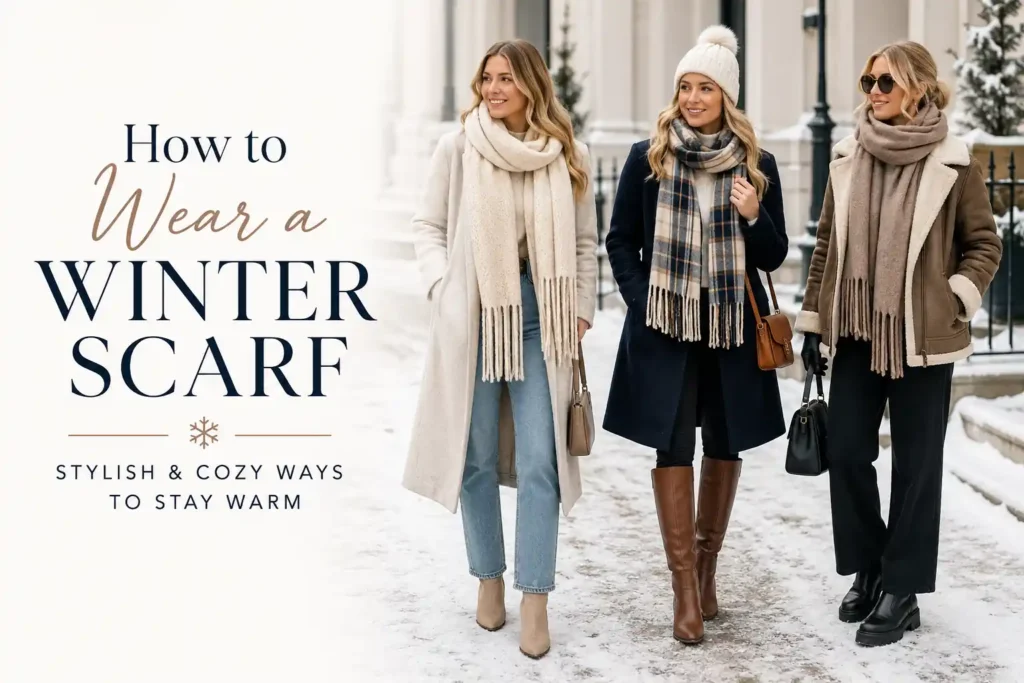
The beauty of a winter scarf lies in its ability to merge practicality with personality. You can use it to add color, texture, and flair to your winter wardrobe while staying cozy on even the coldest days. From classic drapes to creative knots, there are endless ways to style your scarf for any outfit or occasion.
In this detailed guide, you’ll discover how to wear a winter scarf, the best scarf styles and fabrics for cold weather, creative tying methods, outfit pairings for different coat types, and seasonal color inspiration. You’ll also learn tips on scarf care, styling mistakes to avoid, and answers to common questions about winter scarf fashion.
Why a Winter Scarf is a Cold-Weather Essential
Keeps You Warm and Comfortable
The main purpose of a winter scarf is protection. It shields your neck, chest, and even face from icy winds, keeping your body heat from escaping.
Adds Style Effortlessly
A scarf transforms a plain coat or sweater into a polished look. It brings depth, contrast, and interest to your winter outfits.
Offers Versatility
From casual to formal, a scarf can adapt to any occasion. You can tie it differently each day to create fresh looks with the same outfit.
Expresses Personality
Scarves come in endless colors, patterns, and textures. They let you show your mood and creativity through simple details.
Enhances Proportion
The way a scarf is tied can elongate your silhouette or add volume, balancing your overall look perfectly.
Choosing the Perfect Winter Scarf
Before learning how to wear one, it’s important to choose a scarf that complements your lifestyle, climate, and wardrobe.
Fabric Matters
The right material makes all the difference in warmth, comfort, and appearance.
Wool
Classic and insulating, wool scarves are ideal for very cold climates. They’re durable, breathable, and moisture-resistant.
Cashmere
Luxuriously soft and lightweight but incredibly warm. A cashmere scarf adds elegance to both casual and dressy outfits.
Knit
Chunky knit scarves provide cozy texture and are perfect for everyday winter wear.
Fleece
Soft, warm, and wind-resistant—fleece scarves are great for outdoor activities.
Alpaca
Similar to cashmere but slightly lighter and hypoallergenic. Alpaca scarves offer warmth without bulk.
Blended Fabrics
Wool blends or synthetic mixes can offer a balance of affordability, softness, and durability.
Size and Shape
The dimensions of a scarf can determine how you wear it.
- Long scarves (70–90 inches): Great for wraps and layered looks.
- Medium scarves (60–70 inches): Best for casual knots.
- Short scarves (under 60 inches): Ideal for simple drapes or tucks.
- Square scarves: Perfect for folding or tying into neat knots.
Color and Pattern
Color choice plays a major role in how your scarf complements your outfit.
Neutral Tones
Beige, cream, gray, black, and navy work with almost any coat or sweater.
Bold Colors
Red, mustard, green, or royal blue add personality and brightness to winter layers.
Patterns
Plaid, houndstooth, and checkered designs add interest to solid-colored coats.
Textured Styles
Cable knits, ribbed scarves, and fringed edges introduce dimension to an outfit.
How to Wear a Winter Scarf: Timeless Styling Techniques
Learning different tying styles helps you adapt your look to the weather, outfit, and occasion. Here are some of the most popular and stylish ways to wear your winter scarf.
The Classic Drape
This is the simplest and most timeless way to wear a scarf.
- Drape the scarf evenly around your neck.
- Let both ends hang freely in front.
Best for: Long scarves and formal coats.
Style tip: Works great with structured wool or trench coats for effortless elegance.
The European Loop
A favorite for warmth and polish.
- Fold your scarf in half lengthwise.
- Drape it around your neck.
- Pull the loose ends through the loop and tighten.
Best for: Thick wool scarves.
Style tip: Perfect for both men and women who love sleek, tidy looks.
The Once-Around
- Drape one end of the scarf longer than the other.
- Wrap the longer end around your neck once.
- Adjust both ends to hang evenly.
Best for: Casual wear or windy days.
Style tip: Works beautifully with puffers and parkas.
The Double Loop
A stylish option for extra warmth.
- Drape your scarf around your neck with one end longer.
- Wrap it twice around your neck.
- Adjust until both ends are even.
Best for: Extra-long scarves.
Style tip: Ideal for cold climates and outdoor settings.
The Infinity Wrap
If you have an infinity scarf, it’s simple yet cozy.
- Place the looped scarf around your neck.
- Twist it once and loop it again over your head.
Best for: Knit or fleece scarves.
Style tip: Perfect for everyday errands or walks in chilly weather.
The Tucked-In
- Wrap your scarf once around your neck.
- Tuck the ends neatly into your coat or sweater.
Best for: Professional or minimalist outfits.
Style tip: Choose sleek materials like cashmere or fine wool.
The Belted Drape
For a fashion-forward approach:
- Drape your scarf over your shoulders.
- Belt it at your waist to hold it in place.
Best for: Long scarves.
Style tip: Creates a defined waist and chic winter silhouette.
The French Knot
- Fold your scarf in half.
- Place around your neck.
- Pull one end through the loop, twist the loop slightly, and pull the second end through.
Best for: Structured coats or tailored jackets.
Style tip: Gives a polished, Parisian-inspired finish.
How to Pair Your Scarf with Different Outerwear
Your coat style affects how your scarf should be tied and layered.
Wool Coat
- Try the European loop or draped style.
- Pair neutral coats with bright scarves for contrast.
- Use long scarves for added elegance.
Puffer Jacket
- Choose chunky knit or fleece scarves.
- Opt for a single or double loop for extra warmth.
- Avoid overly long scarves that add bulk.
Trench Coat
- Lightweight wool or cashmere scarves work best.
- Drape neatly under the collar or belt over the top for a structured look.
Leather Jacket
- Go for thin or mid-weight scarves like silk or wool blends.
- Keep it casual with a loose drape or once-around wrap.
Overcoat
- Long, wool scarves in deep hues look stunning.
- Use a belted drape or classic fold for a sophisticated look.
Parka or Down Coat
- Choose chunky knitted scarves for comfort.
- Stick to casual wraps and loops for easy layering.
Denim or Bomber Jacket
- Go lightweight with cotton or jersey scarves.
- Try simple drapes or bandana-style knots for a casual touch.
Color and Outfit Coordination
A well-matched color palette creates harmony and makes your outfit stand out naturally.
Monochromatic Style
Wearing different shades of the same color creates a cohesive and polished look.
Contrasting Colors
Pair dark coats with vibrant scarves for an eye-catching combination.
Complementary Shades
Earthy coats pair beautifully with warm hues like rust, camel, or olive.
Textured Neutrals
Gray, beige, or off-white scarves pair effortlessly with most winter tones.
Plaid Perfection
A patterned scarf instantly adds charm to solid coats.
Winter Scarf Outfits for Every Occasion
Office Days
Pair a tailored wool coat with a sleek cashmere scarf in a neutral color for professional elegance.
Casual Weekends
Choose a chunky knit scarf with a puffer or parka for warmth and relaxed style.
Evening Events
Opt for a soft cashmere or silk-blend scarf draped elegantly over a long coat.
Outdoor Adventures
Wear a fleece or wool scarf wrapped tightly around your neck for insulation.
Travel Looks
Use an oversized scarf as a wrap, blanket, or pillow on cold flights.
How to Care for Your Winter Scarves
Proper care extends the life of your scarves and keeps them soft and fresh.
- Hand wash wool or cashmere with gentle detergent.
- Air dry flat to prevent stretching.
- Avoid wringing or twisting.
- Fold scarves neatly and store in breathable fabric bags.
- Use a fabric shaver to remove pilling.
Common Mistakes to Avoid
- Choosing scarves that overpower your frame.
- Mixing too many patterns at once.
- Ignoring fabric compatibility with your coat.
- Wearing scarves too tight around the neck.
- Not coordinating color tones with the rest of your outfit.
Frequently Asked Questions
How do I choose the right scarf length for winter?
Longer scarves (70 inches or more) offer more styling options and better coverage in cold weather.
Can I wear a silk scarf in winter?
Yes, layer it under a thicker scarf or coat for added warmth without bulk.
Should a scarf match my hat and gloves?
Matching is optional. Coordinating tones and textures is often more stylish than an exact match.
How many winter scarves should I own?
Three to five quality scarves—neutral, bright, patterned, and chunky—can cover all outfits and occasions.
Are infinity scarves still in style?
Yes. They’re timeless, practical, and easy to style for both casual and formal wear.
How do I stop my scarf from shedding?
Choose tightly woven materials and avoid friction with rough fabrics.
Winter Scarf Trends to Try This Season
- Oversized blanket scarves for cozy layering.
- Neutral beige and oatmeal tones for minimalists.
- Bold color-block scarves for statement styling.
- Fringed and tassel-edged designs for added texture.
- Reversible scarves for versatility.
Final Words
Knowing how to wear a winter scarf is more than a matter of warmth—it’s a skill that elevates your entire winter wardrobe. A scarf can be the finishing touch that transforms your coat from ordinary to elegant, or your sweater from simple to stylish.
Experiment with different tying methods, mix textures and tones, and invest in quality fabrics that keep you cozy season after season. Whether you’re dressing for work, travel, or weekend adventures, the right scarf can express your personality while keeping you snug and confident.
So this winter, don’t just throw on your scarf—style it with intention. Wrap it, loop it, drape it, and step out into the cold knowing you’ve mastered the art of staying both warm and fashionable.