
Learning how to knit for beginners can feel intimidating at first, but it’s actually one of the easiest and most rewarding crafts to learn. With just a pair of needles and some yarn, you can create scarves, blankets, hats, and countless other handmade items.
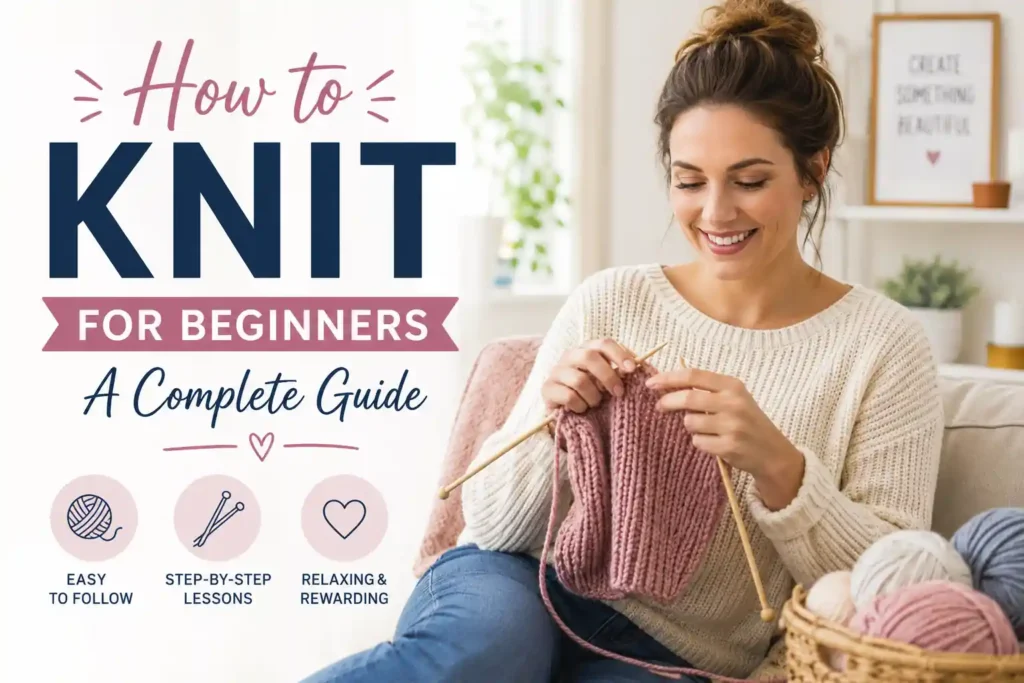
The key is starting with the basics and practicing simple techniques before moving on to advanced projects. This guide covers everything beginners need to know to start knitting with confidence.
Items to Buy
Before you begin knitting, gather these essential supplies:
- Knitting needles
- Medium-weight yarn
- Scissors
- Tapestry needle
- Stitch markers
- Measuring tape
- Row counter (optional)
- Stitch holder (optional)
- Beginner knitting pattern (optional)
What Is Knitting?
Knitting is a craft that involves creating fabric by interlocking loops of yarn with knitting needles. It has been practiced for centuries and remains a popular hobby because it is relaxing, creative, and practical.
Unlike crocheting, which uses a single hook, knitting uses two needles to hold and manipulate stitches. The resulting fabric often has more stretch and drape than crochet.
Choosing the Right Yarn
Beginners should start with a medium-weight yarn, often labeled as worsted-weight yarn. This type of yarn is easy to see and handle while learning basic stitches.
Light-colored yarn is recommended because it makes it easier to identify stitches and spot mistakes. Avoid fuzzy or novelty yarns until you gain more experience.
Understanding Knitting Needles
Knitting needles come in different materials and sizes. Bamboo or wooden needles are excellent choices for beginners because they prevent stitches from slipping too easily.
For most beginner projects, US size 8 (5 mm) knitting needles paired with worsted-weight yarn provide a comfortable starting point.
How to Knit for Beginners: Step-by-Step Guide
Step 1: Make a Slip Knot
Create a slip knot and place it on one knitting needle. This becomes your first stitch.
Step 2: Cast On Stitches
Use a simple cast-on method such as the long-tail cast-on to add stitches to your needle.
Step 3: Hold the Needles Correctly
Hold the needle with stitches in your left hand and the empty needle in your right hand.
Step 4: Insert the Needle
Insert the right needle into the front of the first stitch from left to right.
Step 5: Wrap the Yarn
Wrap the working yarn around the right needle.
Step 6: Pull Through
Pull the wrapped yarn through the stitch to form a new loop.
Step 7: Slide the Old Stitch Off
Remove the original stitch from the left needle.
Step 8: Continue Knitting Across
Repeat the process until all stitches have been transferred to the right needle.
Step 9: Turn Your Work
Switch the needles to begin knitting the next row.
Step 10: Bind Off
Once your project reaches the desired size, bind off the stitches to secure your work.
5 Beginner Knitting Projects
1. Garter Stitch Scarf
Steps
- Cast on 20–30 stitches.
- Knit every row.
- Continue until desired length.
- Bind off.
- Weave in ends.
This is the easiest knitting project for beginners.
2. Dishcloth
Steps
- Cast on 30 stitches.
- Knit every row.
- Create a square shape.
- Bind off.
- Weave in ends.
Dishcloths are quick projects that help build confidence.
3. Baby Blanket
Steps
- Cast on the required number of stitches.
- Knit every row.
- Continue until desired size.
- Bind off.
- Finish with woven ends.
A baby blanket is a larger project that uses simple techniques.
4. Headband
Steps
- Cast on stitches for the desired width.
- Knit rows until long enough.
- Bind off.
- Sew ends together.
- Wear and enjoy.
Headbands are practical and quick to make.
5. Simple Beanie
Steps
- Knit a rectangular piece.
- Bind off stitches.
- Fold and sew the sides.
- Gather the top.
- Secure and finish.
This beginner beanie introduces basic shaping concepts.
Common Knitting Mistakes to Avoid
One of the most common beginner mistakes is accidentally dropping stitches. Work slowly and count stitches regularly to catch mistakes early.
Another mistake is knitting too tightly. Tight stitches make it difficult to insert the needle and can slow your progress considerably.
Tips for Learning Faster
Practice for a few minutes every day rather than trying to learn everything at once. Consistent practice helps develop muscle memory and improves stitch consistency.
Watching video tutorials while following written instructions can also make it easier to understand knitting techniques and correct hand positioning.
Essential Knitting Terms to Know
Understanding basic knitting terms helps you read patterns confidently.
Common terms include:
- Cast On (CO)
- Knit (K)
- Purl (P)
- Bind Off (BO)
- Stitch (St)
- Row
- Gauge
- Yarn Over (YO)
- Slip Stitch (Sl)
Learning these abbreviations makes following patterns much easier.
FAQs
Is knitting difficult for beginners?
No. Knitting can be learned by anyone willing to practice basic techniques regularly.
What is the easiest thing to knit?
A garter stitch scarf is usually the easiest beginner knitting project.
How long does it take to learn knitting?
Most beginners can learn basic knitting stitches within a few hours of practice.
What yarn is best for beginners?
Medium-weight worsted yarn in a light color is usually the easiest option.
What size needles should beginners use?
US size 8 (5 mm) needles are commonly recommended for beginners.
Is knitting easier than crochet?
Some people find knitting easier, while others prefer crochet. It largely depends on personal preference.
Why are my knitting stitches uneven?
Uneven stitches are usually caused by inconsistent tension. Practice helps improve consistency.
What should I knit first?
A simple scarf, dishcloth, or baby blanket is an excellent first knitting project.
Final Words
Learning how to knit for beginners is the first step toward a rewarding and creative hobby. With basic supplies, simple techniques, and regular practice, you’ll quickly gain the skills needed to create beautiful handmade projects.
Start with easy patterns, focus on mastering the knit stitch, and don’t worry about making mistakes. Every project helps improve your skills, and before long, you’ll be ready to tackle more advanced knitting creations.