
Paper lavender flowers bring the soft, calming beauty of lavender into your home without the worry of wilting. These handcrafted blooms are perfect for décor, gifts, and creative projects that capture the essence of nature.
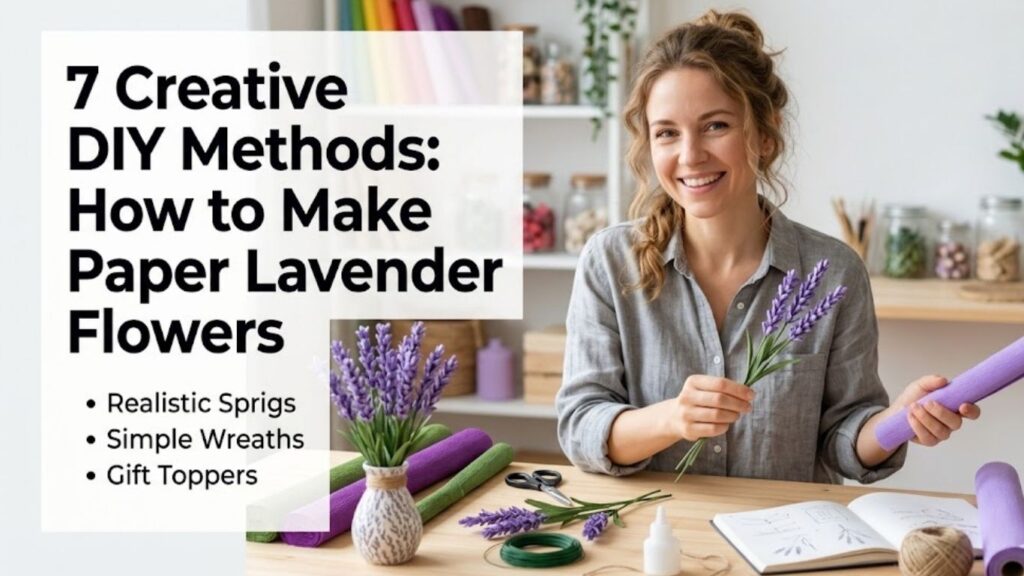
Whether you are just starting or have been crafting for years, making paper lavender flowers can be a relaxing, rewarding experience that results in stunning blossoms you’ll cherish.
Suggested Items to Buy
- Colored crepe paper
- Floral wire
- Glue gun
- Scissors
- Floral tape
Paper Lavender Flowers DIY
Paper lavender flowers can be made in many unique, beautiful ways. Each method in this collection offers a distinct look, texture, and style, ideal for different creative needs. Below are seven complete techniques with detailed steps so you can choose the one that fits your project best.
1. Classic Crepe Paper Lavender
Crepe paper works beautifully for delicate flowers because it can stretch, curl, and mimic real petals. This classic method creates soft, lifelike lavender stems that sway with any breeze.
Materials Needed
- Purple, lavender, and green crepe paper
- Floral wire
- Scissors
- Glue
- Green floral tape
Step-by-Step Instructions
- Prepare Petals
Cut small rectangles of purple crepe paper, about 1 inch by 2 inches. These will become individual lavender blossoms. - Shape Petals
Gently stretch the center of each piece so it forms a soft oval shape with natural-looking curves. - Prepare Stem
Take a piece of floral wire around 8–10 inches long for a single stem. Wrap it lightly with green floral tape. - Attach First Petals
Apply a dab of glue near the top of the wire and attach the first crepe paper piece. Hold briefly until it sets. - Build the Flower
Continue adding petals down the wire, overlapping slightly so the blooms look clustered. - Finish the Cluster
Once you reach your desired flower length, wrap the entire base of the cluster with floral tape to secure it. - Repeat and Arrange
Make enough stems to create a small bouquet or larger arrangement. Group them together for a full, vibrant display.
2. Tissue Paper Lavender Flowers
Tissue paper gives a lightweight, airy effect and is ideal for large arrangements or party décor.
Materials Needed
- Lavender and green tissue paper
- Scissors
- Floral wire
- Glue
- Floral tape
Step-by-Step Instructions
- Cut Tissue Strips
Cut long strips of lavender tissue paper, roughly 2 inches wide and 8–10 inches long. - Create Tassels
Fringe the edges of each strip by making small cuts about 1–1.5 inches deep. - Roll the Paper
Starting at one end, begin to roll the fringed strip around itself loosely so the cut edges form tiny “blossoms.” - Secure with Glue
As you roll, add a drop of glue every inch or so to hold the shape and ensure the tassels stay secure. - Attach to Wire
Once the strip is fully rolled, press the base against the top of a floral wire stem and secure with glue. - Wrap with Tape
Cover the glued area with green floral tape to blend the stem into the flower naturally. - Build a Bouquet
Make several of these tissue lavender stems. Arrange them in a vase for a soft, textured bouquet.
3. Rolled Paper Lavender Stems
Rolling paper is a simple yet elegant way to create lavender with a more stylized finish. This technique uses fewer materials and produces a clean, modern look.
Materials Needed
- Purple cardstock
- Floral wire
- Glue
- Scissors
- Floral tape
Step-by-Step Instructions
- Cut Thin Strips
Cut long, narrow strips of purple cardstock, about ¼ inch wide and 10 inches long. - Roll Strips Tightly
Beginning at one end of a strip, roll it around itself until you reach the other end. This creates a dense, elongated blossom. - Secure the End
Add a little glue to the tip to keep the rolled paper from unraveling. - Attach to Stem
Press the base of the rolled paper against the top of a floral wire and add a drop of glue to secure it. - Wrap with Tape
Use green floral tape to wrap where the paper meets the wire for a seamless stem. - Repeat for Multiple Stems
Create a collection of rolled paper lavender stems in varying heights. - Design Arrangement
Arrange the stems in a container or bundle them together with ribbon for a decorative bundle.
4. Fabric-Enhanced Paper Lavender
Combining fabric with paper adds a soft texture that feels close to real lavender. This technique is great for craft lovers who enjoy mixed materials.
Materials Needed
- Purple crepe paper
- Thin purple fabric (organza or cotton)
- Floral wire
- Glue gun
- Scissors
- Floral tape
Step-by-Step Instructions
- Cut Fabric Petal Strips
Cut thin strips of the purple fabric about 1 inch wide and 6 inches long. - Add Paper Petals
Cut similar strips of crepe paper, slightly shorter than the fabric ones. - Layer Petals
Place the paper strip on top of the fabric strip. The paper adds color while the fabric adds volume. - Roll Together
Start rolling both strips together around the floral wire, allowing the fabric to peek out around the edges. - Glue to Secure
Use a small amount of hot glue every inch to hold the roll tight and stable. - Wrap Base
Once the roll reaches desired length, secure the base with floral tape. - Create Bouquet
Mix several stems together for a lush, soft bouquet with texture and depth.
5. Origami Lavender Flowers
Origami offers a structured, artistic interpretation of lavender and is perfect if you enjoy precise folding and geometry.
Materials Needed
- Origami paper (purple)
- Floral wire
- Glue
- Scissors
- Floral tape
Step-by-Step Instructions
- Prepare Origami Squares
Use small squares of purple paper, about 4 inches by 4 inches. - Fold Basic Shape
Fold each square into a simple petal shape using traditional origami bases such as the kite fold or preliminary fold. - Create Multiple Petals
You’ll need around 8–10 folded pieces per stem to achieve a full lavender look. - Attach Petals to Wire
Apply glue to one end of the petal and press it to the top of a floral wire. Arrange the petals around the wire. - Secure with Tape
Once all petals are attached, wrap the base of the petals and the wire with green floral tape. - Adjust Petal Angles
Slightly bend and adjust the origami petals so they radiate outward like real lavender blossoms. - Assemble Stems
Make several stems and arrange them in a decorative holder or tie together as a bunch.
6. Quilling Lavender Flowers
Quilling uses rolled paper strips to create tiny, coiled blossoms that resemble the clustered flowers of real lavender. This method is excellent for detailed work.
Materials Needed
- Purple quilling strips
- Quilling tool
- Floral wire
- Glue
- Scissors
- Green floral tape
Step-by-Step Instructions
- Insert Strip into Tool
Place the end of a quilling strip into the quilling tool and begin to roll it tightly. - Form Coil
Once fully rolled, allow the coil to loosen slightly for a soft effect. - Glue Coil
Apply a small dot of glue to the end of the strip to prevent it from unrolling. - Attach to Wire
Press the coil against the top of a floral wire stem and secure with glue. - Add More Coils
Repeat the rolling process and attach additional coils down the length of the wire. - Tape the Stem
Cover the entire wire with green floral tape to shape a stem. - Create Multiple Lavender Sprigs
Produce many quilled lavender stems and assemble into a compact bouquet or loose arrangement.
7. Jumbo Paper Lavender Bundles
Perfect for wall décor or large installations, jumbo paper lavender uses oversized petals to create dramatic, artistic stems.
Materials Needed
- Large sheets of purple and green crepe paper
- Floral wire
- Glue gun
- Scissors
- Floral tape
Step-by-Step Instructions
- Cut Large Petals
Cut petals much larger than usual—about 3 inches long and 2 inches wide. - Stretch for Shape
Gently stretch the center of each petal so it forms a cup-like shape with soft curves. - Build Large Clusters
Instead of small blossoms, attach 12–15 petals per stem to achieve fullness. - Add Dramatic Stamen
Use a rolled yellow paper strip that is also oversized to match the scale of your petals. - Secure petals to wire
Glue each petal around the floral wire, working carefully so the cluster stays balanced. - Wrap with Tape
Cover the base and wire with green tape. Add a twist of different greens for realism. - Create Grand Display
Make a few jumbo stems and place them in a tall vase or attach to a backdrop for décor.
Tips for Making Paper Lavender Flowers
- Mix shades of purple for depth and realism.
- Use floral wire of varying lengths for more dynamic arrangements.
- Combine techniques to develop unique hybrid stems.
- Press gently when shaping petals to avoid tearing delicate paper.
- Store completed flowers in a dry, cool space.
Frequently Asked Questions (FAQ)
What kind of paper is best for lavender flowers?
Crepe paper and tissue paper work best since they can be shaped easily and mimic natural petal textures.
Can paper lavender flowers last long?
Yes, if kept dry and away from direct sunlight, paper flowers can last for years without fading or losing shape.
How do I make stems look more realistic?
Use green floral tape to wrap the wire and add small paper leaves for a more lifelike stem.
Is glue necessary or can I use tape only?
Glue provides stronger adhesion, especially for layered petals, but floral tape is great for wrapping stems.
Can I add scent to paper flowers?
Yes, you can lightly spray essential oils on the petals to give your paper lavender a pleasant fragrance.
Final Words
Creating paper lavender flowers is an enjoyable, creative journey that results in beautiful, lasting décor. With these seven varied methods, you’ll have plenty of options to express your artistic style and make stunning floral arrangements.
Whether you prefer delicate tissue, structured cardstock, or mixed materials, each technique offers its own unique charm. Now gather your supplies, choose a method, and let your artistic vision bloom into lovely paper lavender flowers that brighten any space.