
Sewing your own jeans may sound intimidating, but it’s one of the most satisfying sewing projects you’ll ever take on. From the classic blue denim look to modern, customized fits, making jeans at home allows you to craft the perfect pair that fits your body, your style, and your comfort level.
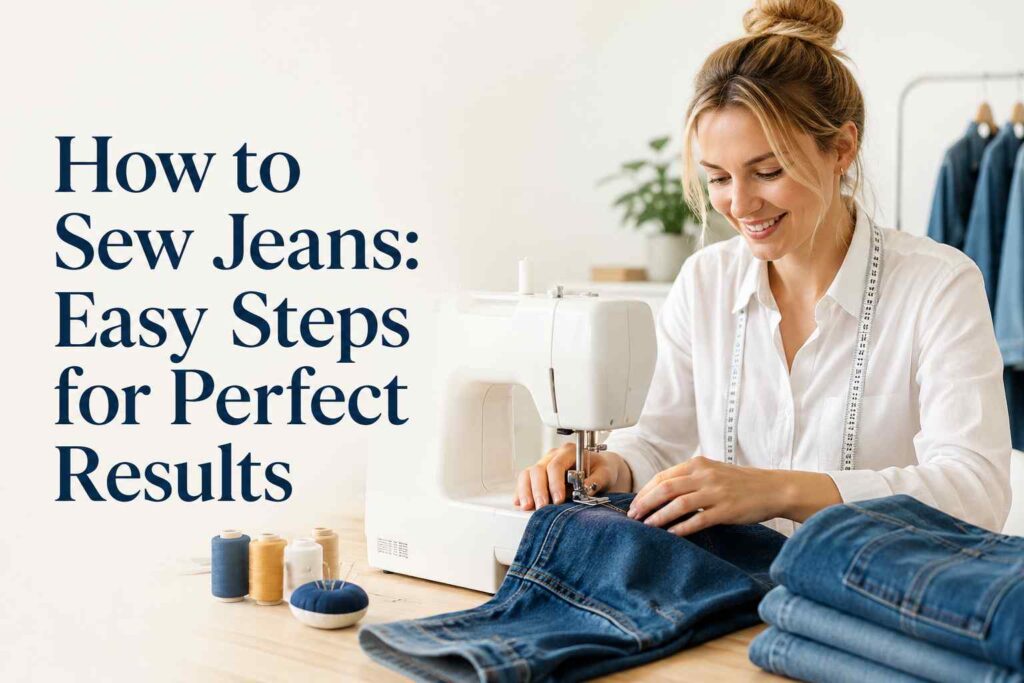
Whether you’re a beginner eager to learn the basics or a sewing enthusiast ready to master advanced stitching, sewing jeans is a skill worth learning. With the right tools, fabric, and patience, you can create professional-quality denim that looks and feels store-bought — but made just for you.
This detailed guide will take you through every step: from choosing the right denim and pattern to sewing, finishing, and styling your final masterpiece. Let’s begin your denim journey!
Why Sew Your Own Jeans
Homemade jeans aren’t just about saving money — they’re about precision, personalization, and pride.
- Perfect Fit: Store-bought jeans rarely fit perfectly, especially around the waist, hips, or thighs. Sewing your own lets you tailor them to your exact measurements.
- Durability: Handmade jeans can last longer since you control the stitch quality and fabric strength.
- Customization: Choose your denim color, thread tone, pocket style, and embellishments.
- Sustainability: By making your own jeans, you reduce textile waste and embrace slow fashion.
Understanding Denim
Before cutting into your fabric, it’s important to understand denim — the heart of your jeans project.
What is Denim?
Denim is a durable twill weave fabric, typically made from cotton, where the weft thread passes under two or more warp threads. This creates the characteristic diagonal ribbing and gives denim its strength and structure.
Types of Denim Fabric
- Raw (Unwashed) Denim
- Stiff, unwashed, and rich in indigo dye.
- Fades uniquely with wear.
- Stretch Denim
- Contains a small percentage of spandex or elastane.
- Ideal for skinny or slim-fit jeans.
- Selvedge Denim
- Woven on traditional shuttle looms, creating a clean edge.
- Known for superior quality and durability.
- Washed Denim
- Pre-softened and easier to sew.
- Available in stonewashed, acid-washed, and faded finishes.
Choosing the Right Denim for Your Project
For beginners, medium-weight denim (around 10–12 oz) is easiest to handle. Heavier denim is sturdy but more challenging to sew, while lighter denim works well for summer jeans or softer fits.
Essential Tools and Materials
Gathering the right tools before you start will make the sewing process smoother and more enjoyable.
Sewing Tools
- Sewing machine (capable of handling thick fabric)
- Heavy-duty or denim needle (size 100/16 or 110/18)
- Sharp fabric scissors or rotary cutter
- Measuring tape
- Tailor’s chalk or fabric marker
- Pins or clips (preferably metal or strong plastic)
- Seam ripper
- Iron and ironing board
Materials Needed
- Denim fabric (2 to 2.5 yards for adults, depending on size)
- Matching or contrasting heavy-duty thread
- Zipper or button fly
- Metal jeans buttons and rivets
- Interfacing for waistband
- Pocket lining fabric (cotton works well)
- Jeans pattern (store-bought or self-drafted)
Step 1: Take Accurate Measurements
Before cutting your fabric, measure yourself carefully to ensure a perfect fit.
Key Measurements
- Waist
- Hips
- Thigh circumference
- Inseam (from crotch to ankle)
- Outseam (from waist to ankle)
- Rise (distance from crotch to waistline)
Write down each measurement clearly — it’s crucial for choosing the right size or modifying your pattern.
Step 2: Choose and Prepare Your Pattern
A jeans pattern is your blueprint. You can use a commercial pattern or trace a pair of jeans that already fits you well.
Tips for Choosing the Right Pattern
- Select a pattern that matches your desired style — straight leg, skinny, flared, or bootcut.
- If you’re a beginner, start with a basic five-pocket jeans pattern.
- Ensure the pattern includes seam allowances and instructions for fly construction.
Once chosen, cut out your paper pattern pieces and label each one for easy reference.
Step 3: Prewash and Prepare the Denim
Denim tends to shrink, so prewashing is a crucial step.
Wash and dry your fabric before cutting to prevent size changes later. Iron it smooth once dry. This also removes excess dye and softens the fabric, making it easier to handle.
Step 4: Cut the Fabric
Lay your denim on a large flat surface, fold it right sides together, and align the grainlines as indicated on your pattern.
Pin your pattern pieces in place and use tailor’s chalk to trace around them. Then, carefully cut each piece using sharp scissors or a rotary cutter.
Don’t forget to cut the smaller pieces: waistband, fly shield, pocket linings, and back yoke.
Step 5: Sew the Front Pockets
The pockets give jeans their functional and aesthetic charm.
- Sew the pocket lining to the front pocket opening, right sides together.
- Clip the curve, turn the lining to the inside, and press.
- Topstitch the edge for reinforcement.
- Place the pocket bag behind the lining and stitch around the edges to secure.
Repeat for both front pockets.
Step 6: Assemble the Front and Fly
The fly is the most detailed part of sewing jeans, but once you understand the process, it’s simple.
Zipper Fly
- Finish the fly edges with a zigzag stitch or serger.
- Attach the zipper to the fly shield.
- Sew one side of the zipper to the pants front.
- Fold over and topstitch to enclose the zipper neatly.
Button Fly
If you prefer a vintage style, use buttonholes instead of a zipper. Sew the buttonholes first, then attach metal jeans buttons evenly spaced along the fly placket.
Step 7: Sew the Back Pieces
Next, work on the back of the jeans.
- Sew the back yoke to the main back pieces (this creates the signature jeans curve).
- Topstitch both seams for strength.
- Attach the back pockets using double topstitching.
You can personalize your back pockets with decorative stitching for a unique touch.
Step 8: Join Front and Back
Place the front and back pieces right sides together. Sew along the side seams and the inseam.
Use a sturdy stitch length (3 mm) and reinforce stress points like the crotch area. After sewing, press the seams toward the back and topstitch for durability.
Step 9: Sew the Waistband
Cut interfacing and apply it to your waistband fabric for structure.
- Attach the waistband to the top of the jeans, right sides together.
- Fold it over to the inside and stitch along the edge.
- Topstitch around for a polished look.
Make sure the waistband fits snugly but comfortably around your waist.
Step 10: Add the Belt Loops
Cut strips of denim about 2 inches wide and 3–4 inches long for each belt loop.
Fold the sides inward, then topstitch down both edges. Attach 5 loops — two on the back, two on the front, and one at the center back. Reinforce with bar tacks.
Step 11: Finish the Hems
Try on your jeans and mark the desired length.
Fold the hem twice (½ inch each fold), press, and topstitch all around. A double needle gives a professional look similar to ready-made jeans.
Step 12: Add Final Details
Now it’s time for finishing touches that give jeans their iconic look.
Rivets
Add rivets to pocket corners for reinforcement. Use a rivet setting tool and hammer to secure them in place.
Jeans Button
Install the main button on the waistband using a button tool or by tapping it gently with a hammer.
Decorative Topstitching
Topstitch all main seams with heavy-duty thread for strength and style. Use a contrasting color like gold or copper for that classic jeans look.
Step 13: Press and Admire Your Work
Give your jeans a final pressing to smooth all seams. Try them on and admire your hard work — you’ve just made a fully functional, custom-fit pair of jeans!
Common Mistakes to Avoid
Even experienced sewers can make errors when sewing jeans. Here’s what to watch out for:
- Skipping prewashing: Leads to shrinkage later.
- Using a regular needle: Denim requires a strong needle to avoid breakage.
- Wrong thread tension: Always test stitches on scrap denim before sewing.
- Uneven topstitching: Use a guide and go slowly for neat lines.
- Neglecting pressing: Press every seam — it makes a huge difference in the final look.
Pro Tips for Perfect Jeans
- Use double topstitching on all high-stress seams.
- Trim bulk at seam intersections to avoid thick lumps.
- Switch to a walking foot for smoother fabric feeding.
- Test-fit before attaching the waistband to adjust the rise or waist.
- Choose metal hardware that complements your denim color.
DIY Jeans Design Ideas
Homemade jeans are a blank canvas for creativity. Here are some design ideas to make your pair unique:
Distressed Jeans
Use sandpaper or a razor to create worn-out areas. For ripped effects, cut small slits and fray them using a needle or tweezers.
Embroidered Jeans
Add embroidered patterns along the legs or pockets for a boho-chic vibe.
Patchwork Jeans
Combine denim scraps or contrasting fabrics for a creative, sustainable style.
Cropped or Raw Hem Jeans
Leave the hems unfinished for a trendy, raw-edge look.
Painted Jeans
Fabric paint allows you to express your artistic side with designs, lettering, or abstract patterns.
Caring for Your Handmade Jeans
To keep your handmade jeans looking their best, proper care is key.
- Wash inside out in cold water.
- Avoid frequent washing to preserve color.
- Line dry instead of using a dryer.
- Iron on medium heat if necessary.
Your jeans will age beautifully with time, developing natural fades and creases that tell your story.
Environmental and Cost Benefits
Sewing your own jeans promotes sustainability and personal value:
- Reduces fast fashion waste.
- Encourages upcycling old denim.
- Saves money in the long run.
- Creates a durable product made with intention and care.
Step-by-Step Summary
- Take accurate measurements.
- Choose a pattern and prewash your denim.
- Cut your fabric and pocket pieces.
- Sew pockets and fly.
- Assemble front and back pieces.
- Attach waistband and belt loops.
- Sew hems and add rivets.
- Press, topstitch, and finish.
Following these steps carefully will help you produce jeans that fit perfectly and last for years.
FAQ
How long does it take to sew jeans?
For beginners, sewing jeans can take 6–10 hours depending on complexity and your pace.
Can I sew jeans on a regular sewing machine?
Yes, if your machine is strong enough and fitted with a denim needle. Avoid forcing thick seams through it.
What is the best thread for sewing jeans?
Use heavy-duty polyester or cotton-wrapped polyester thread. Topstitching thread is thicker and designed for visible seams.
Do I need a serger for jeans?
A serger is helpful but not required. You can finish seams with a zigzag stitch to prevent fraying.
How do I prevent needle breakage?
Use the correct needle size (100/16 or higher), sew slowly over thick layers, and use a hammer to flatten seam junctions if necessary.
How do I get neat topstitching?
Use a longer stitch length (3–3.5 mm) and sew slowly. Guide your fabric using the edge of the presser foot as a reference.
Final Words
Sewing jeans might seem like a challenge at first, but it’s truly an empowering experience. The moment you put on a pair of jeans you’ve made yourself — that fit perfectly and reflect your personality — you’ll understand the beauty of handmade craftsmanship.
With patience, the right tools, and a willingness to learn, anyone can master denim sewing. Whether you prefer classic blue jeans, trendy cropped styles, or artistic embroidered designs, sewing your own jeans gives you complete creative control.
So, thread your needle, prepare your denim, and start stitching. With each seam, you’ll gain skill, confidence, and a garment that’s uniquely yours — built to last and designed to impress.