
Leather is one of the most durable and timeless materials used in sewing and crafting. From jackets and handbags to upholstery and belts, leather projects add elegance and strength to everyday items. However, many beginners and even seasoned sewists feel intimidated when it comes to sewing leather on a sewing machine. Unlike fabric, leather doesn’t behave the same way—it doesn’t stretch easily, it doesn’t self-heal from pinholes, and it requires specialized tools and techniques.
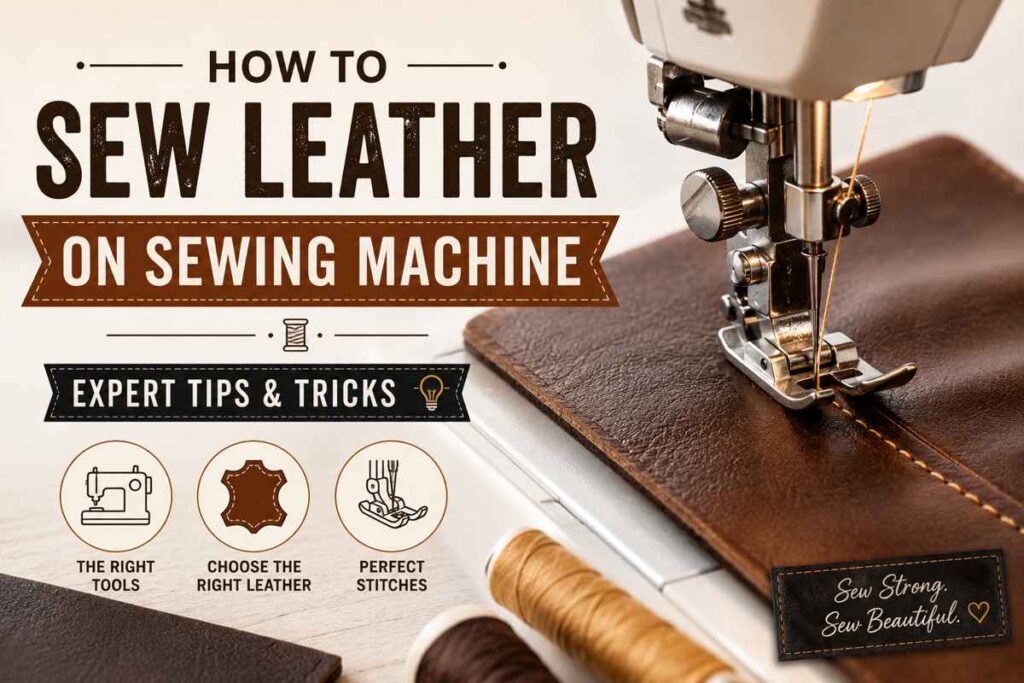
The good news is that with the right preparation, sewing machine setup, and proper handling, you can achieve professional-quality results when sewing leather. Whether you’re making your first leather wallet, a stylish handbag, or reupholstering furniture, this guide will walk you through everything you need to know.
Why Sewing Leather Is Different From Fabric
Limited Flexibility
Leather does not stretch as much as woven fabrics, so once sewn, mistakes are difficult to correct.
No Forgiveness With Needle Holes
Every puncture from a needle creates a permanent hole. This means seam ripping must be minimized.
Thickness
Leather comes in various thicknesses, from thin lambskin to thick cowhide, and this affects sewing machine settings.
Natural Texture
Each piece of leather has its own grain, texture, and irregularities, making it unique but sometimes challenging.
Choosing the Right Leather for Sewing
Types of Leather
- Lambskin: Soft, thin, suitable for garments
- Cowhide: Thick, durable, ideal for upholstery and bags
- Suede: Soft texture, but requires careful handling
- Faux Leather: Affordable and machine-friendly
Thickness Considerations
- Lightweight leather (1–2 oz): Best for clothing
- Medium weight leather (3–4 oz): Great for bags and accessories
- Heavy leather (5 oz and above): Suitable for belts and upholstery
Essential Tools for Sewing Leather
Sewing Machine
- Heavy-duty sewing machine recommended
- Machines with strong feed systems handle leather better
Leather Needles
- Designed with a wedge-shaped point to pierce leather cleanly
- Sizes range from 90/14 to 110/18, depending on thickness
Thread Selection
- Use bonded nylon or polyester thread for strength
- Choose thicker thread for heavy-duty projects
Presser Foot Options
- Walking foot: Helps feed leather evenly
- Teflon foot: Reduces sticking on smooth surfaces
- Roller foot: Allows smooth movement over textured leather
Cutting Tools
- Rotary cutter or sharp leather scissors
- Utility knife for thick leather pieces
Clips Instead of Pins
- Sewing clips or binder clips prevent permanent holes
- Double-sided tape can also hold seams together
Preparing Leather Before Sewing
Cutting Leather
- Use sharp tools to avoid ragged edges
- Cut slowly and carefully to maintain precision
Marking Leather
- Use chalk, silver pens, or tailor’s pencils instead of regular pens
- Avoid tools that leave permanent marks
Conditioning Leather
- Use leather conditioner to keep material soft and workable
- Prevents cracking and stiffness during sewing
Sewing Machine Setup for Leather
Adjusting Stitch Length
- Use longer stitches (3–4 mm) to prevent perforation
- Short stitches weaken leather seams
Adjusting Tension
- Test tension on scrap pieces
- Adjust to avoid puckering or loose stitches
Presser Foot Pressure
- Reduce pressure to allow leather to move freely
- Helps prevent drag and uneven feeding
Needle and Thread Compatibility
- Ensure needle size matches thread thickness
- Improves stitch quality and prevents breakage
Techniques for Sewing Leather on a Machine
Starting and Ending Seams
- Backstitching can weaken leather, so knot thread ends instead
- Alternatively, use very small stitches at the start and end
Handling Corners
- Slow down when sewing curves or corners
- Clip or trim seam allowances to reduce bulk
Sewing Multiple Layers
- Use a walking foot to prevent shifting
- Consider a heavy-duty machine for thick layers
Topstitching Leather
- Use a longer stitch length for decorative seams
- Contrast thread can enhance the design
Avoiding Common Mistakes
Using the Wrong Needle
A universal needle will skip stitches or break; always use a leather needle.
Sewing Too Fast
Leather requires slow, steady stitching for accuracy.
Pinning Leather
Avoid using pins, as they leave permanent holes.
Ignoring Test Swatches
Always test stitch settings on a scrap before sewing the actual project.
Projects You Can Sew with Leather
Leather Bags
Tote bags, crossbody purses, and clutches are popular beginner projects.
Leather Clothing
Jackets, skirts, and vests require careful sewing but are highly rewarding.
Accessories
Belts, wallets, and watch straps are small projects perfect for practice.
Home Decor
Leather cushions, chair upholstery, and coasters add luxury to interiors.
Finishing Leather Seams
Gluing Edges
Use leather glue for added strength before sewing.
Burnishing Edges
Smooth edges with a burnishing tool for a professional finish.
Lining Leather
Add fabric lining to protect the inside seams and enhance comfort.
Tips for Beginners Sewing Leather
- Start with faux leather before moving to real leather.
- Choose simple projects to practice techniques.
- Always have spare needles—leather can blunt them quickly.
- Keep seams minimal to reduce bulk.
- Practice straight, consistent stitching.
Expert Tricks for Advanced Leather Sewing
Reinforced Stitching
Use double rows of stitching for extra durability.
Edge Painting
Apply edge paint to raw leather edges for a polished look.
Combining Fabrics and Leather
Mix fabric with leather for creative and lightweight designs.
Using Decorative Stitches
Experiment with contrasting colors and patterns for unique styles.
Maintenance of Leather Projects
Cleaning Leather Items
- Wipe with a damp cloth and mild cleaner
- Avoid soaking leather in water
Storing Leather Items
- Store in a cool, dry place away from direct sunlight
- Use dust bags for accessories
Maintaining Sewing Machine
- Clean after leather projects to remove debris
- Oil machine parts regularly for smooth operation
Frequently Asked Questions
Can a regular sewing machine sew leather?
Yes, lightweight leather can be sewn on a regular machine with proper needles and settings. For thicker leather, a heavy-duty machine is recommended.
What needle should I use for leather?
Use a leather needle, typically size 90/14 to 110/18, depending on the thickness of the leather.
Why does my thread keep breaking when sewing leather?
Thread may break if tension is too tight, if you’re using the wrong needle, or if the thread is not strong enough.
How do I keep leather from sticking under the presser foot?
A Teflon, roller, or walking foot prevents sticking and ensures smooth stitching.
Can I use cotton thread for sewing leather?
Cotton thread is not strong enough for leather. Use bonded nylon or polyester for durability.
Do I need to line leather garments or bags?
Lining is optional but recommended to protect the inside seams and improve comfort.
How do I finish raw edges of leather?
You can burnish edges, apply edge paint, or stitch a folded seam for a polished finish.
Final Words
Sewing leather on a sewing machine might seem intimidating at first, but once you learn the correct tools, techniques, and settings, it becomes a rewarding skill. Leather allows you to create durable, stylish, and professional-quality projects that last for years. Whether you’re a beginner experimenting with faux leather or an advanced sewist tackling full-grain cowhide, the journey is both challenging and exciting.
With patience, practice, and the expert tips shared in this guide, you’ll gain confidence in sewing leather. Every project you complete adds to your skillset and creativity. So, prepare your machine, choose your leather, and start transforming your ideas into beautifully crafted leather projects today.