
Learning how to wear a beanie can help you create stylish, comfortable outfits for cold days, casual outings, and relaxed streetwear looks. Whether you prefer a classic ribbed knit, a slouchy beanie, or a cuffed design, the right fit and styling technique can make this simple accessory feel intentional and fashionable.
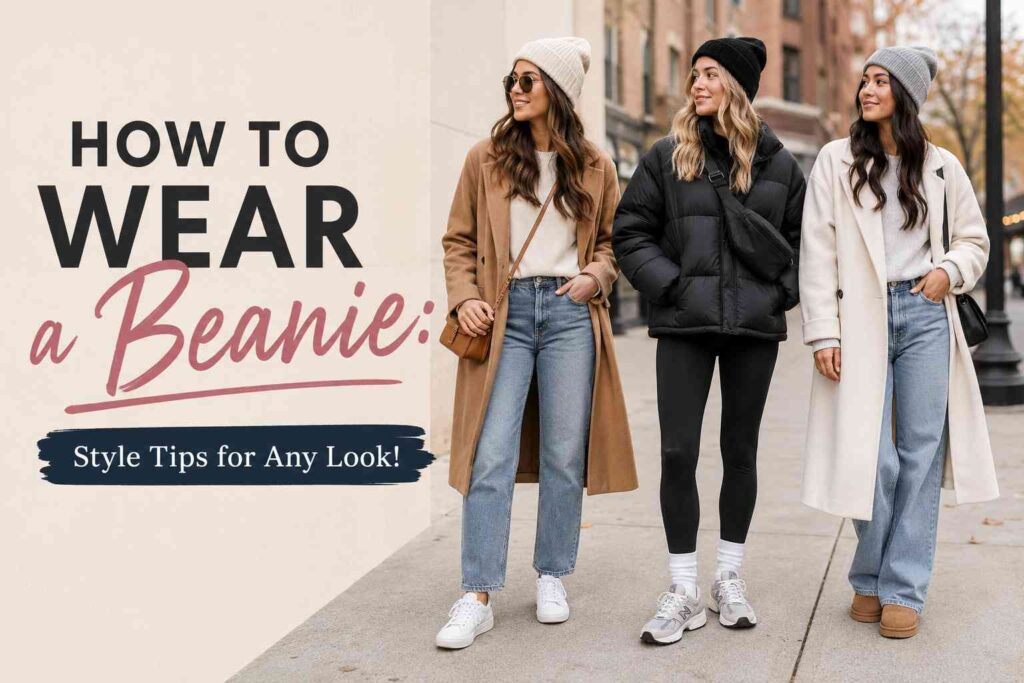
From pairing a beanie with jeans and a coat to styling one with dresses, oversized sweaters, and sporty layers, there are plenty of ways to wear it. This guide covers practical beanie styling ideas, outfit combinations, fit tips, and common mistakes to avoid.
Items to Buy for Styling a Beanie
As an Amazon Associate I earn from qualifying purchases.
- Classic Ribbed Knit Beanie
- Black Cuffed Beanie
- Slouchy Knit Beanie
- Neutral Beige Beanie
- Cashmere Beanie
- Pom-Pom Beanie
- Oversized Wool Coat
- Everyday White Sneakers
- Long Winter Scarf
- Fleece-Lined Winter Beanie
How to Choose the Right Beanie
Find a Comfortable Fit
A beanie should sit securely without squeezing your head or constantly sliding down. Some styles fit close to the scalp, while others have extra fabric designed to create a relaxed, slouchy shape.
Consider the depth as well as the circumference. A shallow beanie may sit higher on the head, while a deeper style offers more coverage and can be folded or adjusted. If possible, try different fits to find one that stays comfortable throughout the day.
Choose a Fabric for the Weather
Wool and wool blends are useful for colder conditions because they provide warmth. Fleece-lined styles can offer additional insulation, while cotton and lightweight knit beanies may work better for milder weather.
If you have sensitive skin, check the material and lining before buying. A softer knit or smooth inner lining may feel more comfortable around your forehead and ears.
Pick Colors That Work With Your Wardrobe
Black, gray, cream, camel, and navy beanies are versatile choices that pair easily with coats, sweaters, denim, and casual jackets. A neutral beanie is particularly useful if you want to wear it with several outfits.
Brighter colors and patterns can add personality to a simple look. A burgundy, forest-green, red, or striped beanie can become the focal point of an otherwise understated winter outfit.
How to Wear a Beanie: 15 Stylish Ways
1. The Classic Cuffed Beanie
The classic cuffed beanie is one of the easiest styles to wear. Pull it over your head so it covers the top comfortably, then position the folded edge around your forehead. You can pull it down to cover your ears in cold weather or wear it slightly higher when temperatures are mild.
Pair a black or gray cuffed beanie with a crewneck sweater, straight-leg jeans, and sneakers for an easy everyday outfit. A neutral color keeps the look simple, while a bright beanie adds a little contrast. Keep the cuff even for a neat finish, or adjust it slightly to suit your preferred fit.
2. The Relaxed Slouchy Beanie
A slouchy beanie has extra fabric at the crown, creating a softer silhouette. Position the front comfortably above your eyebrows and allow the excess knit to fall toward the back of your head. Avoid pulling it too tightly, because doing so removes the relaxed shape that makes this style distinctive.
This beanie works well with oversized sweaters, relaxed denim, casual coats, and chunky sneakers. Try a charcoal or oatmeal design with a simple monochrome outfit for a coordinated appearance. The loose shape gives the outfit a laid-back feel without requiring many accessories.
3. The Beanie With a Wool Coat
A beanie can make a tailored wool coat feel less formal and more suitable for everyday wear. Choose a fine-knit style in black, cream, gray, or camel, and position it neatly on your head. A cuffed or lightly slouchy design works especially well with a structured coat.
Wear the combination with straight-leg trousers, a fitted knit top, and ankle boots. Matching the beanie to your scarf or gloves can create a coordinated finish, while a contrasting color adds interest. Keep the rest of the outfit relatively simple so the coat and knit accessories work together rather than compete.
4. The Beanie With a Puffer Jacket
For cold-weather errands and casual outdoor activities, a beanie and puffer jacket make a practical combination. Choose a close-fitting knit that stays in place when you move around, and pull it down enough to provide the coverage you need.
Style a black puffer with a gray beanie, relaxed jeans, and comfortable sneakers or winter boots. Alternatively, wear a cream beanie with an olive or chocolate-brown jacket for a softer color combination. If your jacket is oversized, a streamlined beanie can balance the volume without adding another bulky layer around your head.
5. The Monochrome Beanie Outfit
A monochrome outfit uses variations of one color to create a cohesive appearance. Start with a beanie that matches or closely complements your sweater, trousers, or outerwear. Black, gray, cream, and brown are particularly easy colors for this approach.
For example, wear a charcoal beanie with a gray sweater, dark gray trousers, and black boots. You can also combine cream knitwear with beige trousers and an oatmeal beanie. Mixing different textures, such as wool, denim, leather, and ribbed knit, keeps the outfit visually interesting even when the colors are similar.
6. The Beanie With Jeans and a T-Shirt
A beanie can add a casual finishing touch to a simple jeans-and-T-shirt outfit. Choose a lightweight knit for mild weather or a thicker ribbed style when it is cold. Position it naturally on your head rather than pulling it so low that it hides your eyebrows.
Wear a white or striped T-shirt with straight-leg jeans, a denim jacket, and sneakers. When the temperature drops, add a flannel shirt or casual coat. A black beanie creates a classic finish, while a red or green one adds a pop of color to the otherwise basic combination.
7. The Beanie With an Oversized Sweater
An oversized sweater pairs naturally with a relaxed knit beanie. Choose a beanie with a comfortable fit and a texture that complements the sweater without making the entire outfit feel too bulky. A simple cuffed design is a reliable option, while a slouchy style creates a softer silhouette.
Pair a cream or gray sweater with leggings, straight-leg jeans, or wide-leg trousers. Finish the outfit with sneakers, loafers, or ankle boots, depending on the weather. If both the sweater and beanie are chunky, balance the outfit with a cleaner trouser shape and a structured bag.
8. The Beanie With a Leather Jacket
A knit beanie can soften the sharp appearance of a leather jacket and create an appealing mix of textures. Choose a black, charcoal, or dark brown beanie for a coordinated outfit, or use a lighter shade to contrast with a dark jacket.
Wear the jacket over a plain T-shirt or fine-knit sweater, then add straight-leg jeans and ankle boots. A cuffed beanie keeps the look neat, while a slightly slouchy design gives it a more relaxed streetwear feel. Keep jewelry and other accessories simple if you want the jacket to remain the main feature.
9. The Beanie With Wide-Leg Trousers
Wide-leg trousers create a flowing silhouette, and a simple beanie can add a casual element to the outfit. Choose a close-fitting or lightly slouchy knit so the upper half does not become too bulky. Neutral colors work particularly well when the trousers are patterned or have a strong shape.
Try a fitted sweater, wide-leg trousers, a long coat, and a black or cream beanie. Sneakers create a relaxed finish, while ankle boots can make the outfit feel more structured. This combination is a useful way to balance tailored pieces with a comfortable cold-weather accessory.
10. The Beanie With a Casual Dress
You can wear a beanie with a casual dress for an outfit that mixes soft, feminine shapes with relaxed knitwear. A simple ribbed beanie generally works well with sweater dresses, shirt dresses, and long-sleeved jersey styles. Adjust the fit so the beanie sits comfortably without overpowering the rest of the look.
Pair a neutral sweater dress with tights, ankle boots, and a matching beanie. For a more casual outfit, choose a cotton dress, denim jacket, and sneakers. Keep the colors coordinated, or use a brighter beanie to add contrast to a simple dress.
11. The Beanie With a Denim Jacket
A denim jacket and beanie make a reliable combination for casual days. A classic cuffed beanie complements the structured shape of denim, while a slouchy design gives the outfit a more relaxed appearance. Choose a knit that provides enough warmth for the weather without becoming uncomfortable indoors.
Wear a blue denim jacket over a sweatshirt or striped top, then add black jeans and sneakers. A gray, cream, or burgundy beanie works well with blue denim. When temperatures drop, layer a longer coat over the denim jacket if it fits comfortably, or swap the jacket for a warmer outer layer.
12. The Beanie With an All-Black Outfit
An all-black outfit offers an easy foundation for a beanie. Combine black trousers or jeans with a black sweater, coat, and boots, then choose a black beanie for a streamlined look. Different textures help separate the pieces and prevent the outfit from appearing flat.
If you want a little contrast, choose a charcoal, cream, or gray beanie instead. A ribbed knit adds texture, while a smooth fine-knit design feels more understated. Keep the fit comfortable and the cuff even if you prefer a clean, polished finish.
13. The Beanie With a Scarf
Pairing a beanie with a scarf is both practical and stylish in cold weather. Choose accessories that complement each other in color or texture. They do not need to match exactly; a charcoal beanie with a camel scarf or a cream beanie with a burgundy scarf can look just as coordinated.
Wear the combination with a winter coat, sweater, jeans, and boots. If your scarf is thick or patterned, choose a simpler beanie so the accessories do not compete for attention. For a cohesive outfit, repeat one color from the scarf in your coat, gloves, or shoes.
14. The Beanie With Sporty Streetwear
A beanie fits easily into sporty streetwear outfits, particularly when paired with relaxed layers and comfortable shoes. Choose a lightweight or ribbed style that stays secure as you walk. A cuffed design works well with hoodies and sweatshirts, while a slouchy beanie creates a looser silhouette.
Try a hoodie, bomber jacket, relaxed joggers, and chunky sneakers. A black or gray beanie keeps the outfit understated, while a bright color can create a focal point. Keep the layers comfortable and avoid excessive bulk around the neckline if you are also wearing a thick hood or scarf.
15. The Beanie With a Long Winter Coat and Boots
A long winter coat and boots create a practical foundation for a cold-weather outfit. A beanie adds warmth and gives the outfit a relaxed finish. Choose a knit that complements the coat’s color and fits comfortably under a hood if you need extra protection from wind or rain.
Wear a camel or charcoal coat with a cream beanie, dark trousers, and leather or weather-resistant boots. You can also choose a matching beanie and scarf for a coordinated look. Make sure the coat, footwear, and knitwear suit the actual weather conditions, particularly when walking outdoors for long periods.
How to Wear a Beanie With Different Hairstyles
With Long Hair
Long hair can be worn loose beneath a beanie or tucked behind the ears. For a relaxed look, allow the hair to fall naturally over your shoulders and adjust the beanie so it does not pull too tightly at the hairline.
You can also wear a low ponytail or loose braid. If the beanie has a close fit, leave enough room around the hair tie so it does not create uncomfortable pressure at the back of your head.
With Short Hair
A cuffed beanie can work well with short hair because it creates a simple, balanced shape. Position it comfortably above the eyebrows and allow some hair to show around the sides if you like that appearance.
A shallow beanie creates a closer fit, while a deeper design offers more coverage. Try different styles with your coat and neckline to find a shape that feels natural and does not slip as you move.
With Curly or Textured Hair
If you have curly or textured hair, consider a beanie with enough room to avoid flattening your hairstyle. A looser fit or satin-lined design may help reduce friction, depending on the fabric and your hair’s needs.
You can wear your hair loose, in a low puff, or in a protective style that comfortably fits beneath the beanie. Avoid forcing thick hair into a hat that is too small, and remove the beanie if it causes uncomfortable tension or pulls on your hair.
With a Ponytail or Bun
Some beanies can be worn with a low ponytail or bun positioned below the hat’s edge. Secure your hair first, then pull the beanie into place without stretching it excessively. A low hairstyle may be more comfortable than a high bun under a close-fitting knit.
If your beanie is not designed with an opening for a ponytail, avoid forcing hair through the knit. Choose a suitable fit and hairstyle that allow the hat to sit naturally.
How to Choose the Best Beanie Color for Your Outfit
Black and Gray Beanies
Black and gray are easy choices if you want an accessory that works with many outfits. A black beanie pairs naturally with dark coats, leather jackets, denim, and sporty clothing. Gray offers a softer alternative and looks good with black, navy, cream, and burgundy.
These colors are useful when you want to wear the same beanie frequently without having to plan the rest of your outfit around it.
Cream, Beige, and Camel Beanies
Cream, beige, and camel shades work particularly well with neutral winter wardrobes. They complement brown coats, blue denim, white sweaters, olive jackets, and black outerwear.
A light beanie can brighten a dark outfit, while a camel knit creates a warm color combination with other earthy tones. If you wear makeup or use hair products that can transfer to fabric, choose a material that can be cleaned according to its care label.
Bold and Bright Beanies
A bright beanie can add personality to a simple winter outfit. Red, cobalt blue, forest green, and burgundy are options that can stand out against neutral coats and sweaters.
To keep the outfit balanced, repeat the beanie’s color in a small detail, such as a scarf pattern, bag, or pair of gloves. You do not need every accessory to match; one noticeable color can be enough.
Common Beanie Styling Mistakes to Avoid
- Pulling the beanie too low: Keep the front comfortable above your eyebrows unless the design is specifically intended for deeper coverage.
- Choosing the wrong size: A tight beanie can cause discomfort, while a loose one may slide off.
- Ignoring the weather: A lightweight knit may not provide enough warmth in freezing conditions, and a thick wool beanie may feel uncomfortable indoors.
- Overloading the outfit with bulky accessories: Balance a chunky beanie and scarf with simpler clothing shapes.
- Matching every accessory exactly: Coordinating colors can look polished without requiring identical shades and patterns.
- Ignoring fabric care: Wool, cashmere, and lined beanies may require special washing instructions.
- Forgetting practical safety: Keep loose knitwear and accessories away from machinery and other moving equipment.
FAQs About Wearing a Beanie
How should a beanie fit?
A beanie should feel secure without squeezing your head or causing discomfort. The front can sit just above your eyebrows, and the crown should suit the style you have chosen. If it constantly slips or leaves a painful pressure mark, try a different size or shape.
Should a beanie cover your ears?
It depends on the weather and the look you want. Pulling the beanie over your ears provides extra warmth in cold conditions, while wearing it slightly higher can work in milder weather. Choose the level of coverage that feels comfortable and appropriate for the temperature.
How do you wear a beanie without looking awkward?
Start with a simple, well-fitting style in a neutral color. Position it naturally on your head, avoid pulling it too far down, and pair it with clothing that suits the same overall mood. A cuffed beanie with jeans, a sweater, and a coat is an easy starting point.
Can you wear a beanie with a dress?
Yes. A beanie can work with casual dresses, sweater dresses, and simple long-sleeved styles. Pair it with tights and boots in colder weather, or choose a lightweight knit with a casual dress and sneakers when the temperature is mild.
Are slouchy beanies still a good style choice?
Slouchy beanies remain a versatile option for relaxed outfits and casual streetwear. The key is choosing a shape that complements your clothing and feels comfortable. A classic cuffed beanie is another reliable option if you prefer a neater silhouette.
What color beanie goes with everything?
Black, gray, cream, and navy are among the easiest colors to coordinate with everyday clothing. Choose the shade that works best with your coats, sweaters, and favorite accessories.
Can you wear a beanie indoors?
You can wear a beanie indoors when it is comfortable and appropriate for the setting. In warm indoor spaces, however, a thick winter beanie may feel too hot. Consider removing it when it becomes uncomfortable or when the occasion calls for a different dress code.
How do you keep a beanie from flattening your hair?
Choose a comfortable fit, avoid pulling the beanie tightly over your hair, and consider a smooth or satin-lined option if friction is a concern. Let your hair settle after removing the hat, and adjust the hairstyle or beanie size if you notice persistent pulling or flattening.
Final Thoughts
Learning how to wear a beanie is all about finding a comfortable fit, choosing a style that suits your outfit, and balancing textures and colors. A classic cuffed knit works with everyday jeans and coats, while a slouchy beanie adds a relaxed touch to oversized sweaters and streetwear.
Start with a versatile neutral beanie, experiment with different outfit combinations, and choose fabrics that suit the weather. With a few simple styling adjustments, a beanie can become one of the most useful accessories in your cold-weather wardrobe.
Helpful Resources
- The Metropolitan Museum of Art — Explore clothing, textiles, and the history of fashion accessories.
- Victoria and Albert Museum — Discover fashion and textile collections, including examples of knitwear and accessory design.